
Amelogenesis Imperfecta — Full Mouth Rehabilitation with Porcelain Crowns & Veneers
This patient had amelogenesis imperfecta — a genetic condition where enamel doesn't form in the right amount or structure, leaving teeth largely unprotected: sensitive, prone to breakdown, and more likely to retain plaque than teeth with normal enamel. The teeth had previously been restored with composite, which had stained and chipped — an outcome that was almost inevitable rather than a sign anything had gone wrong with the bonding itself. Composite and other adhesive materials rely on a reasonable amount of healthy enamel to bond to predictably; without it, restorations tend to break down prematurely regardless of how well they're placed. On top of that, the bite had its own problems — a crossbite, an increased overjet and an increased overbite.
Porcelain was the better material here for the same reason composite wasn't: it doesn't depend on bonding to compromised enamel in the same way, and with the right preparation technique gives a far more predictable, long-lasting result. BOPT crowns were chosen specifically to preserve as much of the remaining tooth structure as possible while still protecting what was left, reliably, for the long term.
Since every tooth needed full-coverage restoration regardless of the bite, braces weren't part of the plan — orthodontics wouldn't have meaningfully changed a treatment that was already going to touch every tooth 360 degrees. Instead, the crossbite, overjet and overbite were corrected through the shape and design of the crowns themselves, rebuilding the bite with restorations rather than repositioning the teeth first.
Shared with patient consent. Results are individual to this patient.
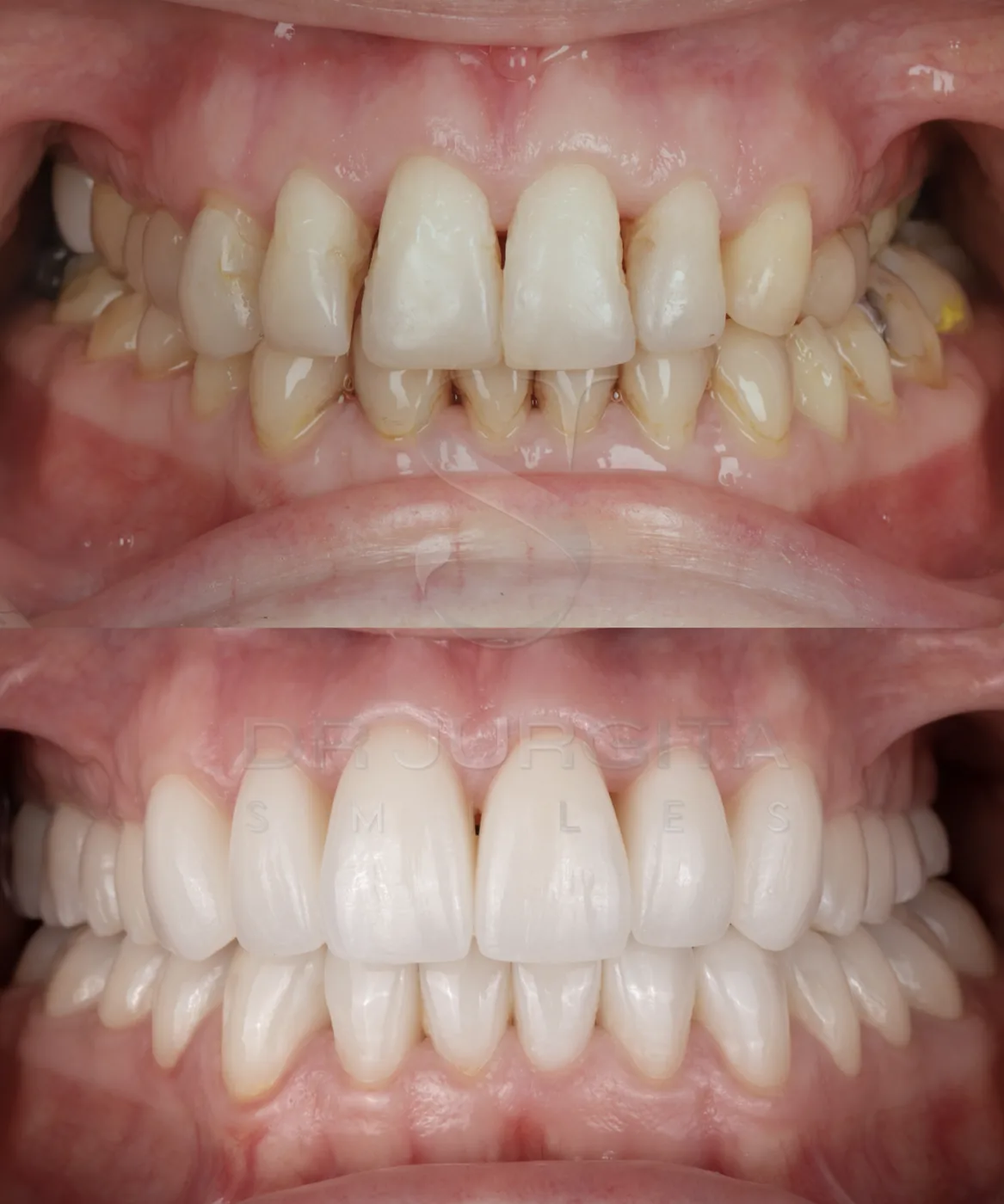
Clinical photos
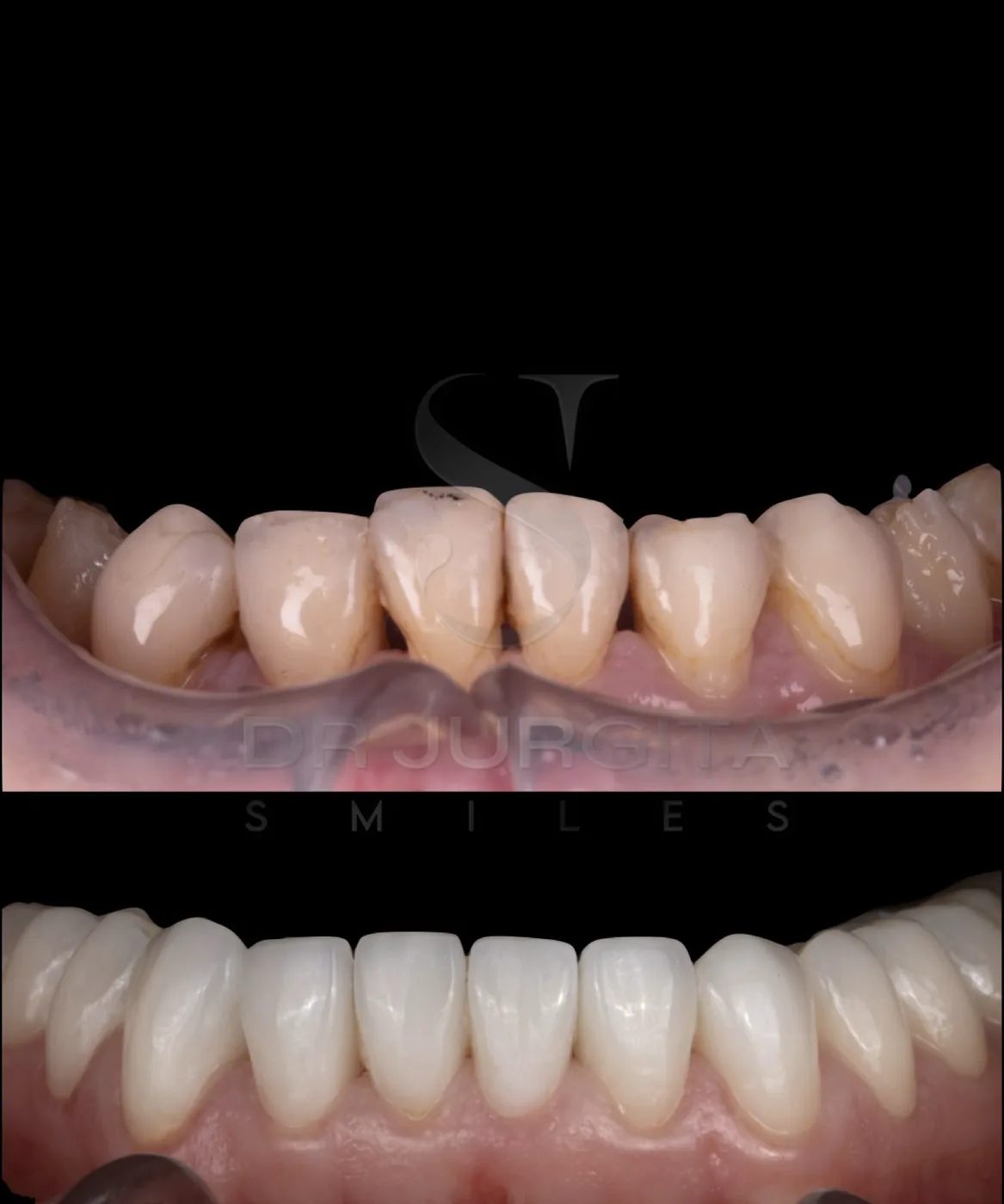
Lower teeth with old composite on the front teeth and malformed enamel on the posterior teeth 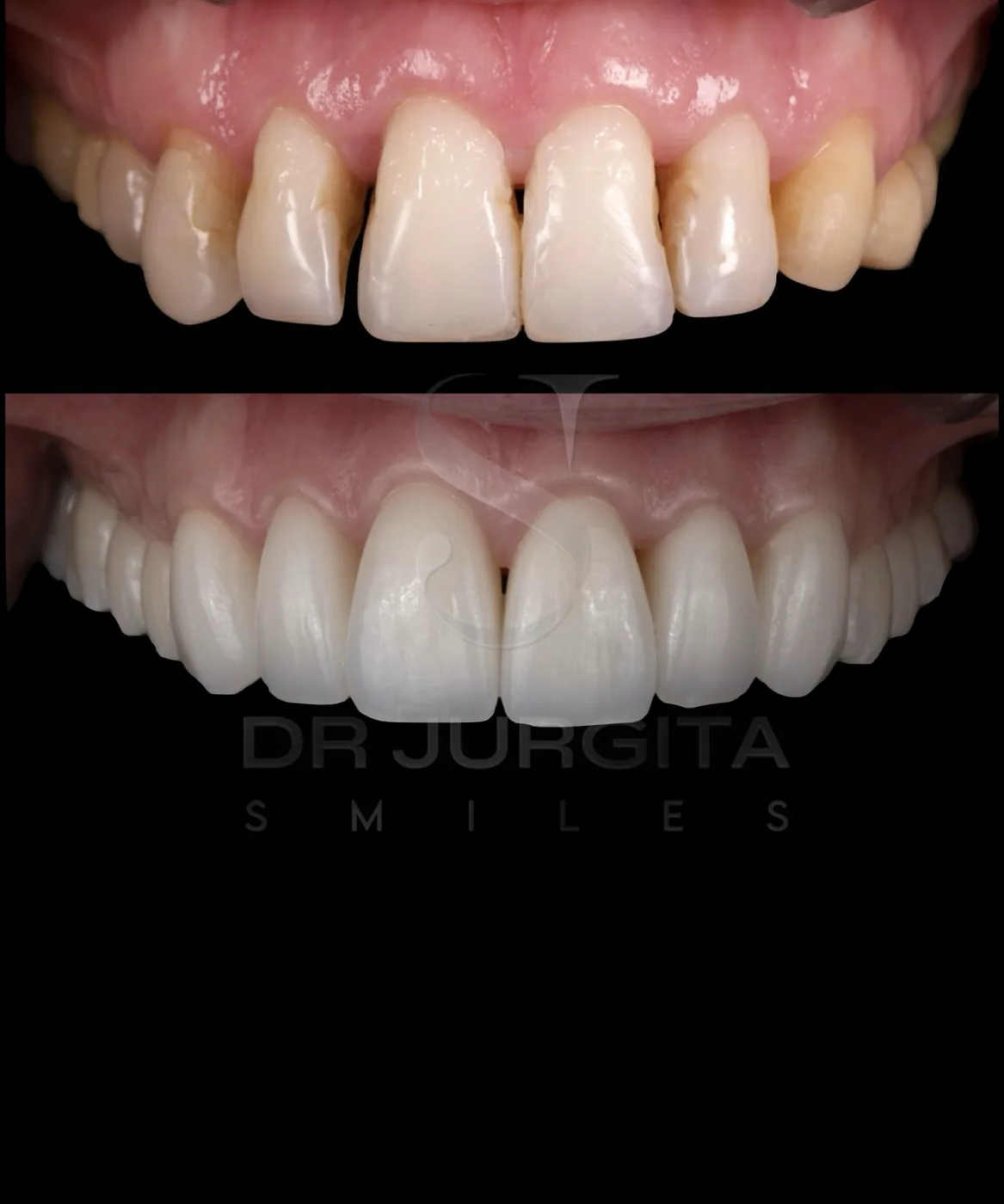
Upper teeth patched up with composite resin that is failing 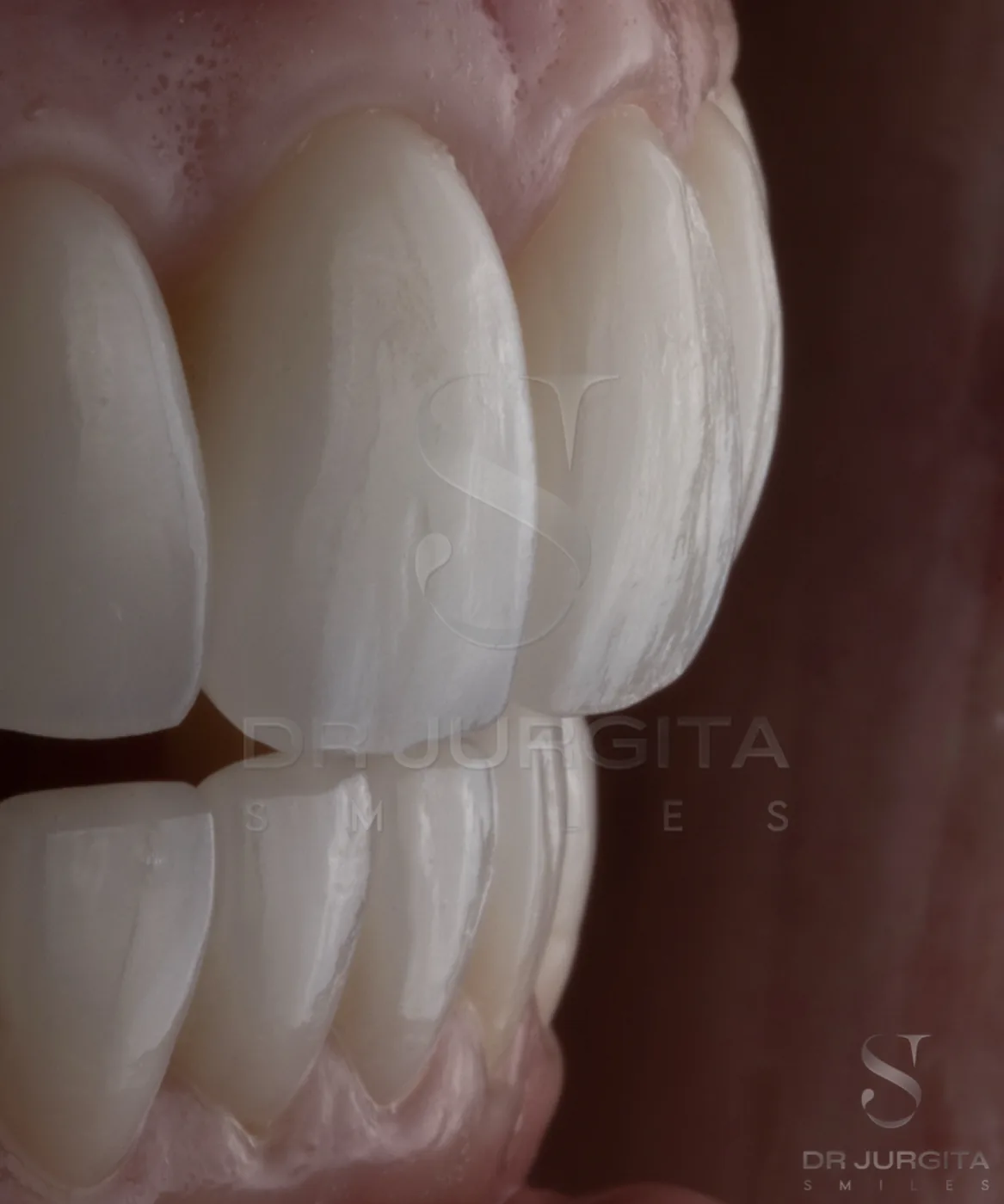
Macro profile — surface texture and translucency of the finished porcelain - Back to Porcelain Crowns & Veneers
Not sure where you fit?
You don’t have to know which treatment you need — that’s exactly what a consultation or Ask About Your Smile is for.
Treatments in this case
- Porcelain veneers·from £1,500
- Crowns·from £1,500
- Gum contouring · Fees discussed at consultation
Not sure where you fit?
You don’t have to know which treatment you need — that’s exactly what a consultation or Ask About Your Smile is for.