
Ankylosed Tooth — Composite Veneer Camouflage After Orthodontics
Two upper front teeth were ankylosed — fused directly to the bone rather than held by a normal ligament — which meant that no amount of orthodontic force could move or straighten them. Braces could align the rest of the patient's teeth, but these two had to stay exactly where they were, so every other tooth was positioned around them rather than the other way round.
Once orthodontics was finished, the result was improved but still far from ideal: the two front incisors remained visibly misaligned, the midline was off-centre, and there was a noticeable mismatch in proportion between the left and right side. Composite bonding was used to redesign the smile around this reality, layering and shaping the resin so that, viewed straight on, the teeth read as straight and symmetrical — even though, looked at from an angle, the underlying misalignment is still there. The composite doesn't change the foundation; it changes what the smile looks like on top of it.
This kind of case could also be treated with porcelain veneers involving some tooth reduction, but the patient chose composite instead — quicker, less invasive, and more economical. It's a good example of how composite bonding isn't limited to straightforward cosmetic touch-ups: done well, it can be a genuinely effective solution even in complex, compromised cases where the tooth positions themselves can't be changed.
Shared with patient consent. Results are individual to this patient.
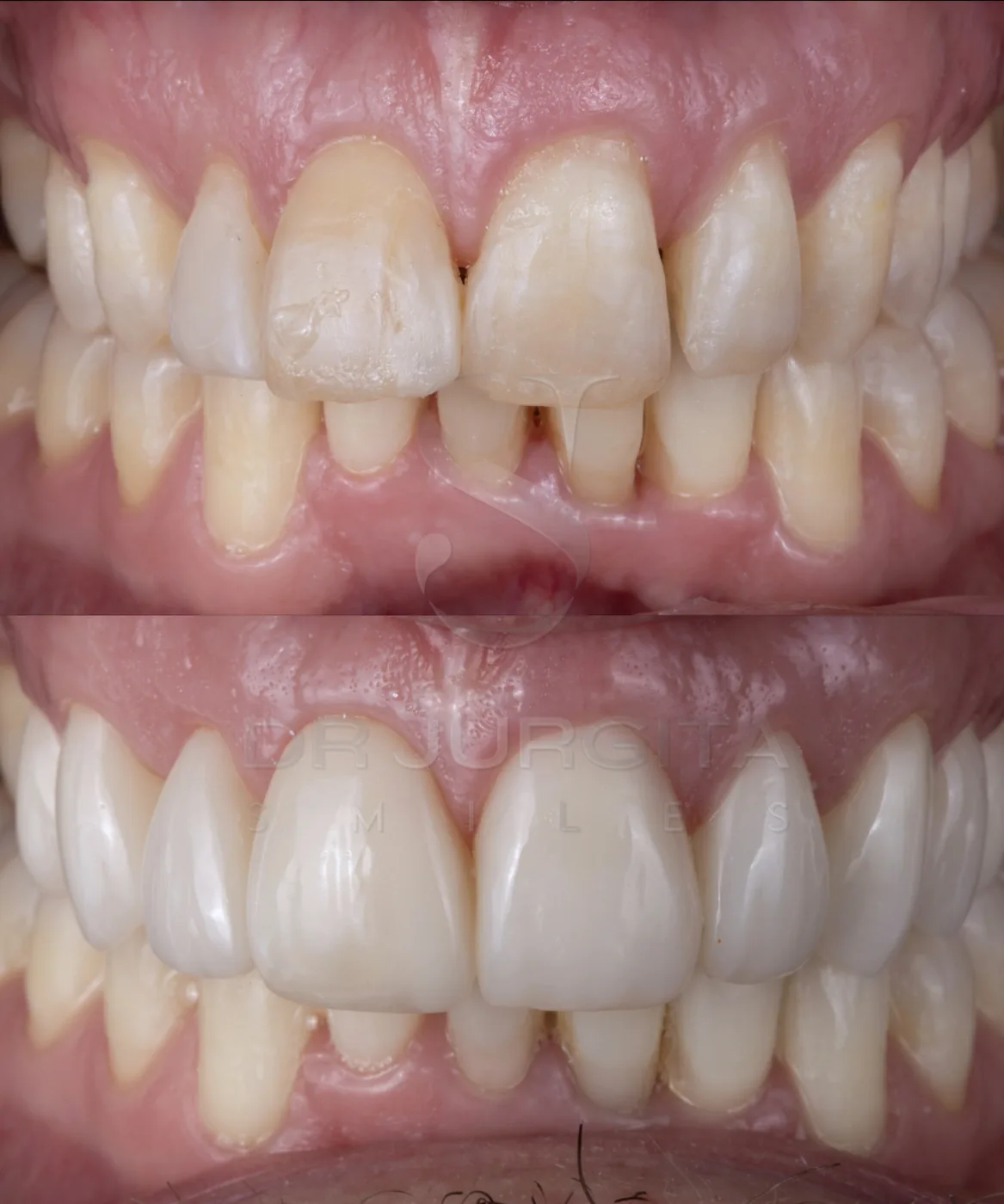
Clinical photos
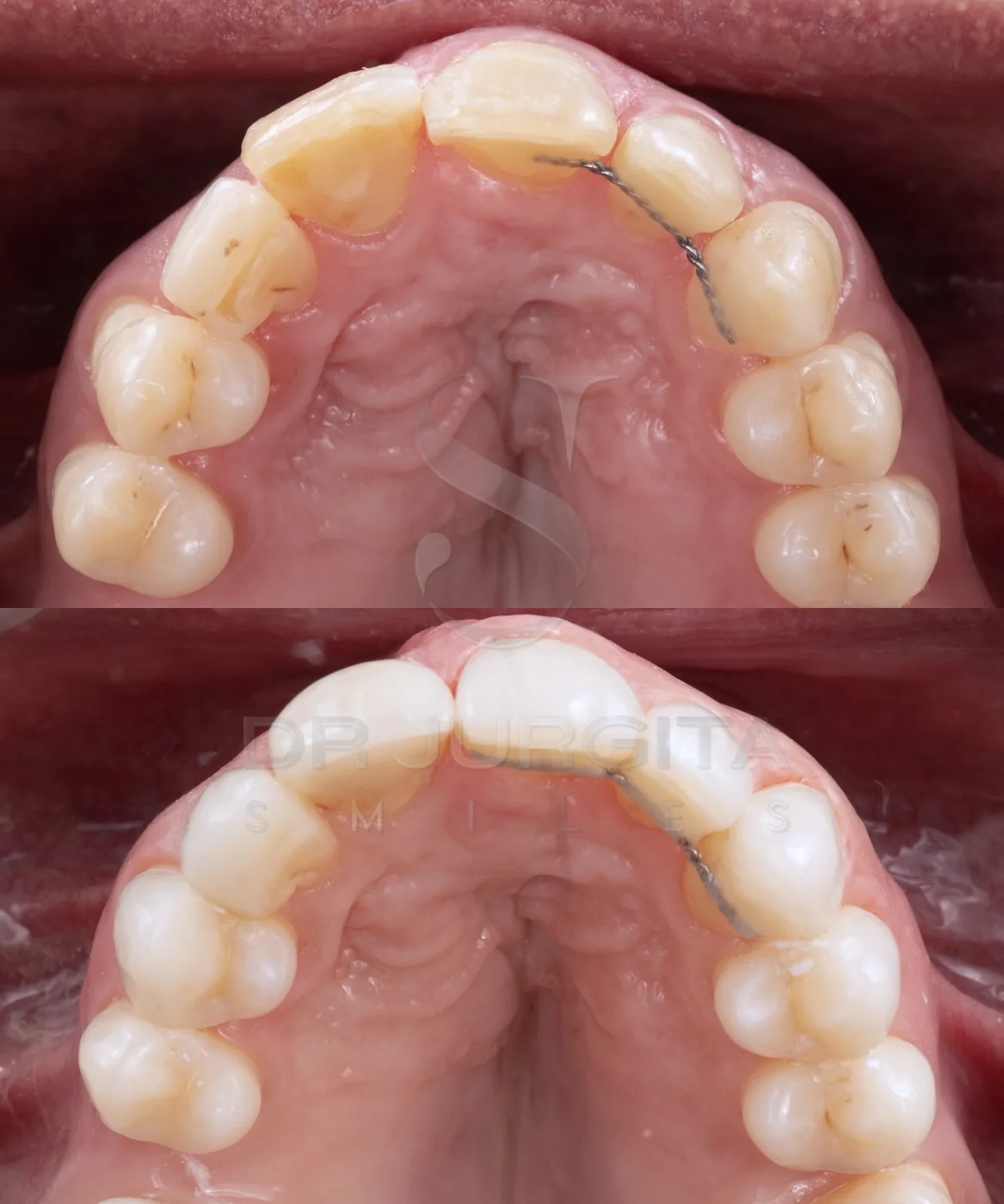
Occlusal view — before and after, with retainer in place 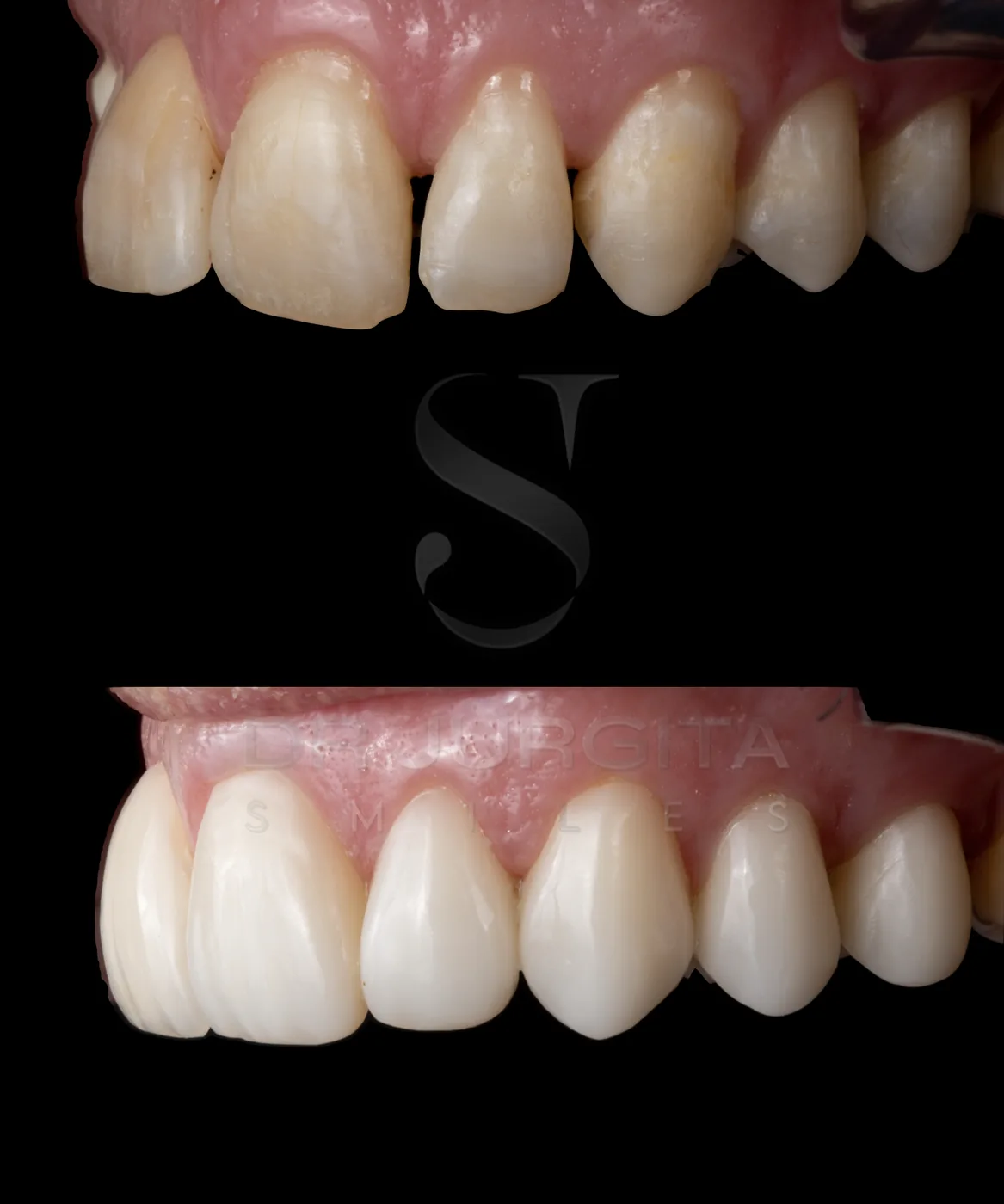
Lateral view — position and volume corrected 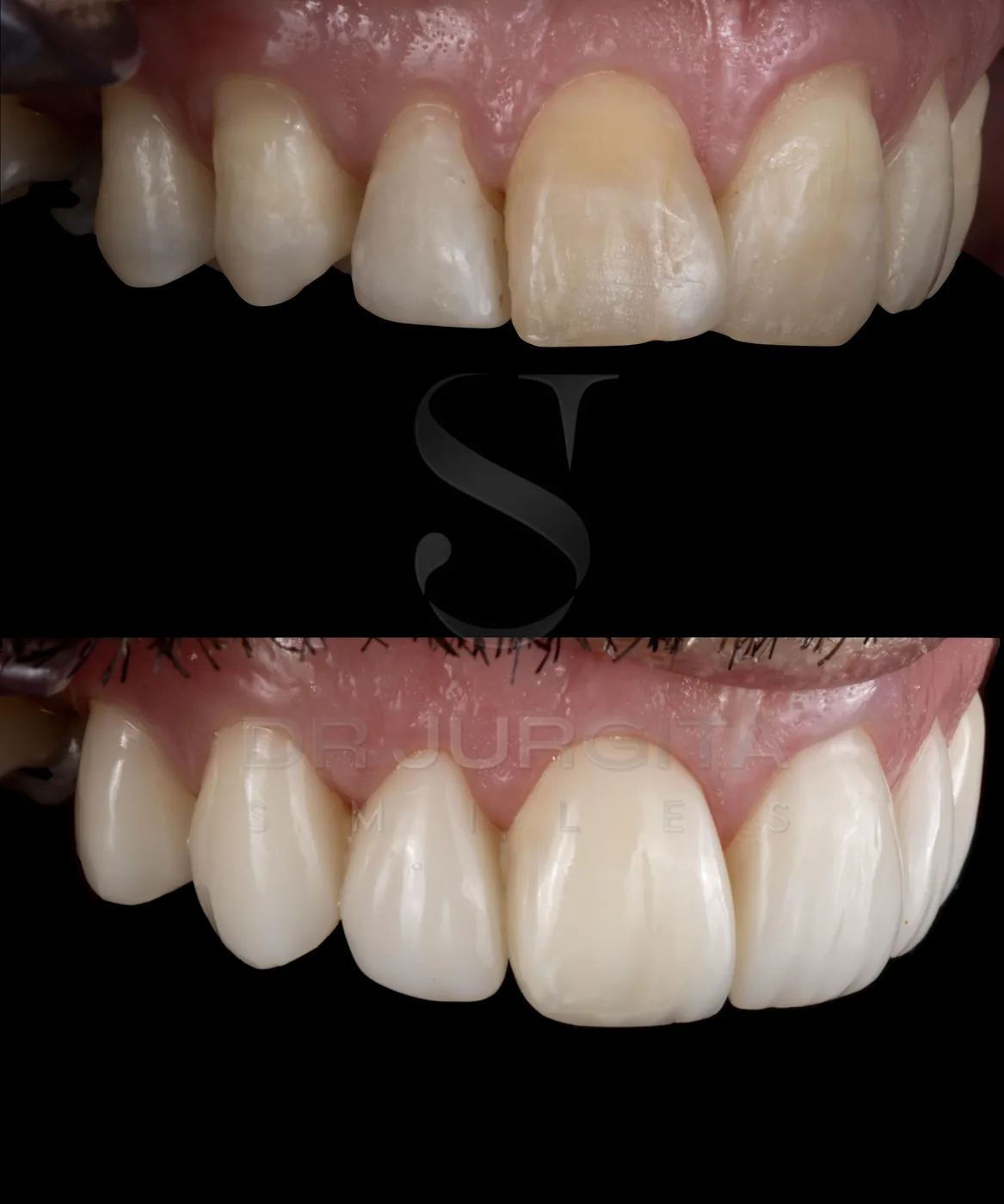
Close-up — shade and texture matched to the neighbours - Back to Composite Bonding
Not sure where you fit?
You don’t have to know which treatment you need — that’s exactly what a consultation or Ask About Your Smile is for.
Treatments in this case
- Composite bonding·from £300
- Gaps & missing teeth · Fees discussed at consultation
- Teeth whitening·from £550
Not sure where you fit?
You don’t have to know which treatment you need — that’s exactly what a consultation or Ask About Your Smile is for.