
Bridge Replacing Two Failing Front Teeth
This patient was referred for restorative work. Two of her upper front teeth were failing and could not be saved, so they needed to be extracted. Over time she had also lost a significant amount of bone and gum in the area, which meant that replacing them with implants would have required extensive bone and gum grafting. After discussing the options, she preferred not to undergo these procedures, and we chose to replace the missing teeth with a traditional bridge.
The failing teeth were removed, and a provisional bridge was made to wear while the area healed. This allowed us to shape the gum into natural-looking pontic areas. The final bridge not only replaced the missing teeth but also improved the proportions, position and alignment of the surrounding teeth.
Shared with patient consent. Results are individual to this patient.
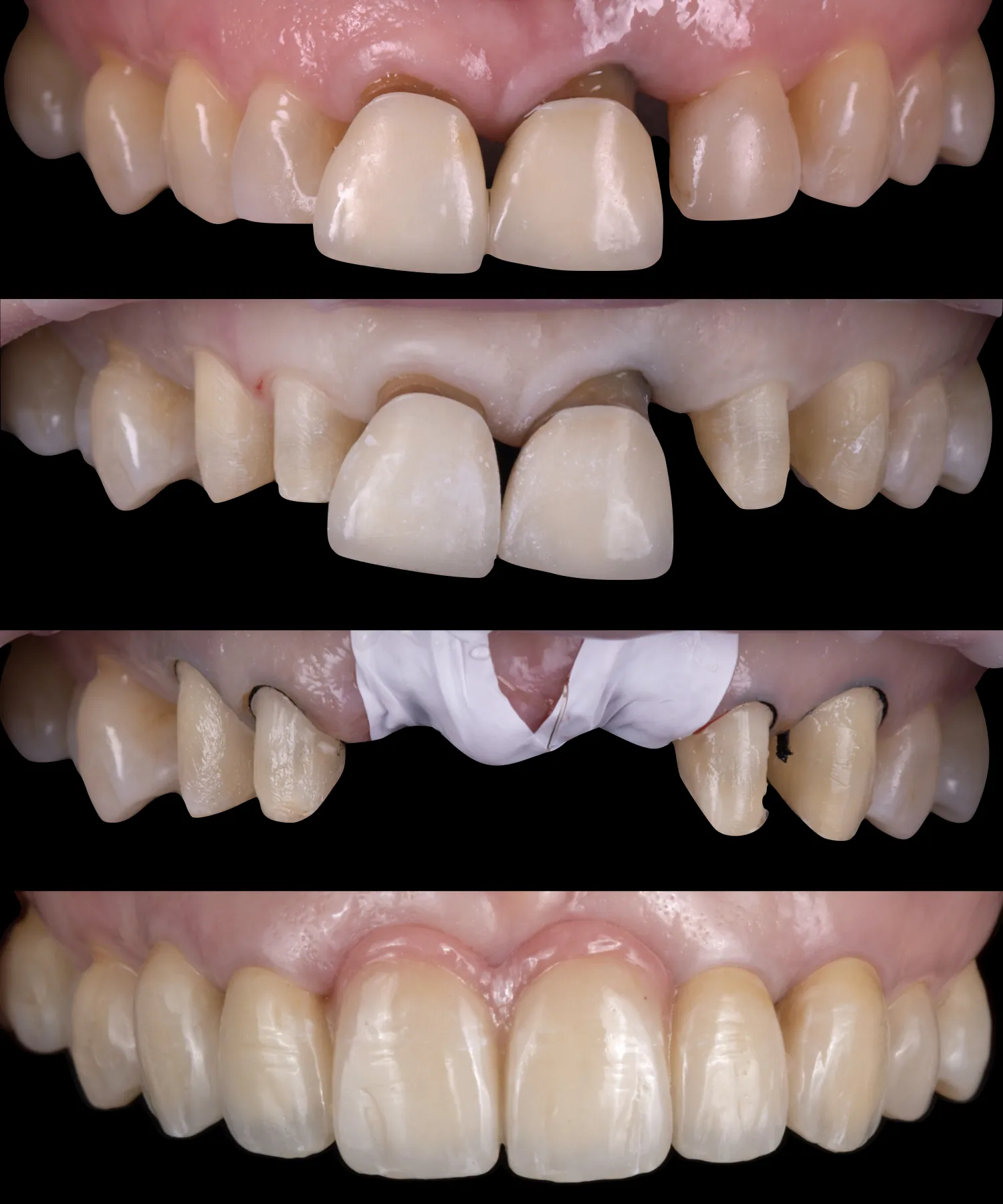
Clinical photos
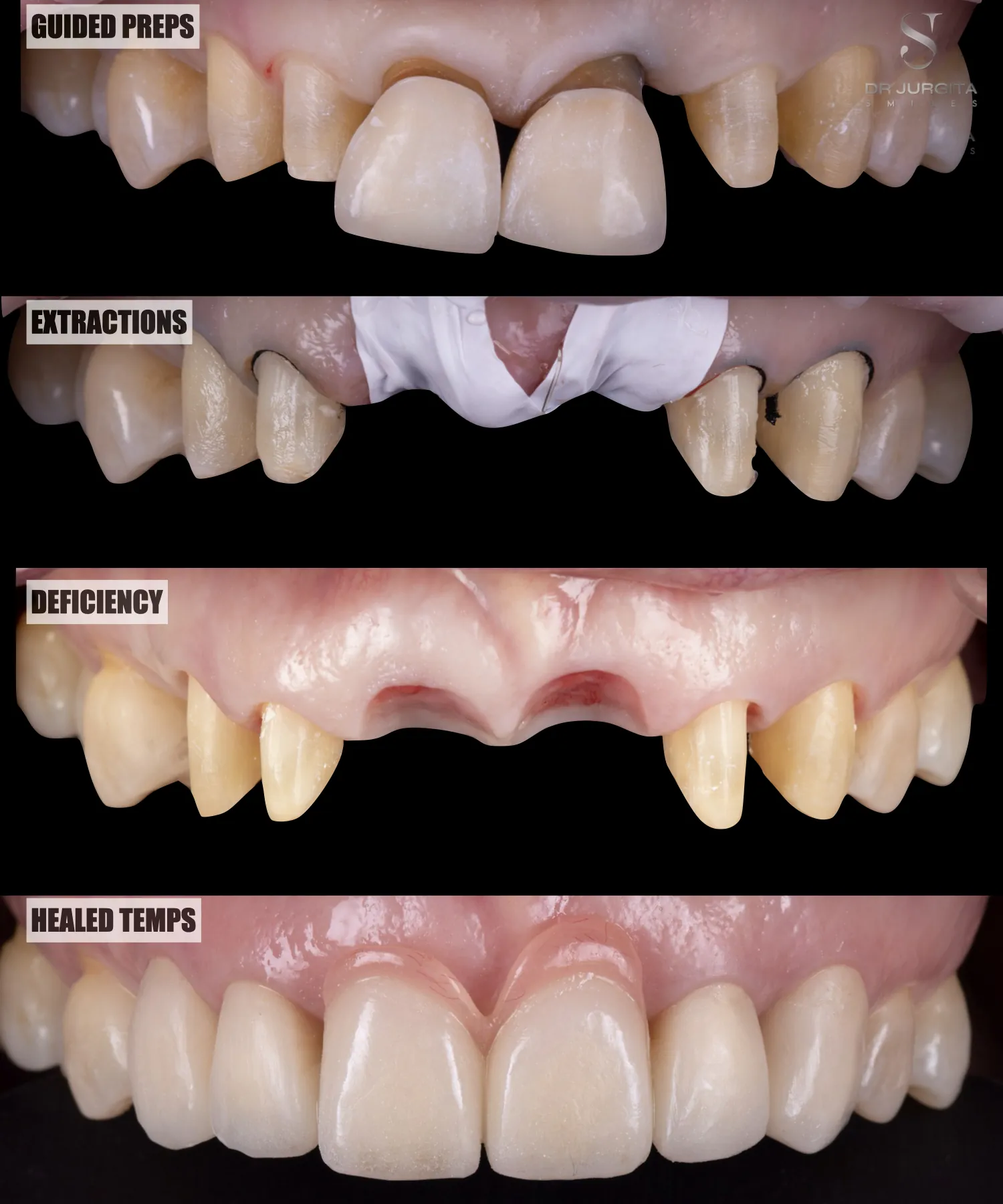
Treatment steps — guided preparation, extractions, the healed gum, and the provisional bridge 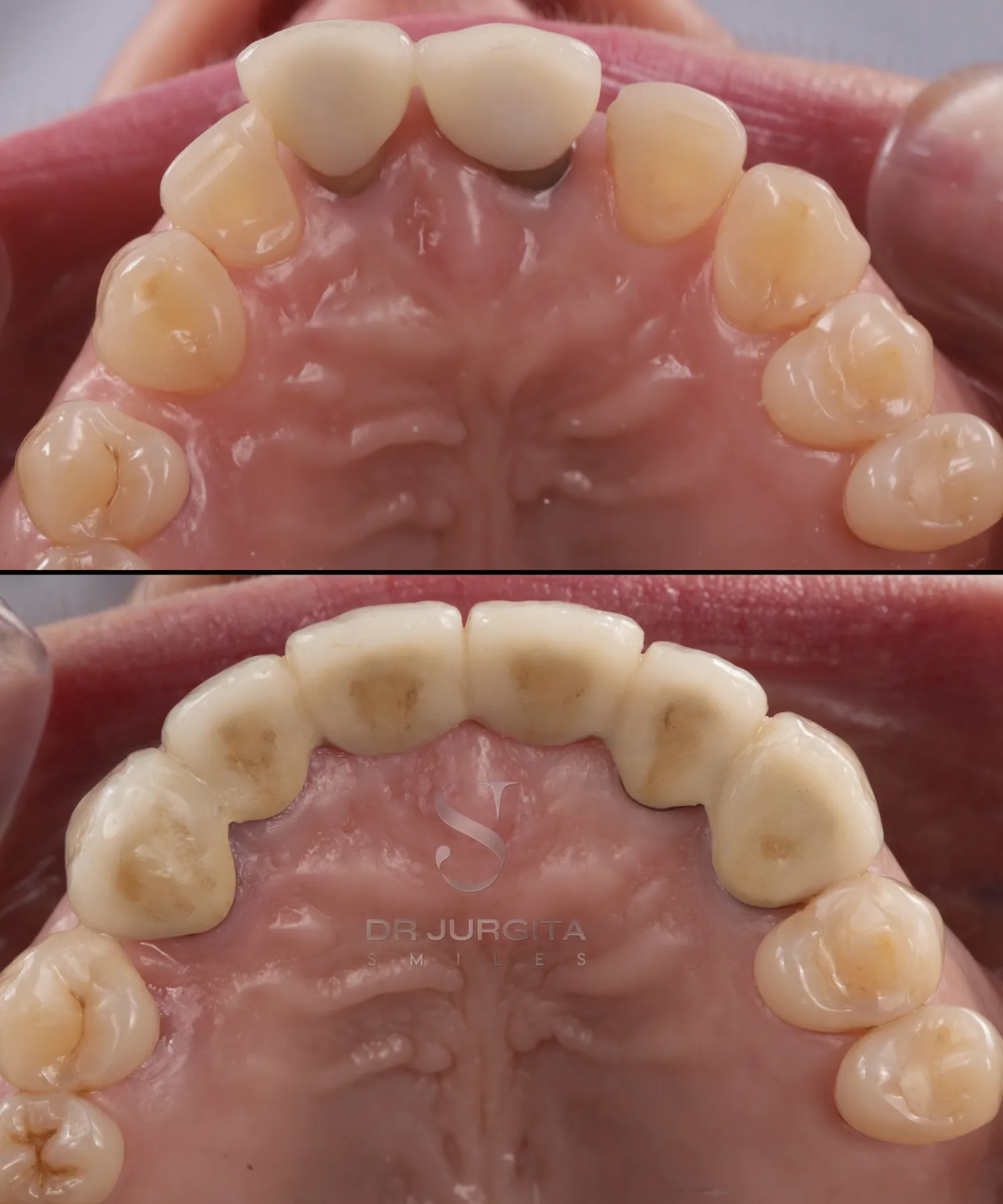
Viewed from behind — before and after 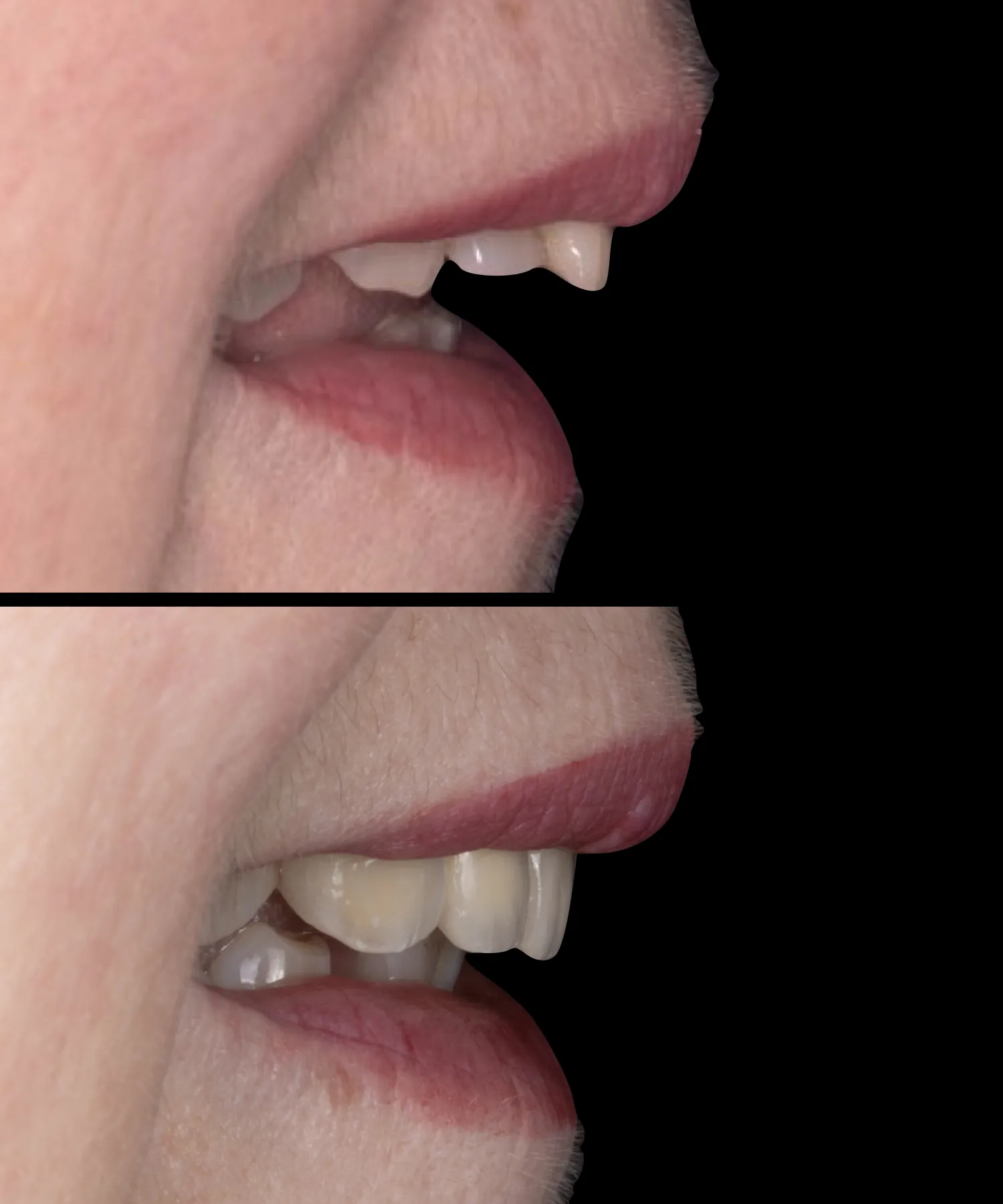
Side profile — before and after - Back to Fine Restorative Treatments
Not sure where you fit?
You don’t have to know which treatment you need — that’s exactly what a consultation or Ask About Your Smile is for.
Treatments in this case
Not sure where you fit?
You don’t have to know which treatment you need — that’s exactly what a consultation or Ask About Your Smile is for.