
Composite Bonding & Black Triangle Closure After Orthodontics
This patient came in self-referred after a long course of fixed braces, wanting the finishing touches orthodontics alone hadn't given her — brighter, more symmetrical teeth, edge wear restored, old fillings replaced, and black triangles closed for good. Treatment was done on the upper and lower teeth separately across two visits, replacing old fillings alongside the aesthetic work so the teeth had genuinely healthy foundations underneath, not just a better-looking surface.
Closing a black triangle well isn't about filling the gap with composite — it's about reshaping the tooth surfaces that create the gap in the first place, so there's no gap left to fill. Done that way, there's no bulk, no bleeding, and flossing stays fully possible — which is essential, not optional, afterward. Get the shaping wrong and the result can look bulky or unnatural, which is why I use my own signature shaping technique specifically to make black triangle bonding look as natural and invisible as possible.
Shared with patient consent. Results are individual to this patient.
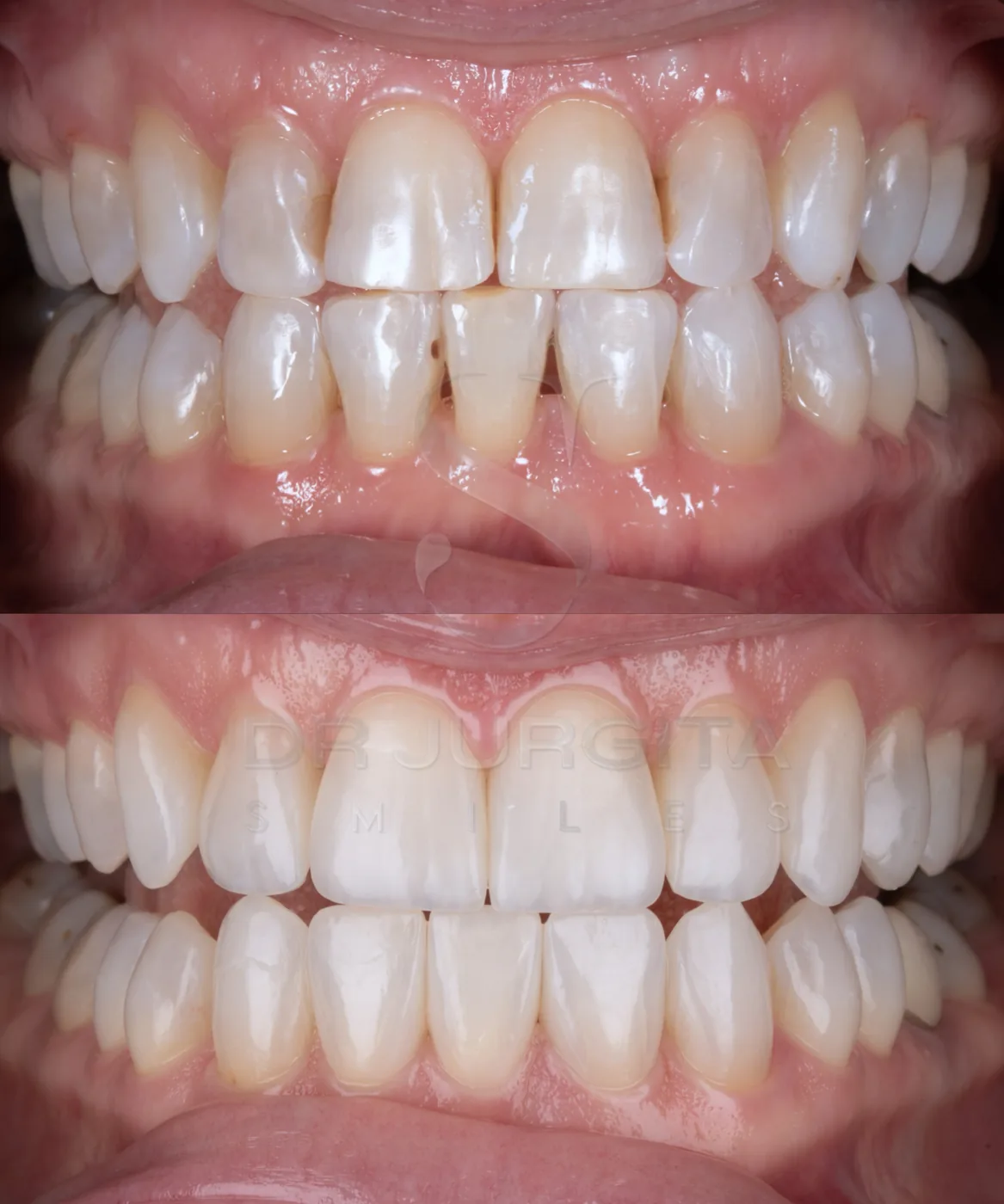
Clinical photos
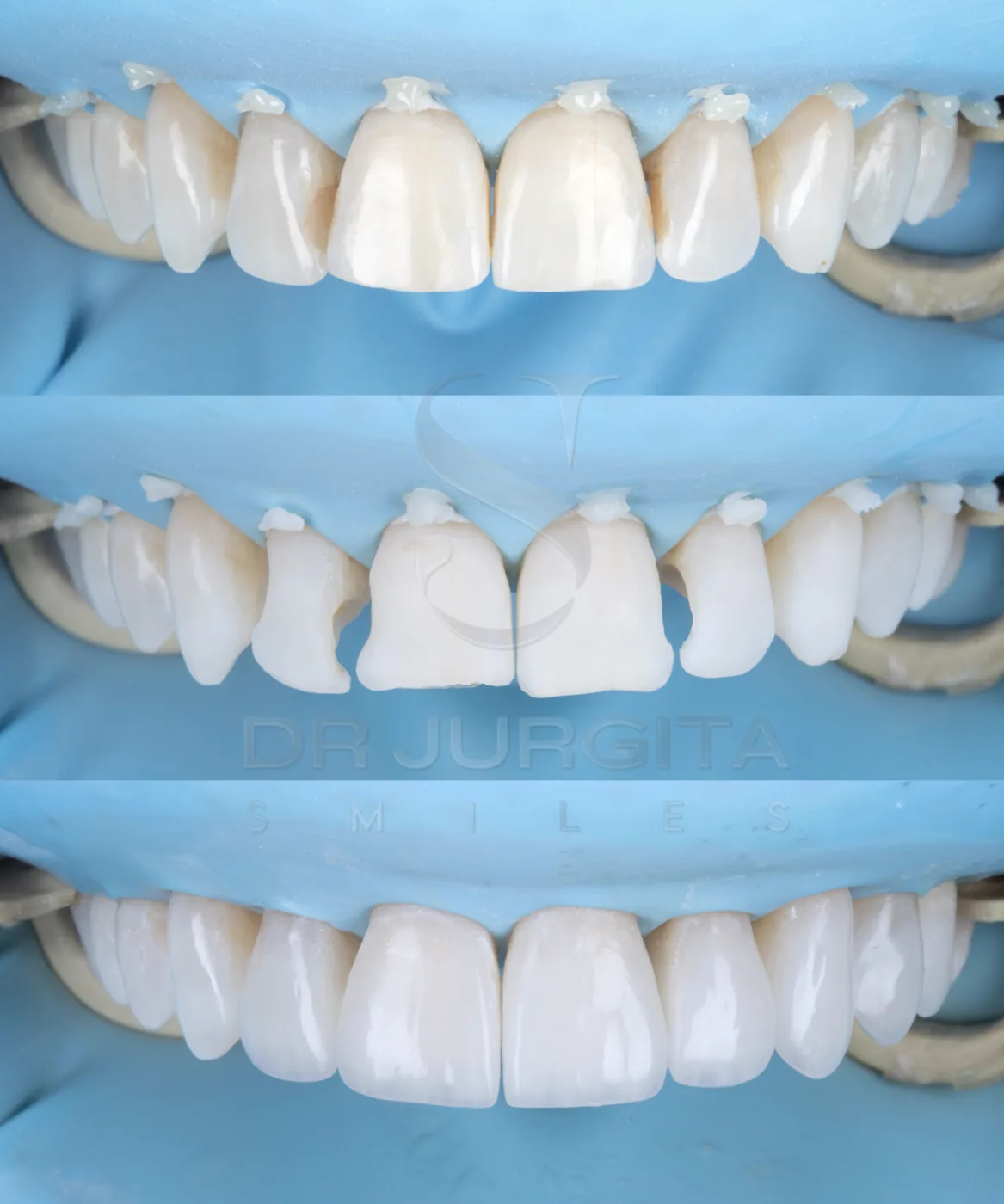
Under rubber dam — contacts rebuilt and shaped in layers 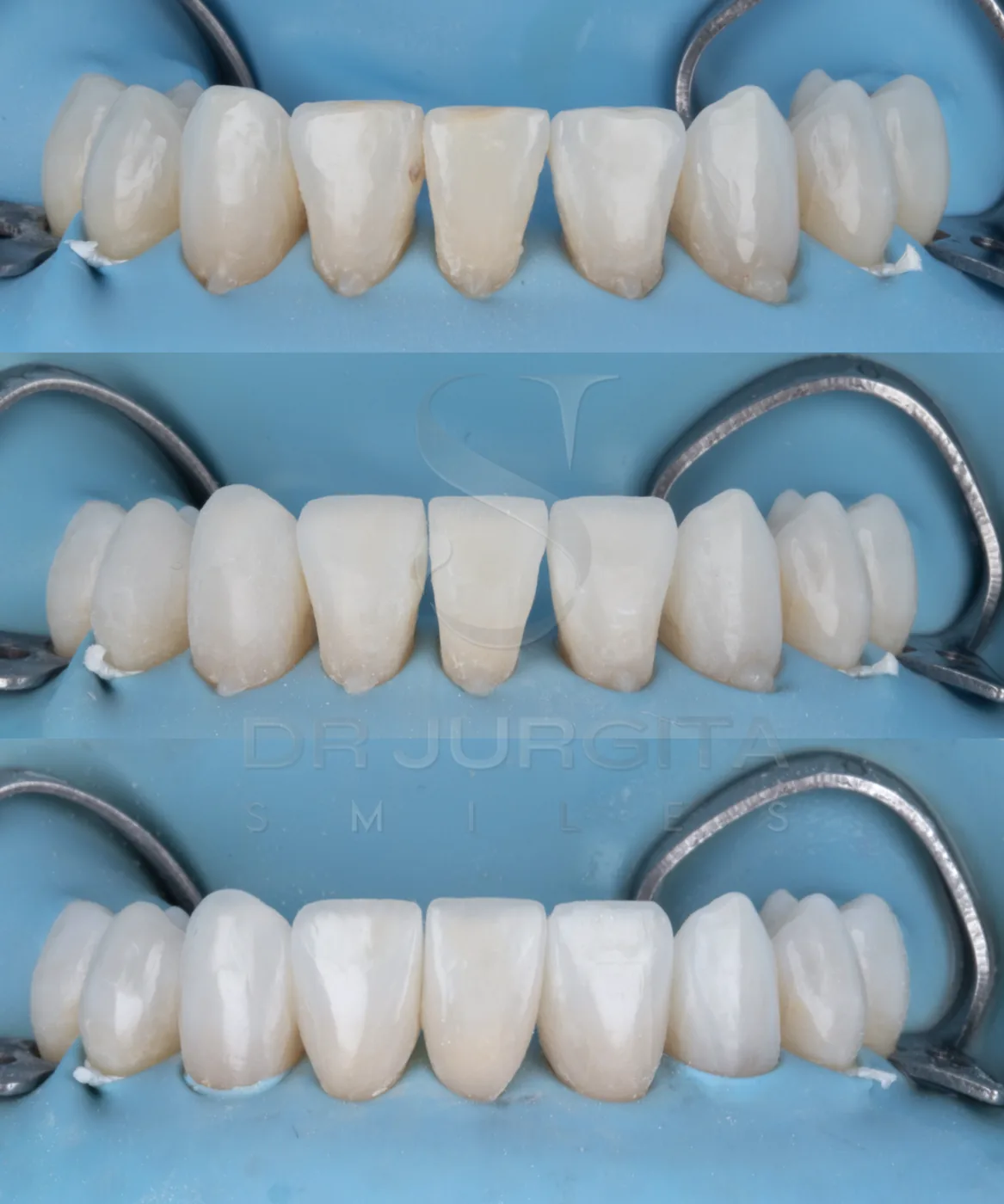
Close-up progression — widths, contours and edges refined 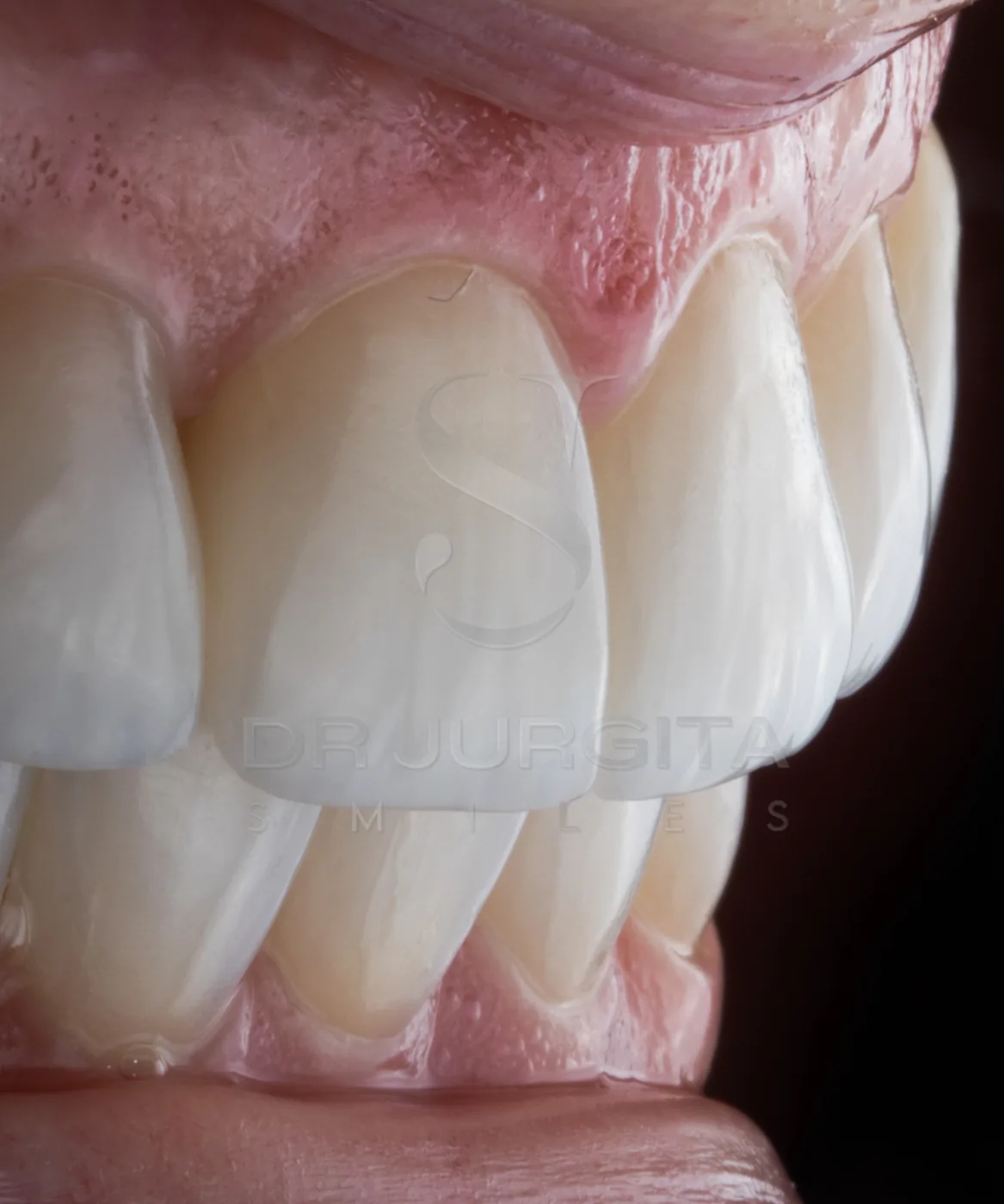
Final detail — polished surfaces and natural translucency - Back to Composite Bonding
Not sure where you fit?
You don’t have to know which treatment you need — that’s exactly what a consultation or Ask About Your Smile is for.
Treatments in this case
- Composite bonding·from £300
- Gaps & missing teeth · Fees discussed at consultation
- Teeth whitening·from £550
Not sure where you fit?
You don’t have to know which treatment you need — that’s exactly what a consultation or Ask About Your Smile is for.