
Composite Bonding for a Narrow Smile — Widening After Orthodontics
This patient's orthodontic treatment had done what it could, but the smile still looked narrow on the sides — not because anything had gone wrong, but because of an anatomically narrow dental arch, a developmental pattern rather than a treatment failure. Braces can't simply push teeth further outward to widen a smile like this: doing so would move the teeth beyond the bone that safely supports them, risking gum recession and long-term instability. When the arch itself is narrow, the safe way to add width is restoratively, building volume onto the teeth rather than moving them.
The front teeth also had edge wear that needed masking, so they received minimal edge bonding and black triangle closure with composite resin. The side teeth were treated more substantially, with composite veneering designed to add real volume and make the smile read as wider and fuller — which has the secondary effect of reducing how dominant the front teeth appear, since the whole arch reads as one balanced curve rather than a few prominent teeth in the middle.
Shared with patient consent. Results are individual to this patient.
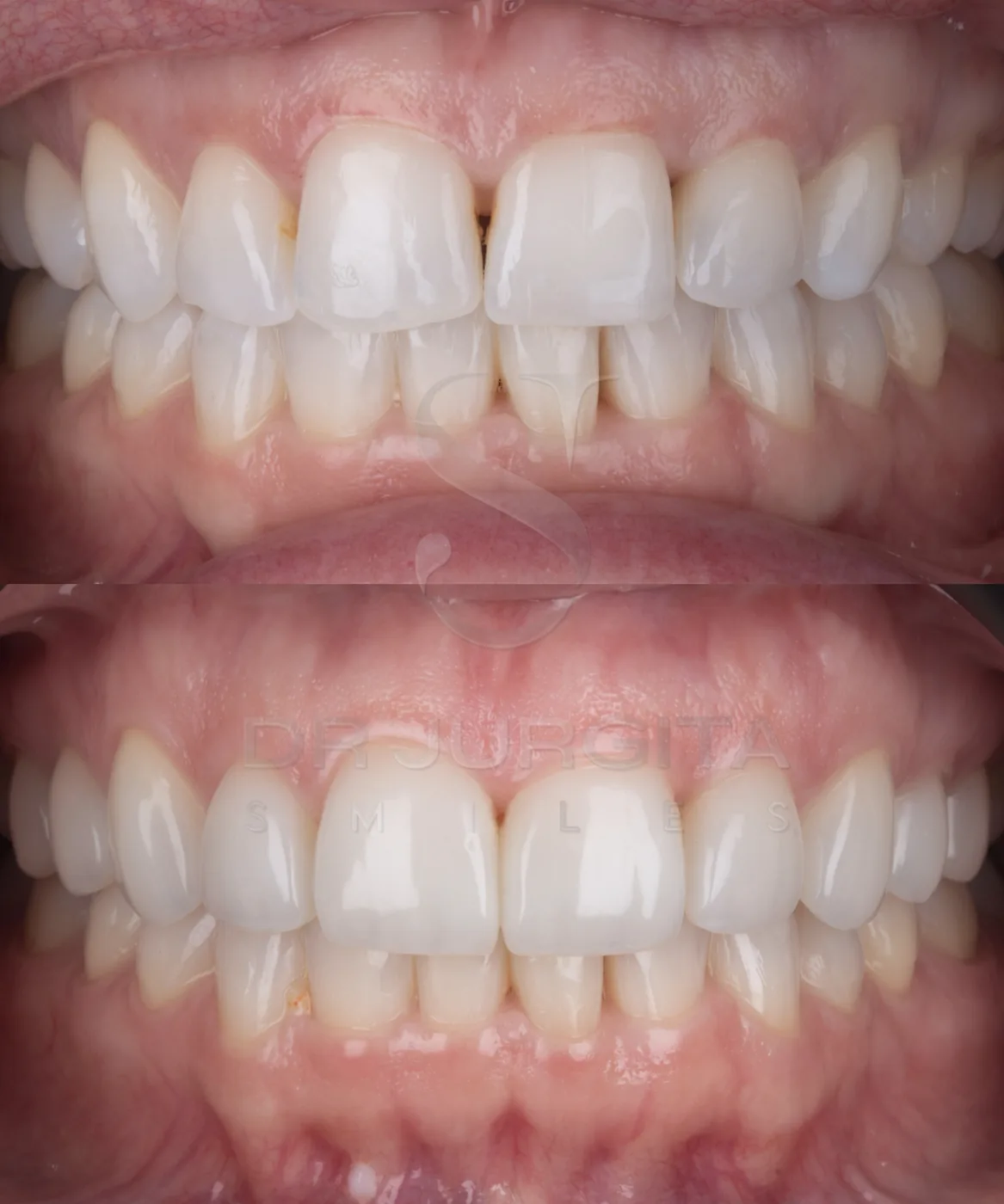
Clinical photos
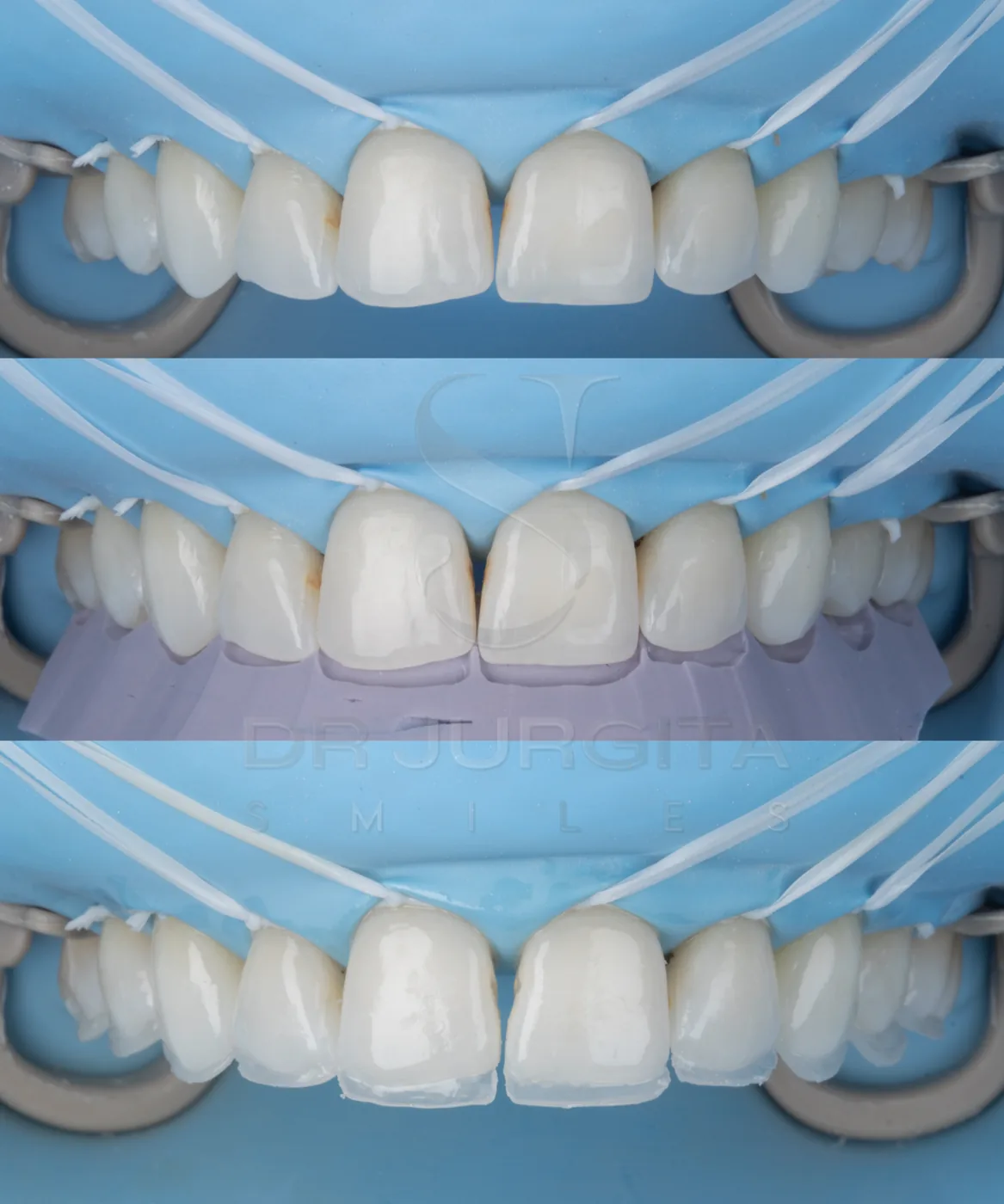
Under rubber dam — before, matrix in place, and after 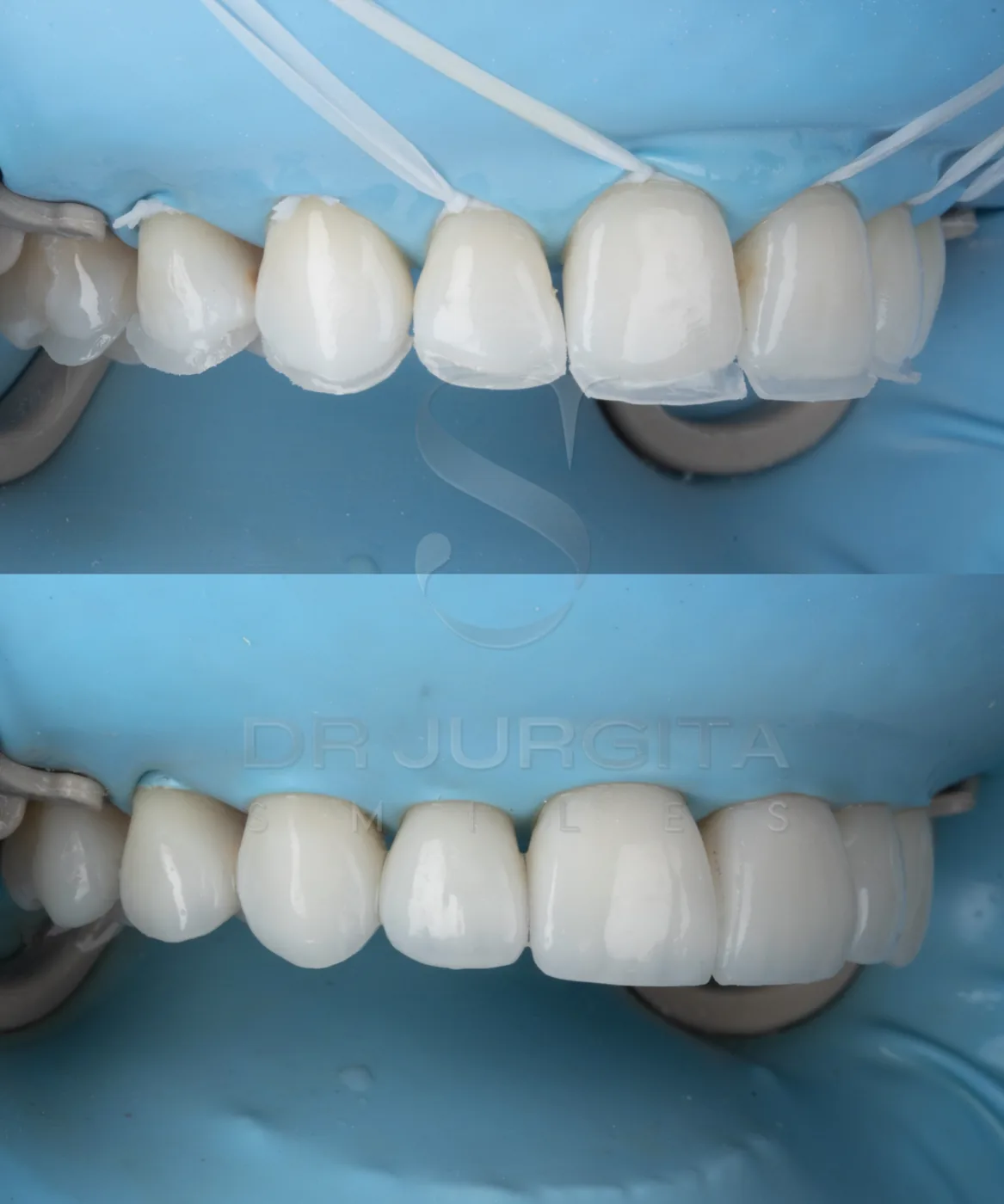
Widths and edge positions balanced 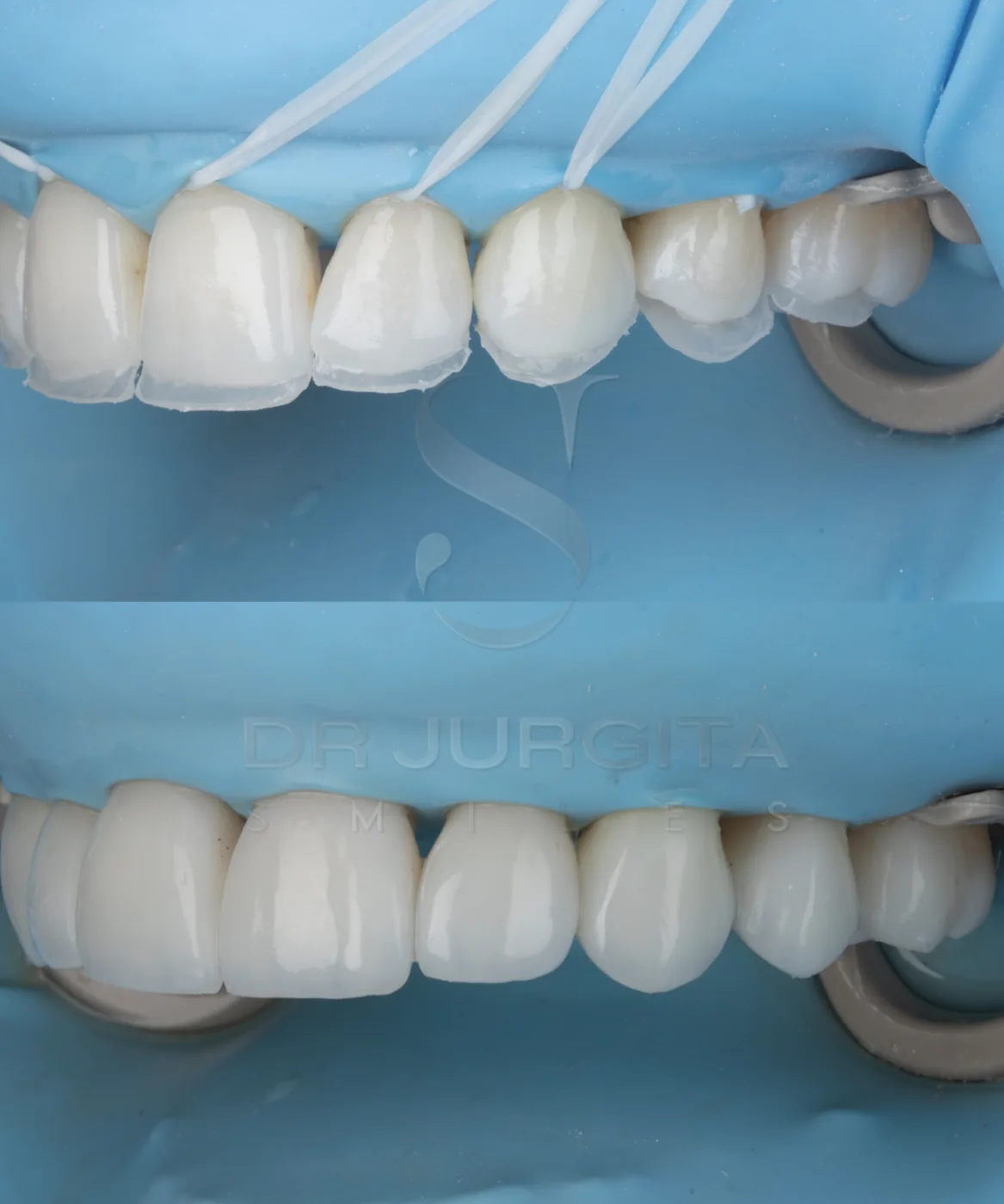
Polished finish — symmetrical smile line restored - Back to Composite Bonding
Not sure where you fit?
You don’t have to know which treatment you need — that’s exactly what a consultation or Ask About Your Smile is for.
Treatments in this case
Not sure where you fit?
You don’t have to know which treatment you need — that’s exactly what a consultation or Ask About Your Smile is for.