
Composite Bonding for Tooth Size Mismatch (Bolton Discrepancy)
A young patient was unhappy with small teeth and visible gaps between them, and had already been turned away from braces by an orthodontist — not because the gaps couldn't be closed, but because the real problem wasn't spacing at all. This is a Bolton discrepancy: a mismatch between the size of the teeth and the size of the jaw they sit in, where the teeth are simply too small for the space available. Closing those gaps by moving the teeth together with braces would have meant constricting the jaw and the bite, risking real functional problems rather than solving anything.
The more appropriate answer was to make the teeth themselves bigger, closing the gaps naturally as a result rather than as the direct target of treatment. A meticulous layering technique was used to build up each tooth — matched to the natural colour, translucency and subtle edge effects of young, bright teeth, so nothing looks artificially added. Just as important was reading the shape each tooth already had and rebuilding to that same shape, so the composite reads as more tooth rather than a bulky filler sitting in the gap.
Shared with patient consent. Results are individual to this patient.
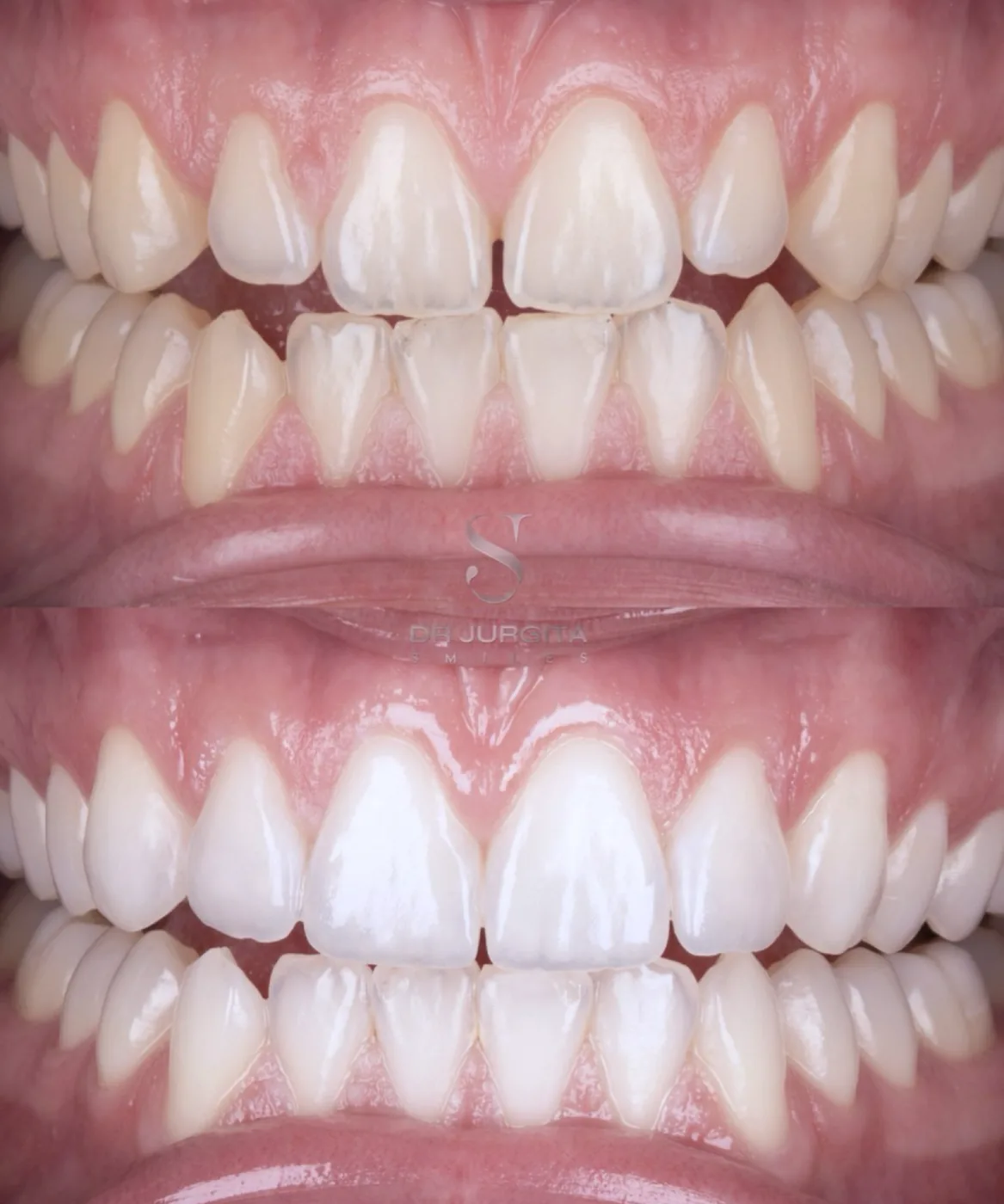
Clinical photos
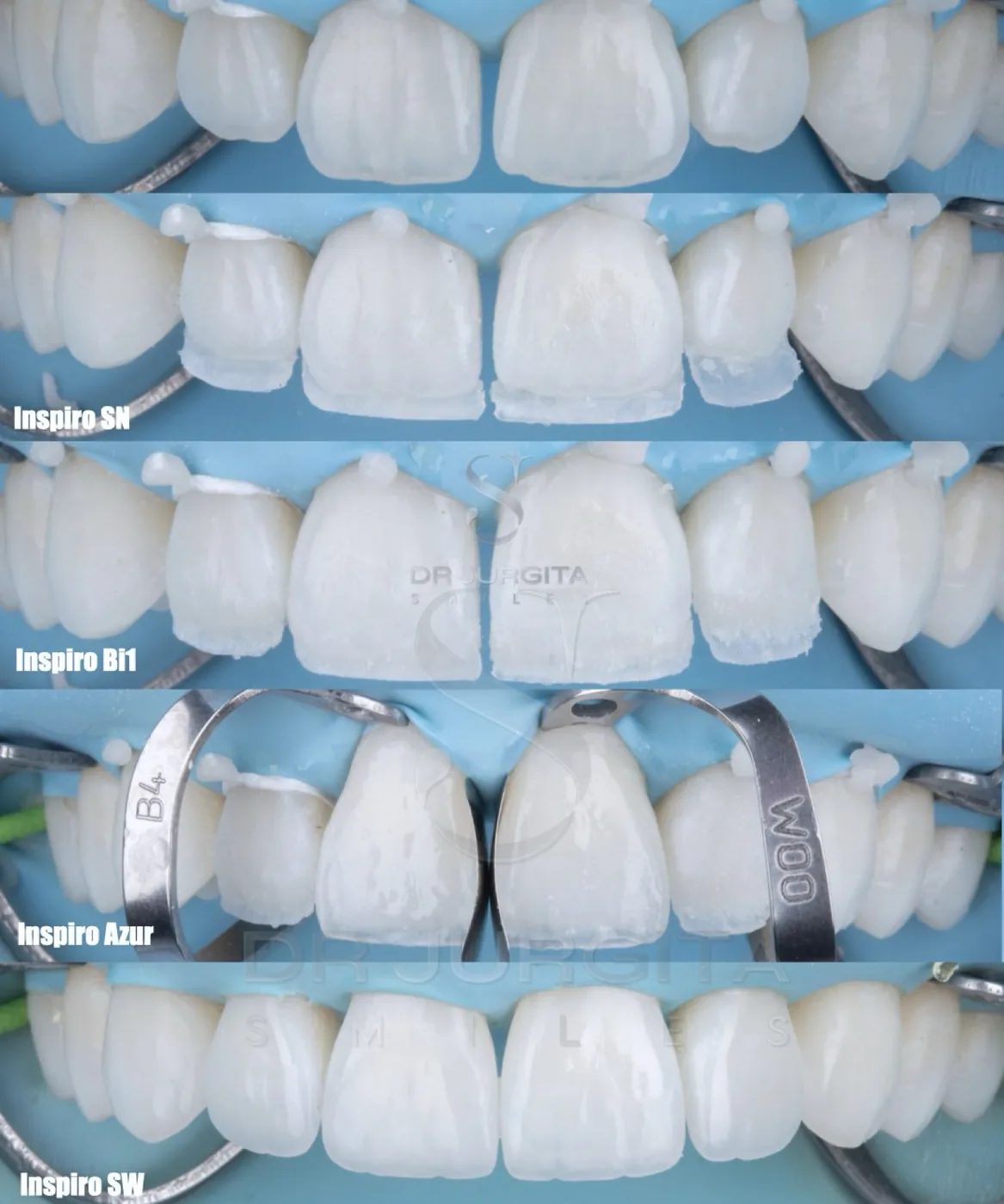
Layered under rubber dam — shades built up in sequence 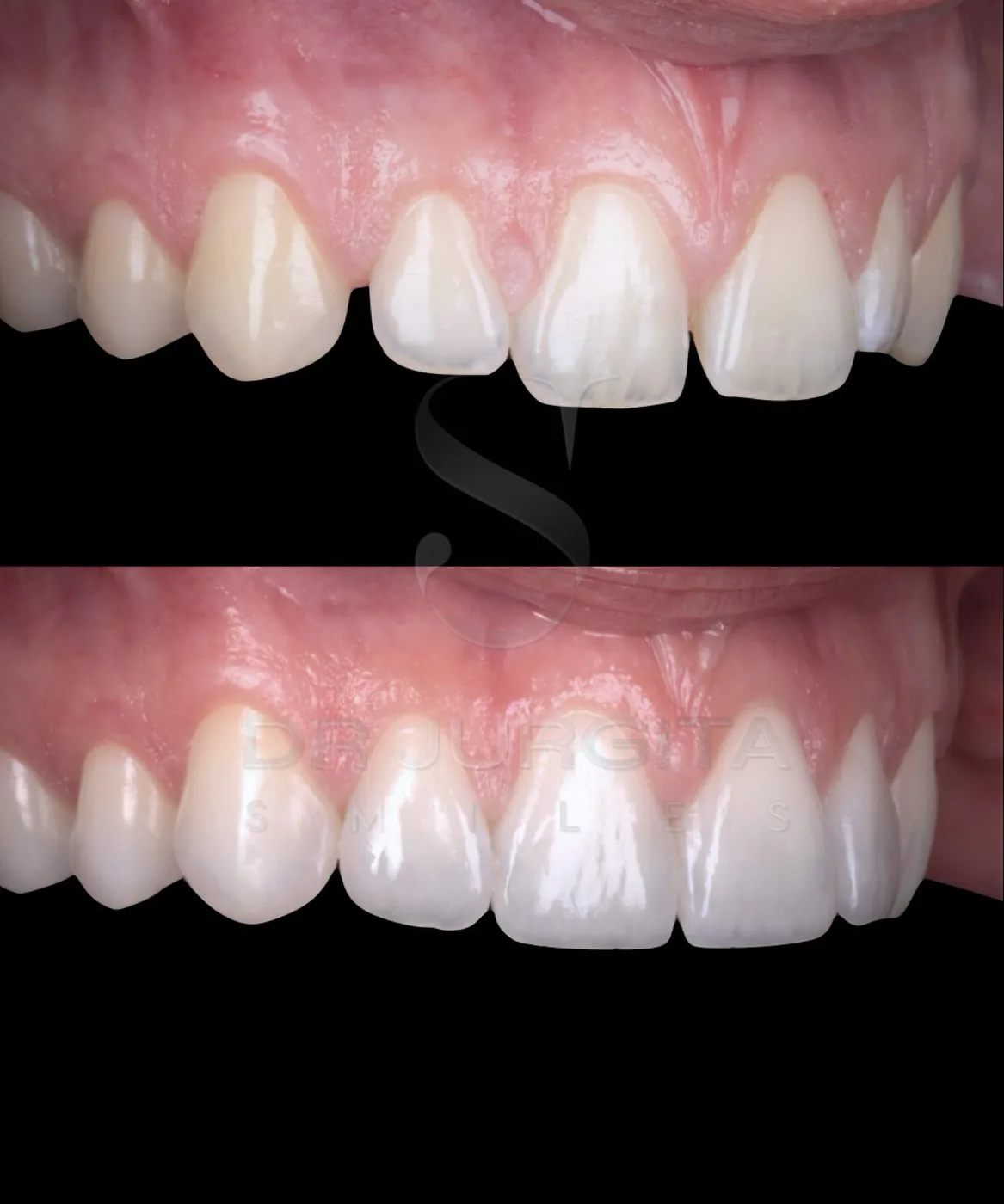
Side view — widths and edges refined before and after 
Finished result — polished edges and a level smile line - Back to Composite Bonding
Not sure where you fit?
You don’t have to know which treatment you need — that’s exactly what a consultation or Ask About Your Smile is for.
Treatments in this case
- Composite bonding·from £300
- Gaps & missing teeth · Fees discussed at consultation
- Teeth whitening·from £550
Not sure where you fit?
You don’t have to know which treatment you need — that’s exactly what a consultation or Ask About Your Smile is for.