
Composite Bonding for Worn Edges — Gum Recession Referred to a Periodontist
This patient had already had orthodontic treatment, but two problems remained: worn edges with small gaps that had opened up, and gum recession that had left some roots exposed. She initially asked for the receded gum to be covered with composite as well, alongside the edge bonding — a request worth pushing back on rather than simply agreeing to.
Covering exposed root surface with white composite isn't a biologically sound fix. It doesn't restore the gum that's actually missing; it just extends tooth-coloured material further down the root, which tends to make that tooth look unnaturally long and can throw the whole gumline out of symmetry with its neighbours. So the bonding here was kept deliberately minimal — only the worn edges were built up and the small gaps closed — and the patient was referred to a periodontist for gum grafting instead, to actually restore the gum tissue that belongs there. A graft is more biologically stable than a restorative cover-up, and gives a far better aesthetic result long term, because it solves the actual problem rather than disguising it.
Aesthetic dentistry is as much about knowing when to do less as it is about knowing what to add.
Shared with patient consent. Results are individual to this patient.
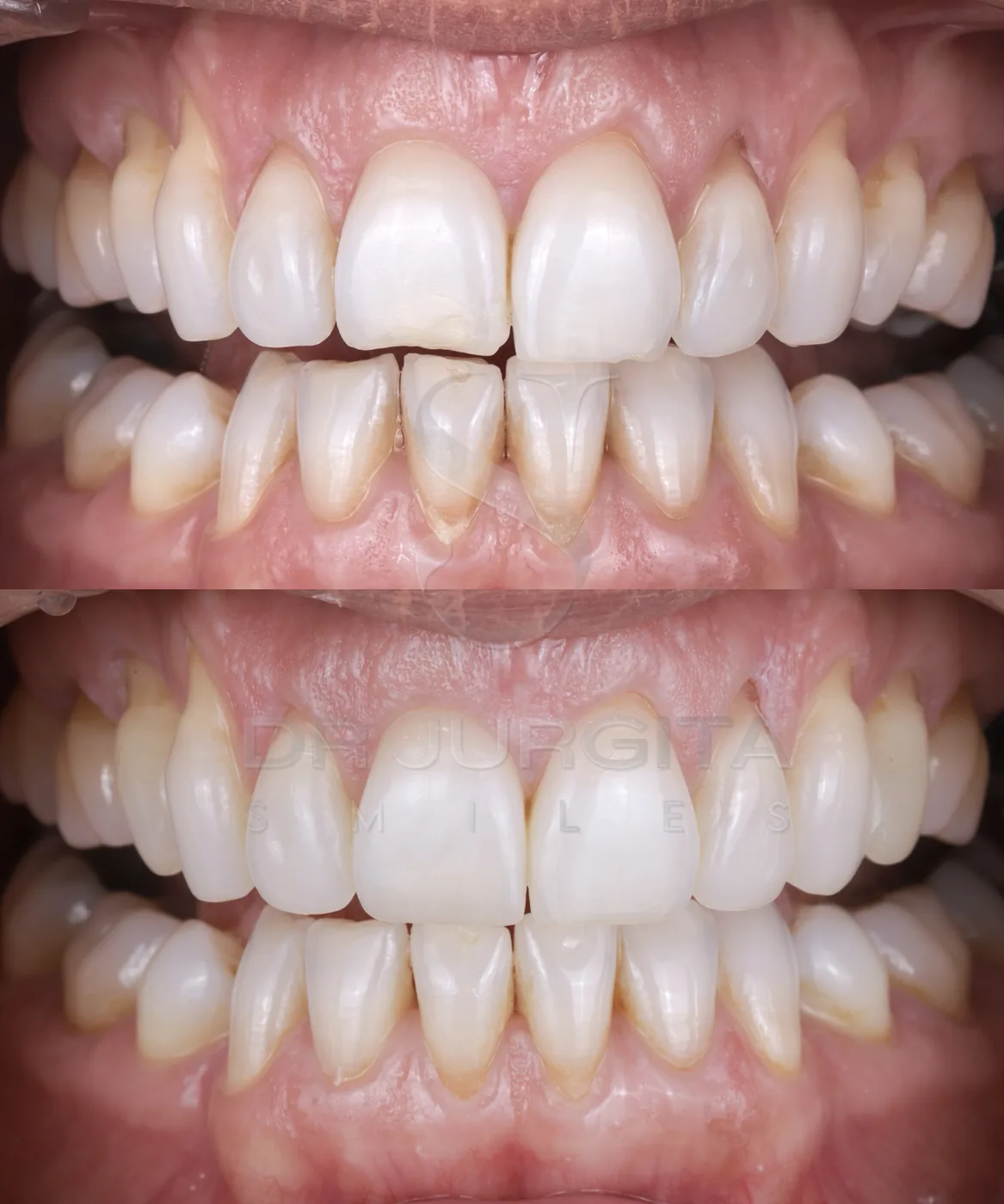
Clinical photos
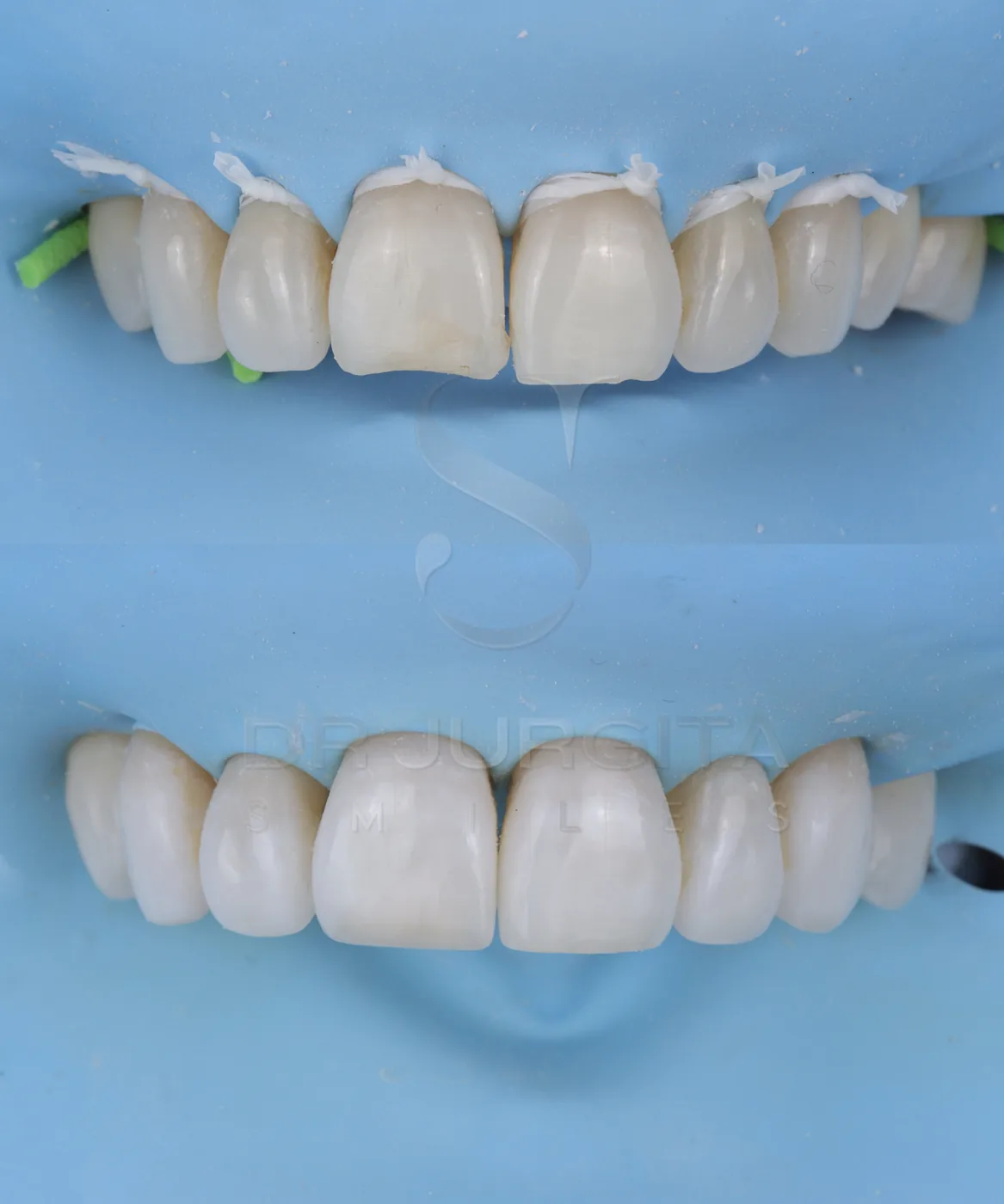
Under rubber dam — worn edges before and after layering 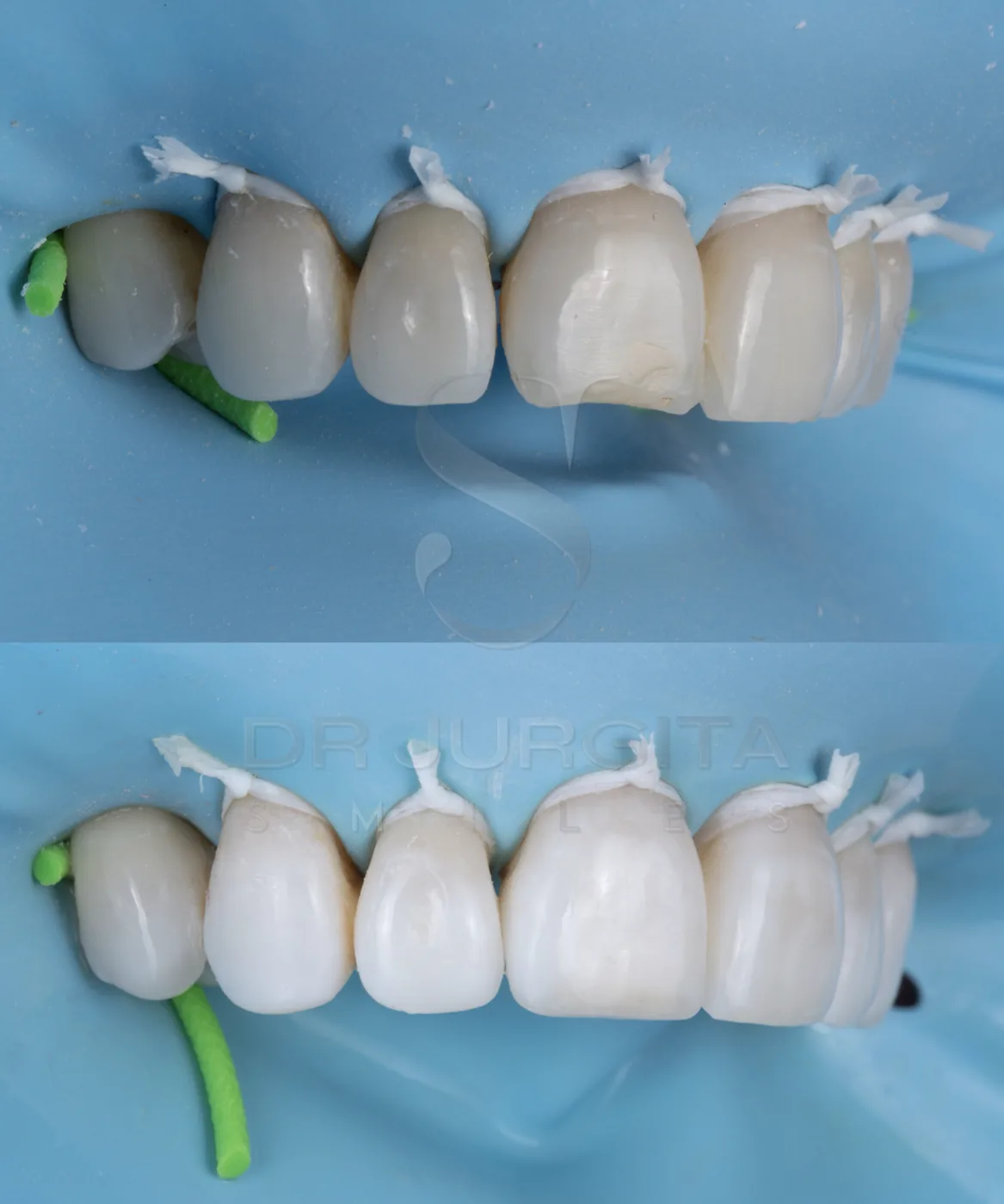
Close-up — matrices in place while contours are rebuilt 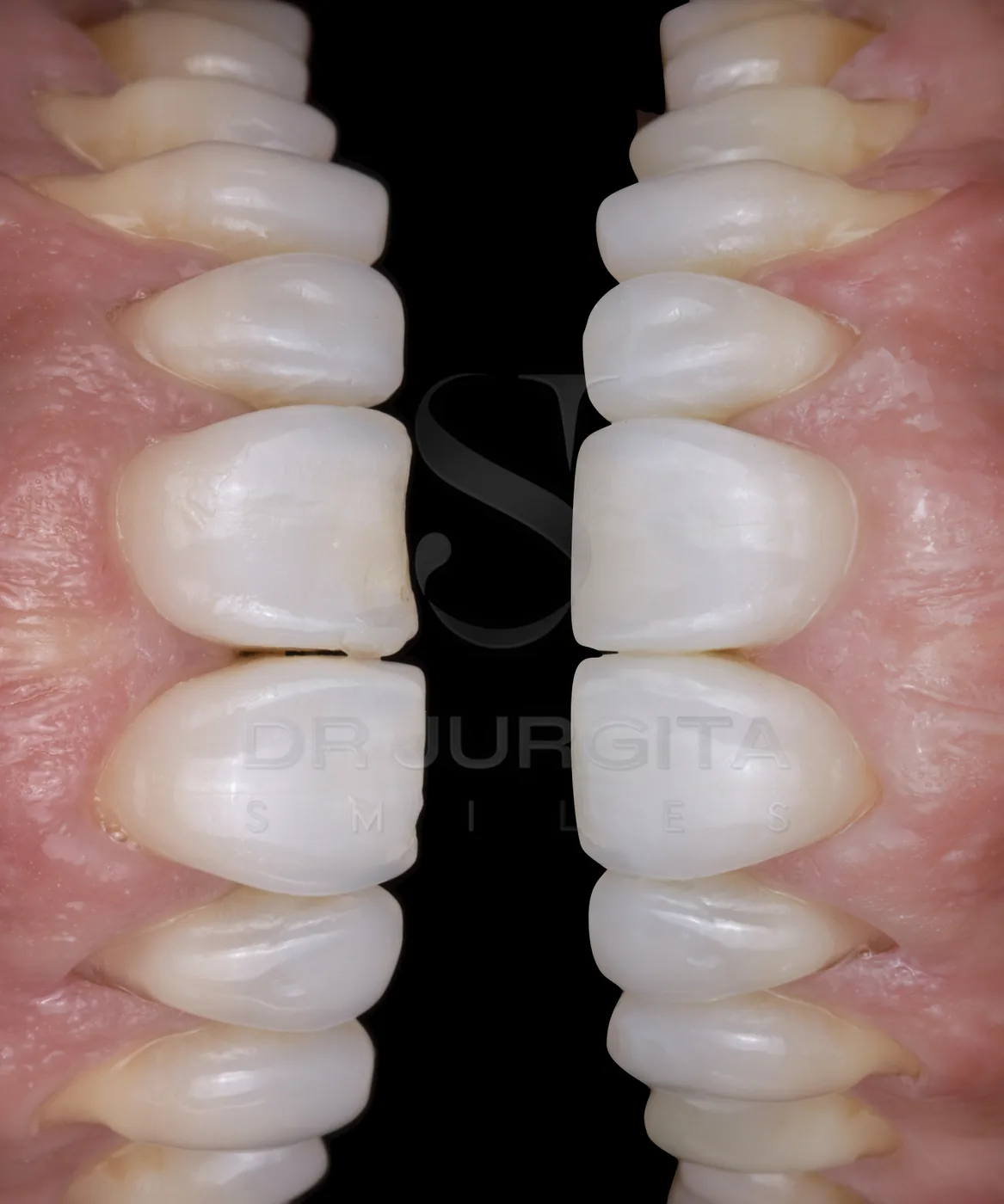
Finished result — restored length, polished surface texture - Back to Composite Bonding
Not sure where you fit?
You don’t have to know which treatment you need — that’s exactly what a consultation or Ask About Your Smile is for.
Treatments in this case
Not sure where you fit?
You don’t have to know which treatment you need — that’s exactly what a consultation or Ask About Your Smile is for.