
Composite Bonding — Reshaping Teeth After Braces
This patient wanted more youthful-looking teeth — rebuilding the wear on the edges that had developed before orthodontics, caused by teeth sitting in the wrong positions — but wanted it to look completely natural, not obviously "done." The tricky part wasn't the aesthetics; it was making sure the new bonding would actually survive. If the bite's functional movements pass directly through a chipped edge, bonding straight over it tends to chip again almost immediately — the forces simply have nowhere else to go.
So the edges weren't the starting point. The functional surfaces were assessed first, and the palatal (inner) surfaces of the teeth received some bonding of their own, shaping controlled, favourable pathways for how the teeth actually meet and move against each other during chewing and biting. Only once those pathways redirected the load away from the vulnerable edges was the minimal, natural-looking edge bonding carried out — protected by design, not by the patient having to be careful with what she eats.
Shared with patient consent. Results are individual to this patient.
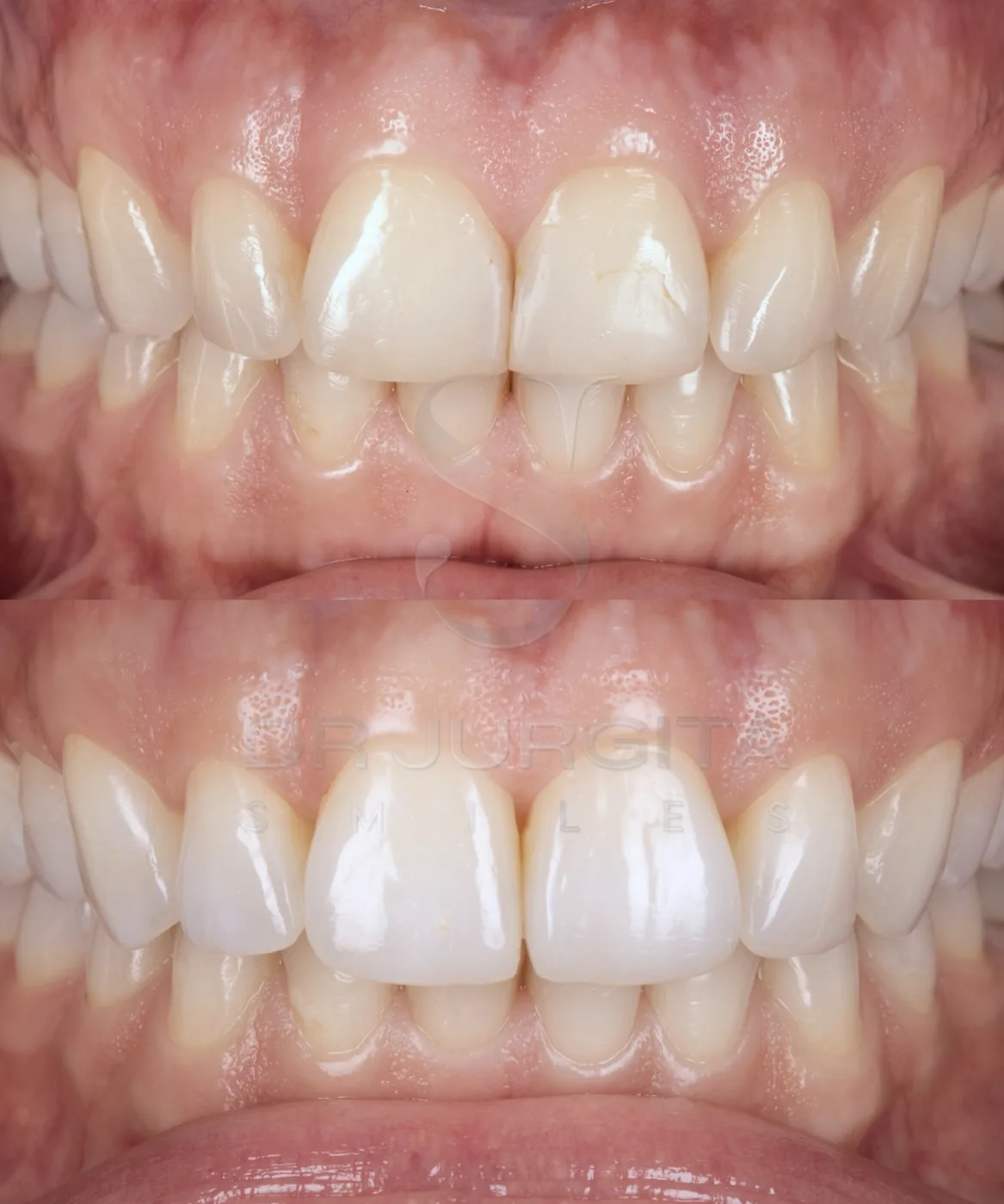
Clinical photos
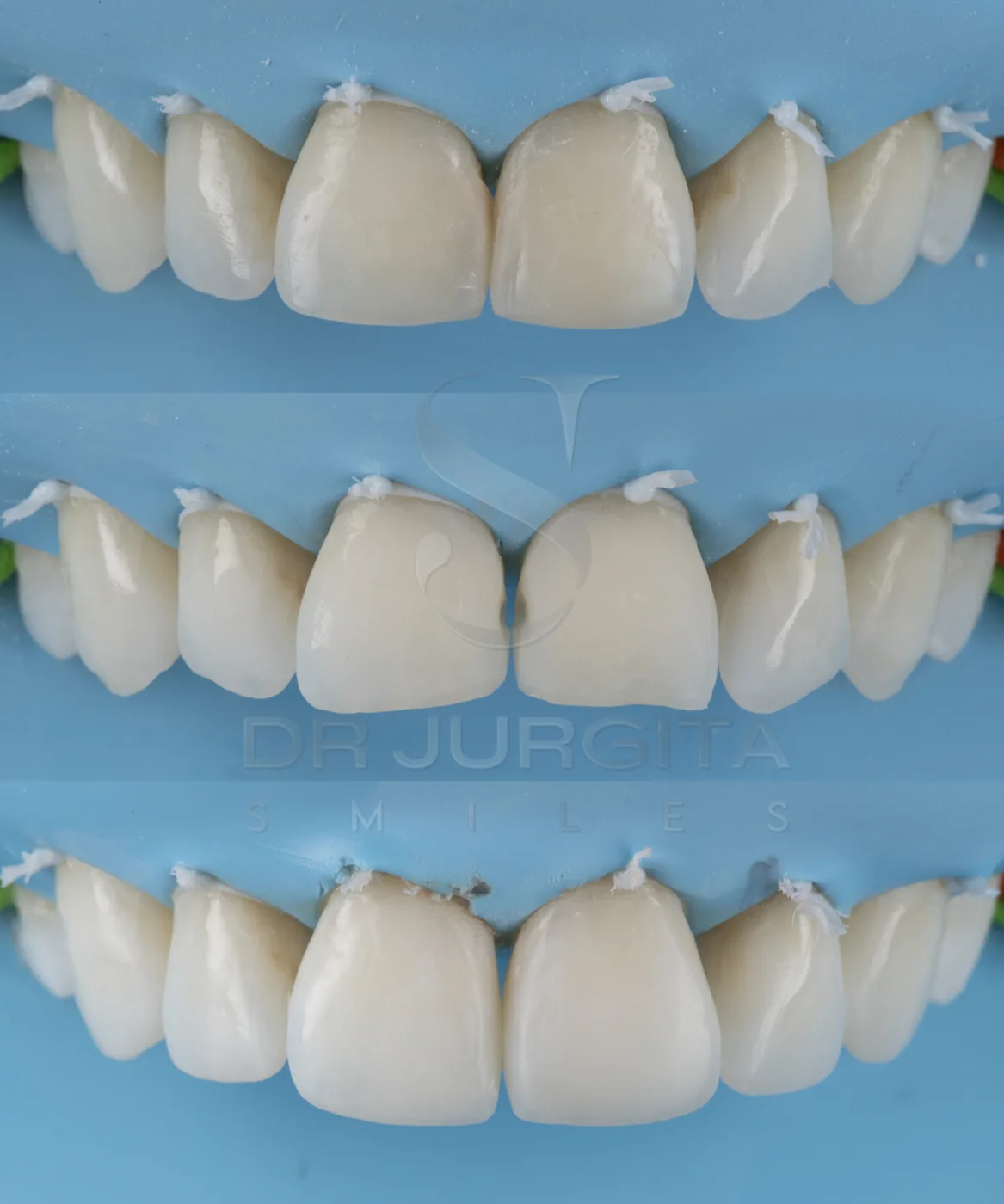
Under rubber dam — edges rebuilt in layers 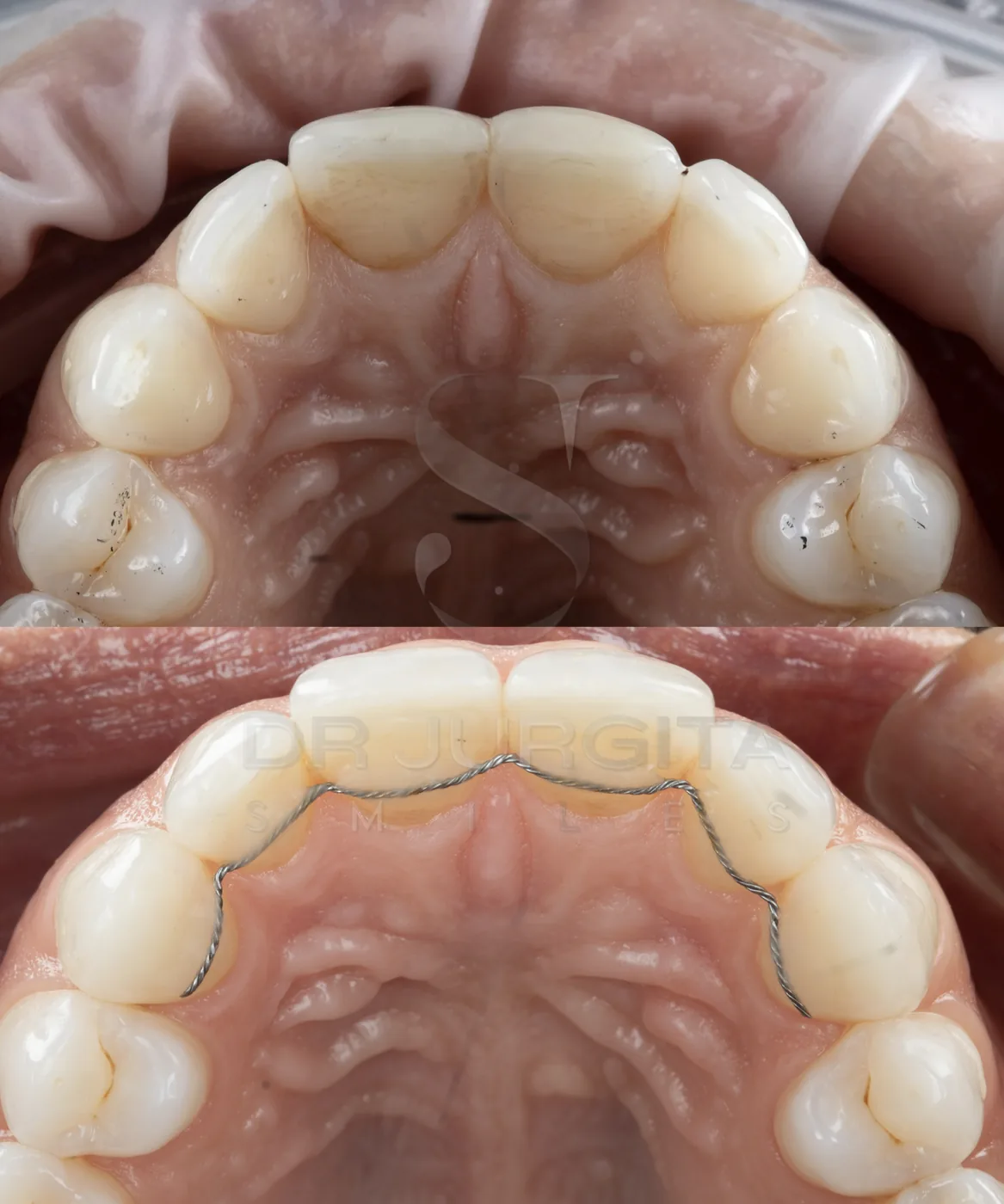
Occlusal view — palatal surfaces and bonded retainer 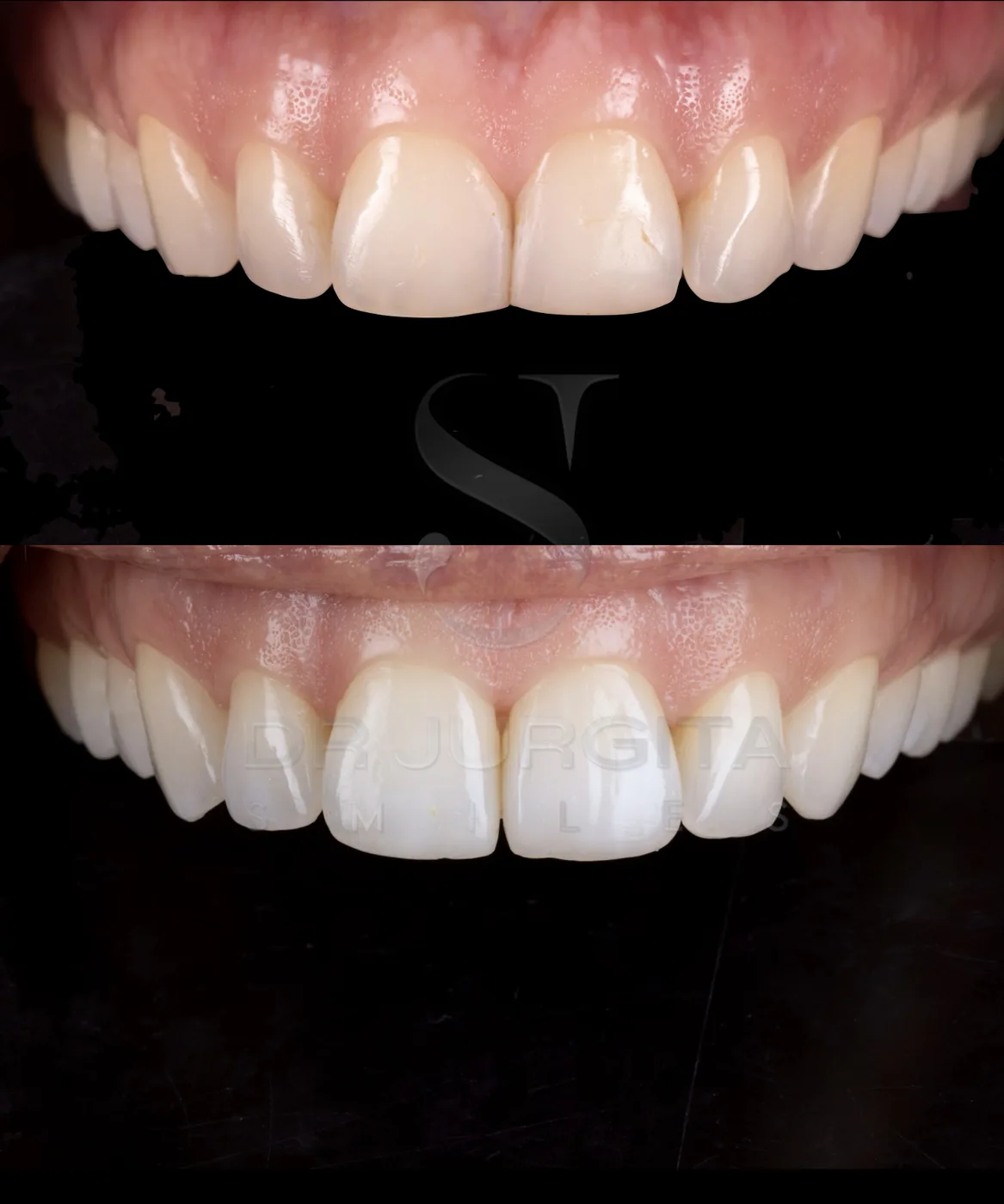
Finished result — even edges, restored length - Back to Composite Bonding
Not sure where you fit?
You don’t have to know which treatment you need — that’s exactly what a consultation or Ask About Your Smile is for.
Treatments in this case
Not sure where you fit?
You don’t have to know which treatment you need — that’s exactly what a consultation or Ask About Your Smile is for.