
Deep Bite & Tooth Wear from Grinding — Full Mouth Rehabilitation (Bruxism)
This patient came in wanting a better-looking smile, but the underlying picture made that a much bigger case than it first appeared: a deep bite, visible tooth wear, a bite that had gradually collapsed, chipping porcelain veneers, and heavy grinding (bruxism) — a combination that makes dental work genuinely unpredictable if it isn't addressed properly. Simply replacing the chipped veneers with a stronger material wouldn't have solved anything; the same mechanical overload that broke the old veneers would go on to break new ones too, and damage the teeth underneath in the process.
So aesthetics came second. The bite had to be opened and the whole mechanics of how the teeth met redesigned first — teeth were built up, brought out of the deep bite, and load was rebalanced so the right teeth carried force at the right moments rather than everything concentrating on a few overworked contacts. This was a joint case: Dr Basil Mizrahi opened the bite and managed the provisional stage, and the final porcelain work was completed once that new bite had proven stable.
Bruxism itself doesn't go away with treatment — once a bruxer, always a bruxer — so the new crowns needed more than a better bite to survive long term. The redesigned occlusion now distributes grinding forces far more favourably across the restorations, and the patient wears a protective nightguard, giving the new work the best realistic chance of lasting.
Shared with patient consent. Results are individual to this patient.
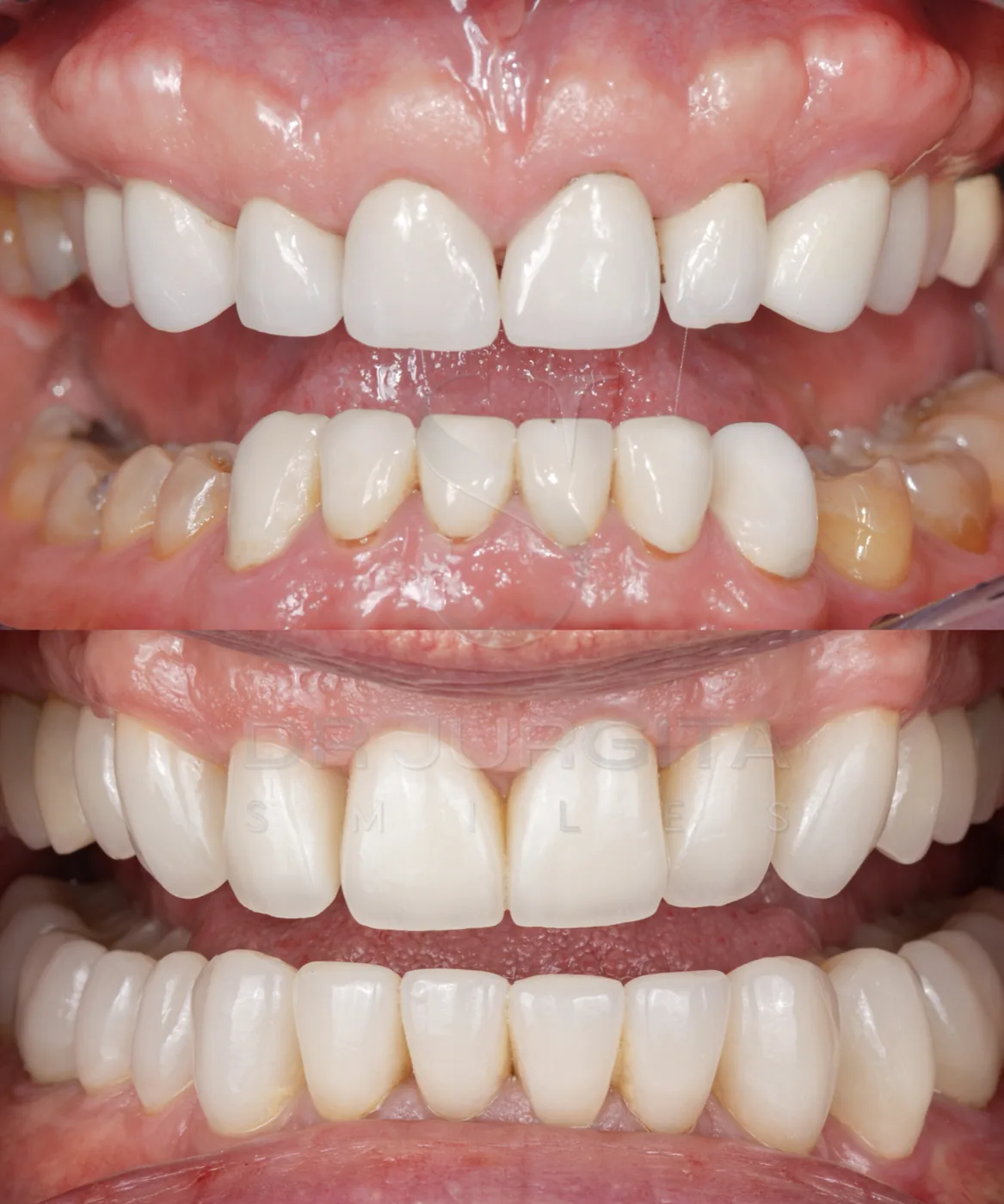
Clinical photos
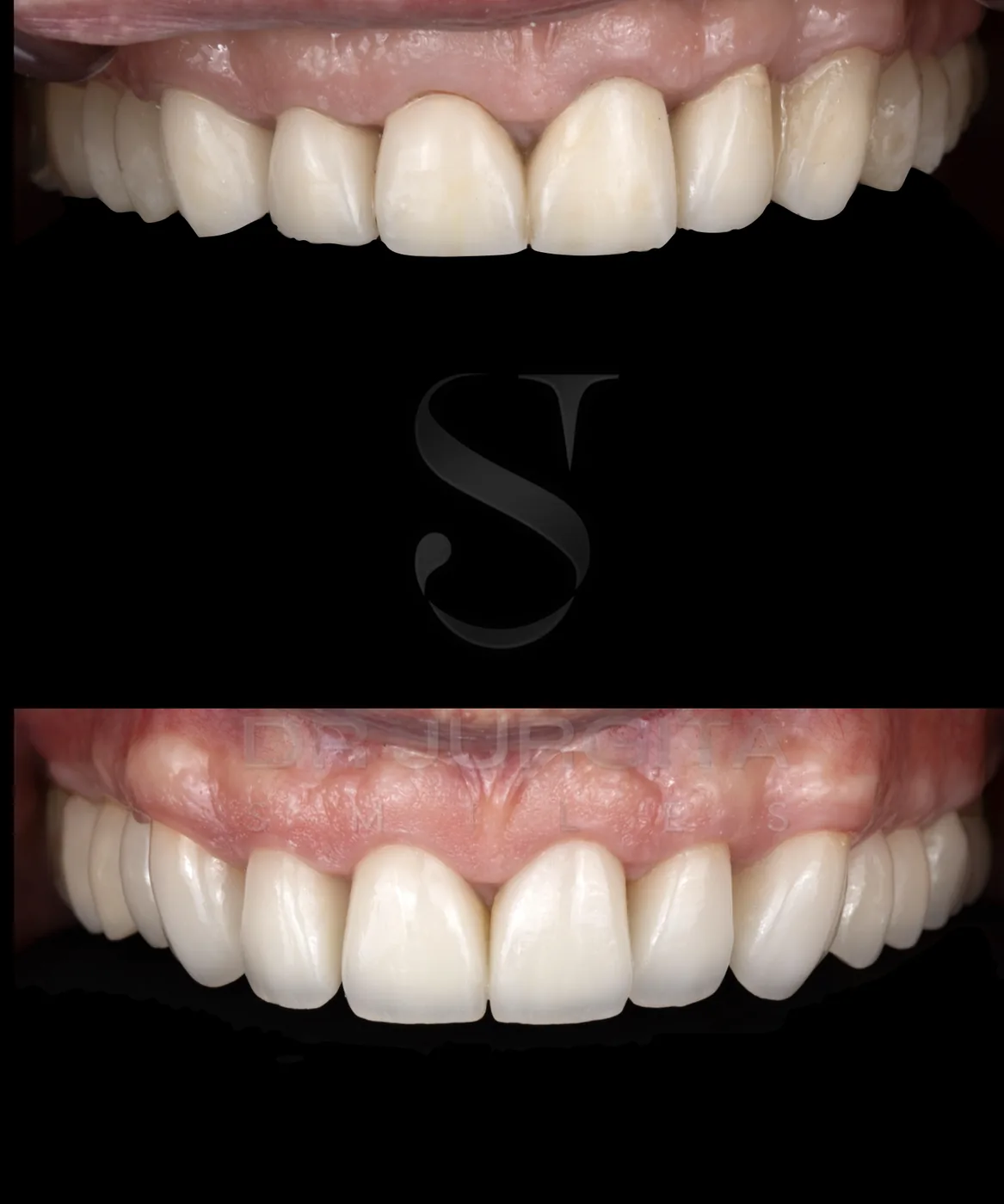
Provisionals by Dr Mizrahi replaced with final porcelain crowns 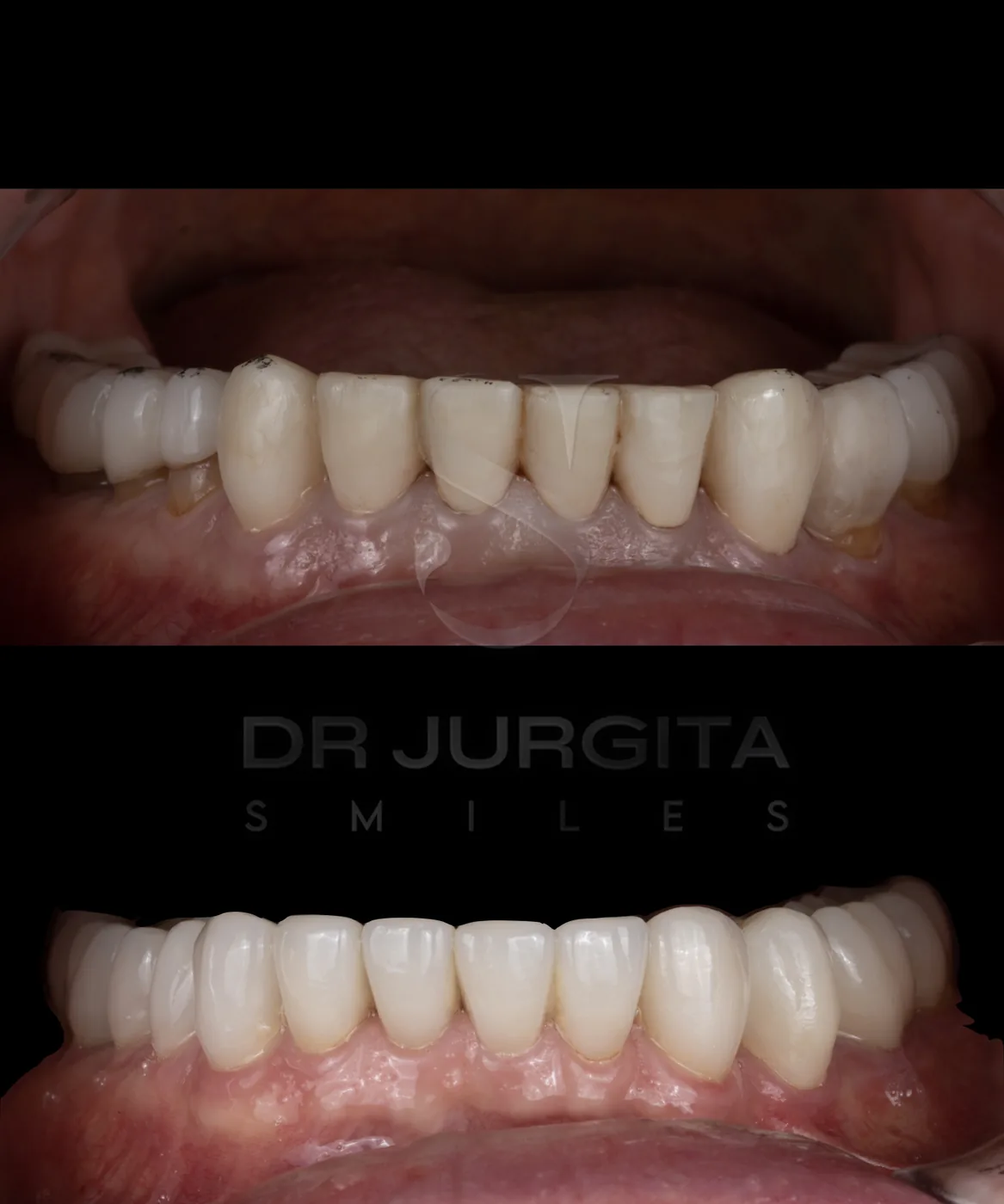
Lower teeth provisionals by Dr Mizrahi replaced by final porcelain work 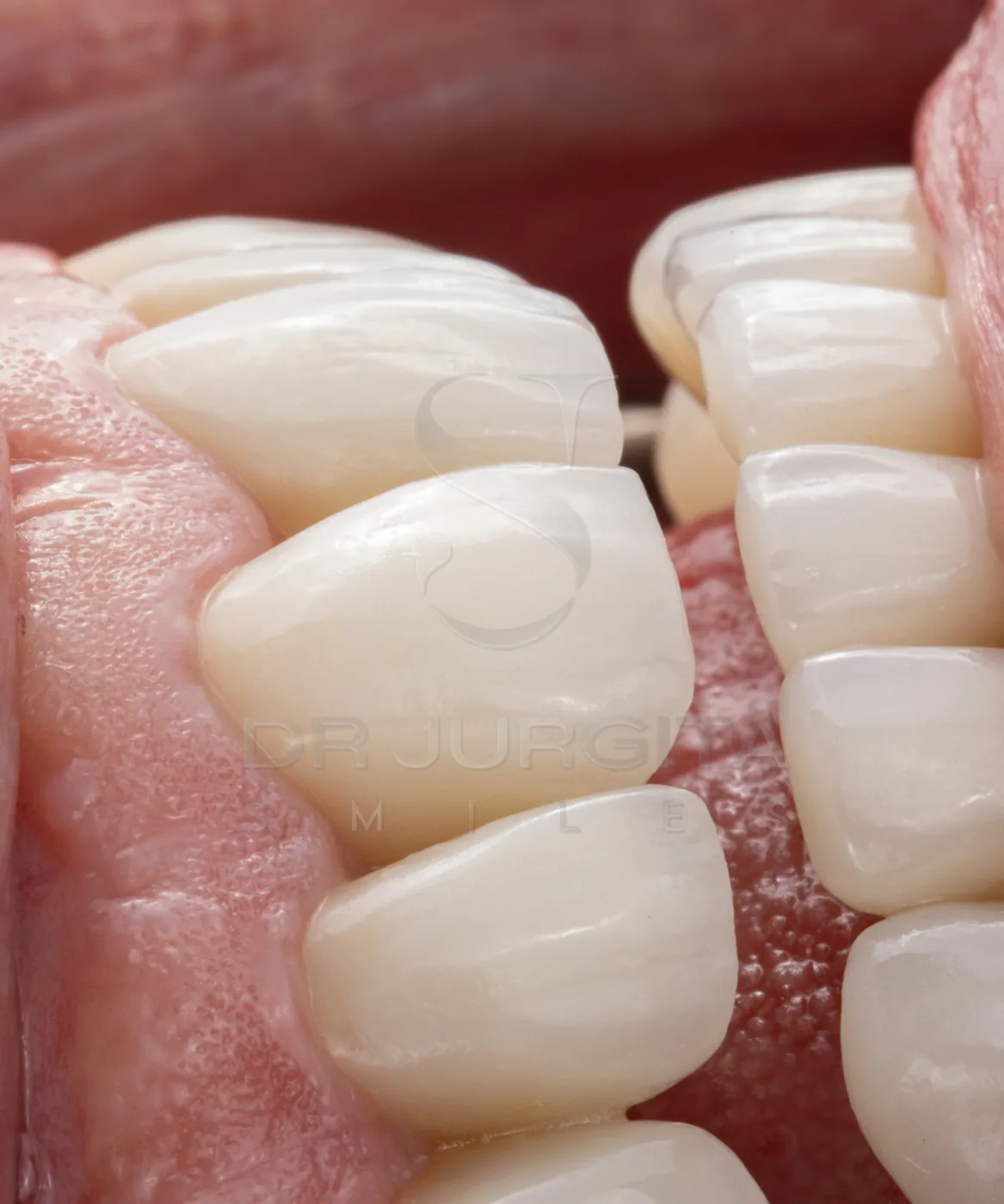
Macro detail — surface texture and translucency of the finished restorations - Back to Porcelain Crowns & Veneers
Not sure where you fit?
You don’t have to know which treatment you need — that’s exactly what a consultation or Ask About Your Smile is for.
Treatments in this case
Not sure where you fit?
You don’t have to know which treatment you need — that’s exactly what a consultation or Ask About Your Smile is for.