
Fixing Bad Veneers — Redone Upper & Lower for a Natural Result
The veneers were recent, and they hadn't gone well: severe pain, gum inflammation, infection, and a result the patient wasn't happy with either aesthetically or in how the bite felt. The cause was identifiable — the veneers had been poorly fitted and cemented, and leftover cement around the margins was triggering an ongoing inflammatory response in the gum.
The first step wasn't redesigning anything — it was removing the veneers, cleaning the teeth thoroughly, and stabilising the situation so the pain and inflammation could actually resolve. New provisionals were placed, and the teeth were monitored over 2 to 4 weeks to see whether the sensitivity would settle on its own or whether the nerve had been damaged beyond recovery, which would mean root canal treatment for that tooth. In this case, no permanent damage had occurred — the original preparations, though aggressive, hadn't exposed the nerve, and because the patient sought help quickly rather than living with failing veneers for months, there wasn't time for reversible sensitivity to become irreversible damage.
Only once everything had settled and the gum had healed did the redesign begin, based on what the patient actually wanted from her smile: natural tooth shapes, but pushed to the brightest end of natural — the bleached, very white look some patients want, without losing the natural form of the teeth themselves.
Shared with patient consent. Results are individual to this patient.
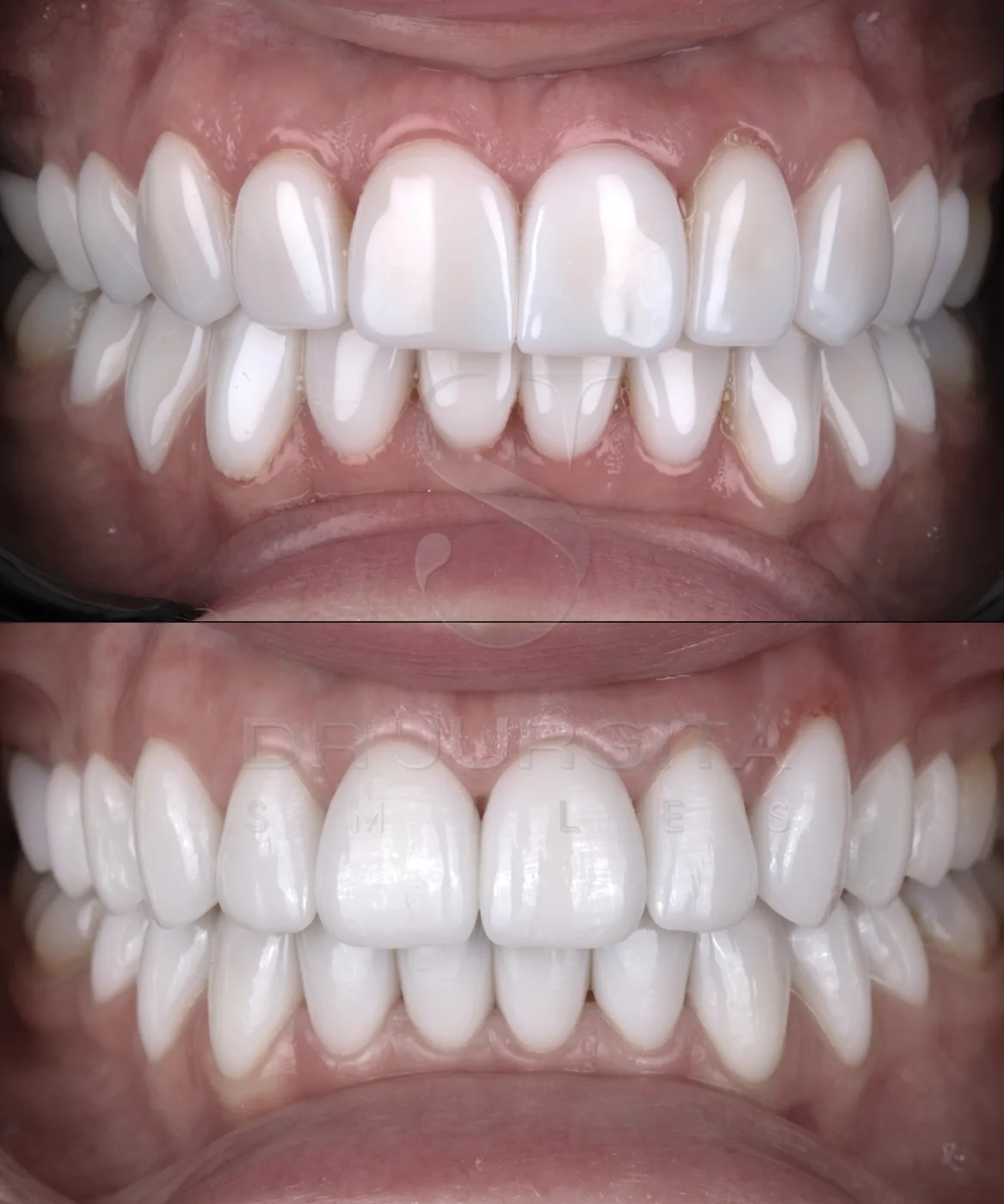
Clinical photos
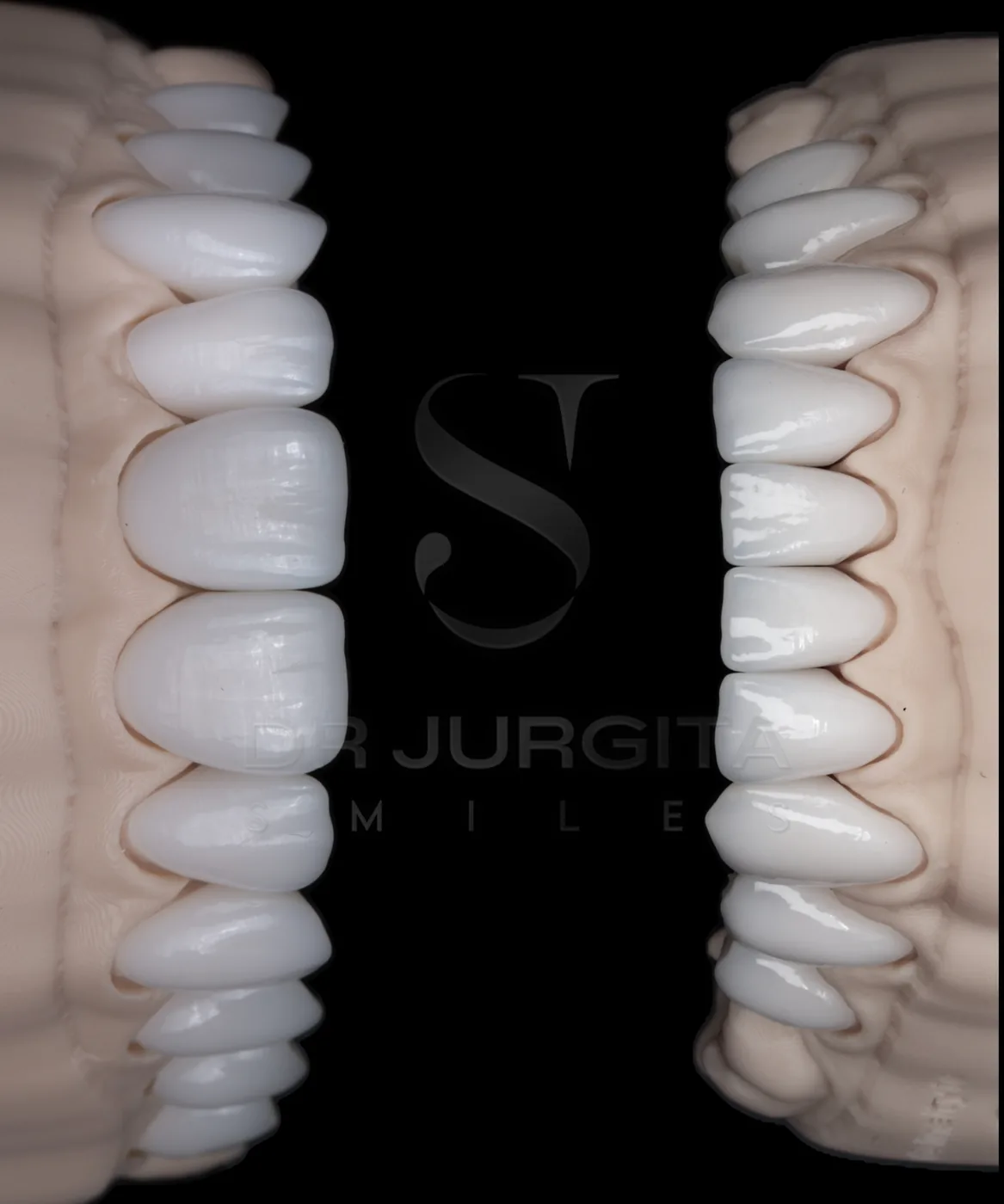
Laboratory model — the new veneers seated before fitting 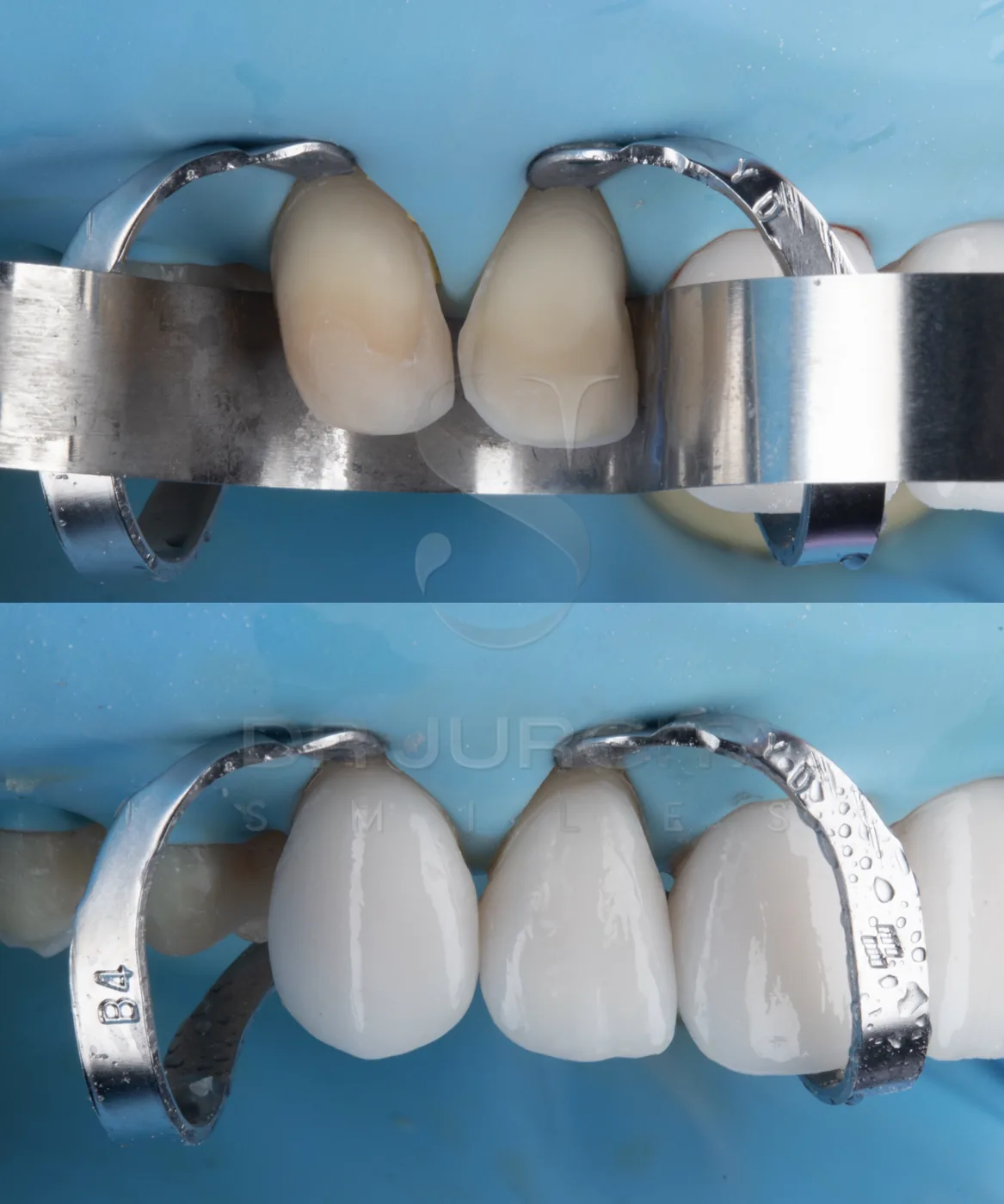
Cementation of veneers under rubber dam 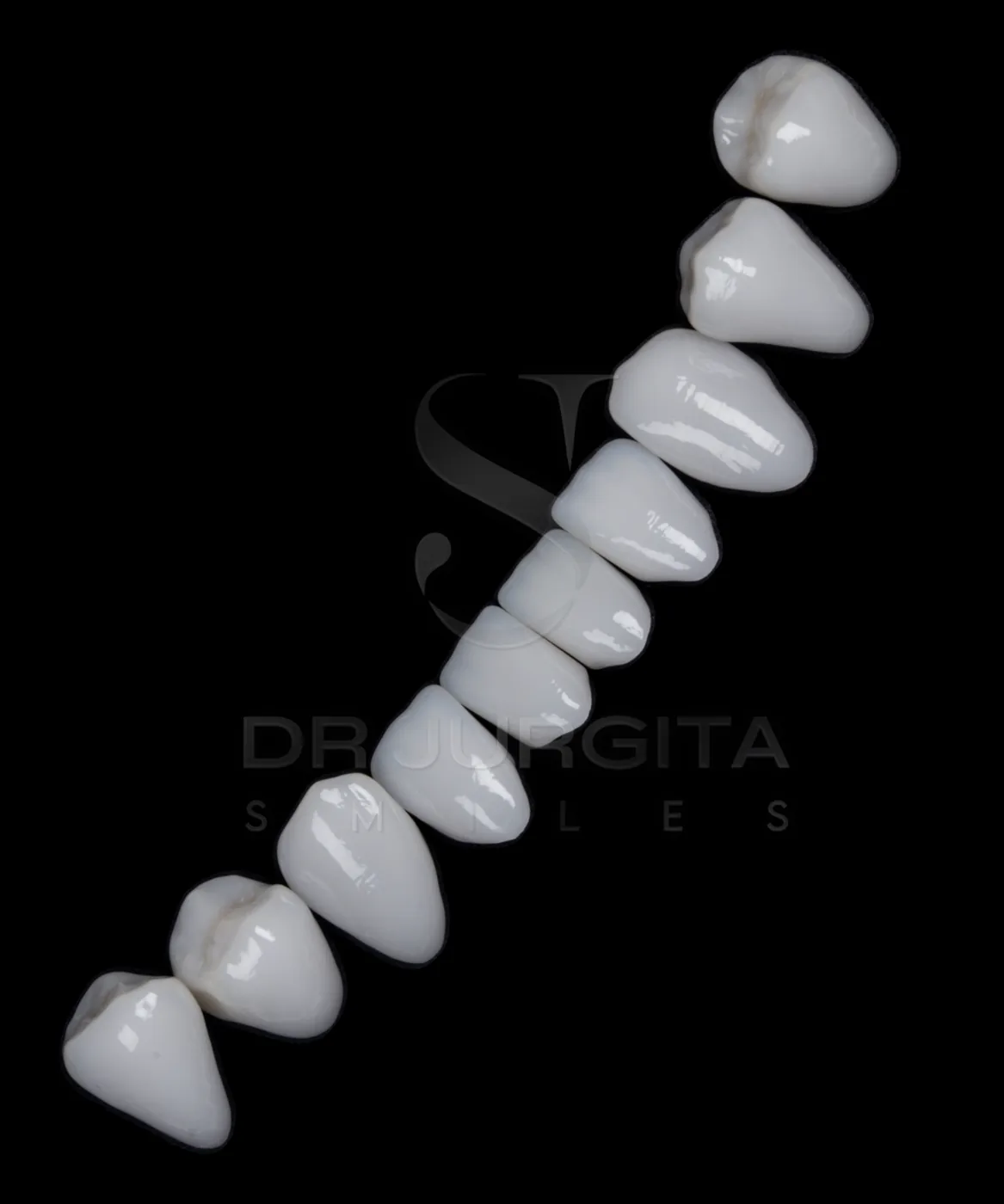
Veneers and onlays before cementation - Back to Porcelain Crowns & Veneers
Not sure where you fit?
You don’t have to know which treatment you need — that’s exactly what a consultation or Ask About Your Smile is for.
Treatments in this case
- Porcelain veneers·from £1,500
- Gum contouring · Fees discussed at consultation
Not sure where you fit?
You don’t have to know which treatment you need — that’s exactly what a consultation or Ask About Your Smile is for.