
Minimal Composite Bonding to Close Gaps After Braces
This patient had deferred bonding after her orthodontic treatment, worried it would change the shape and character of her teeth — a fair concern, since bonding can be used to deliberately reshape teeth. But some cases call for the opposite skill: adding material without altering the underlying shape or character at all, which is harder to do well and needs real precision from whoever's placing it.
Here, orthodontics had deliberately opened small spaces between her naturally small teeth, creating the room needed to build up proportions later with bonding. Composite was added to six upper front teeth, but only to close those gaps — nothing about the shape or character of her smile was changed, and the amount of material used was kept minimal throughout.
Composite bonding does wear over time; the material thins slightly, though not enough to let the gaps reopen. What it does need is yearly polishing — to keep the join between tooth and composite invisible, and to keep the material's surface glossy rather than dulling and becoming noticeable.
Shared with patient consent. Results are individual to this patient.
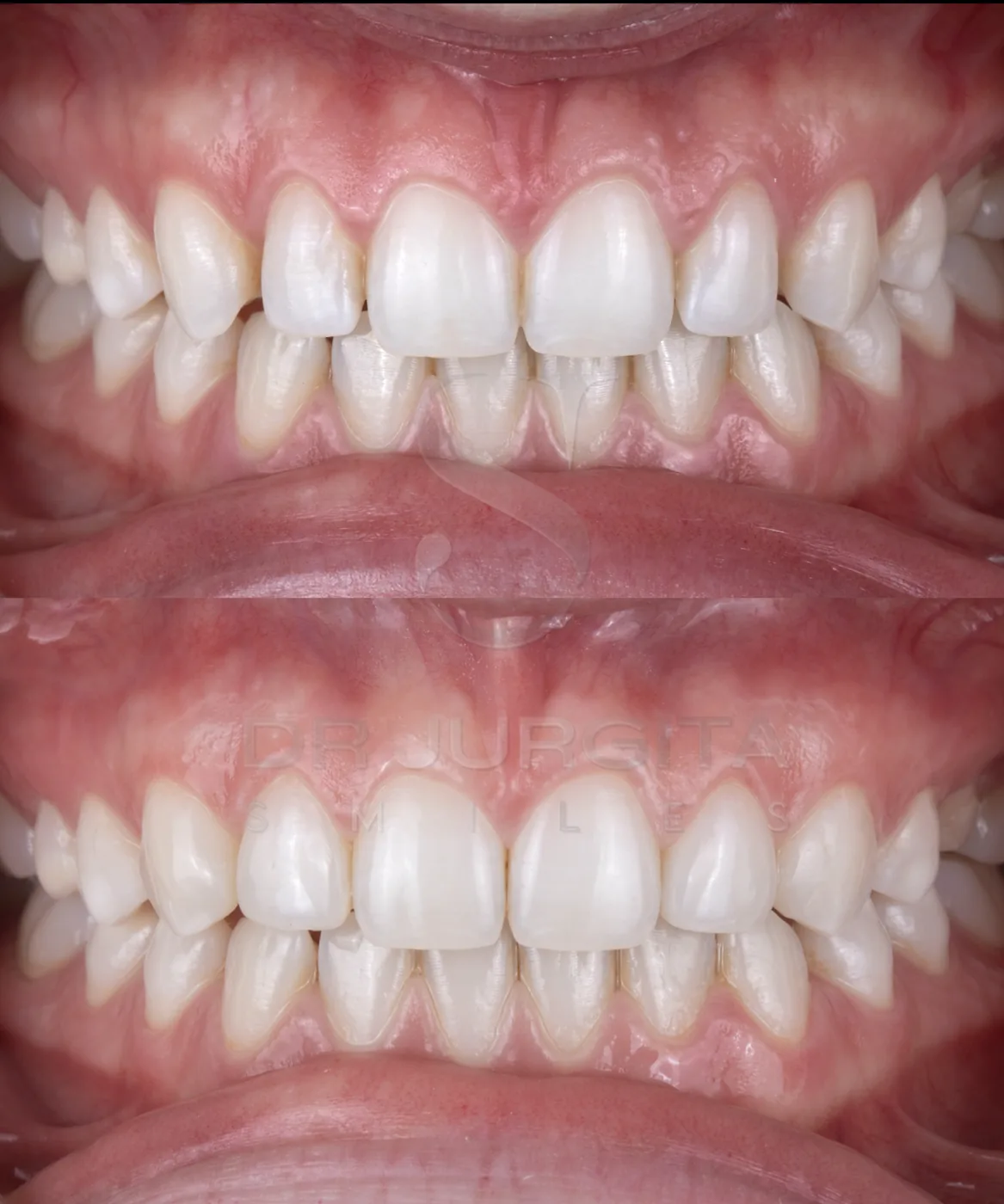
Clinical photos
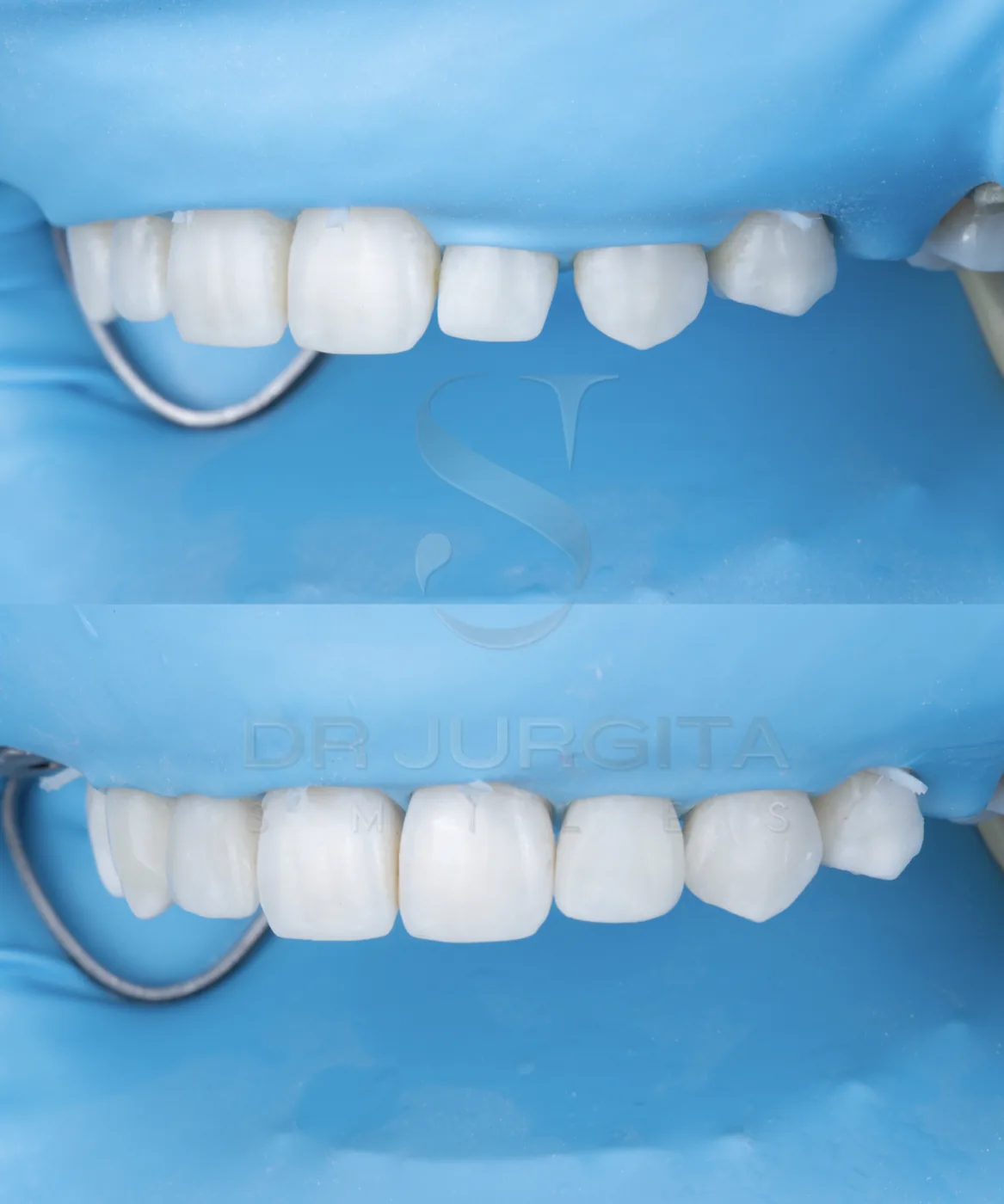
Under rubber dam — before and after gap closure 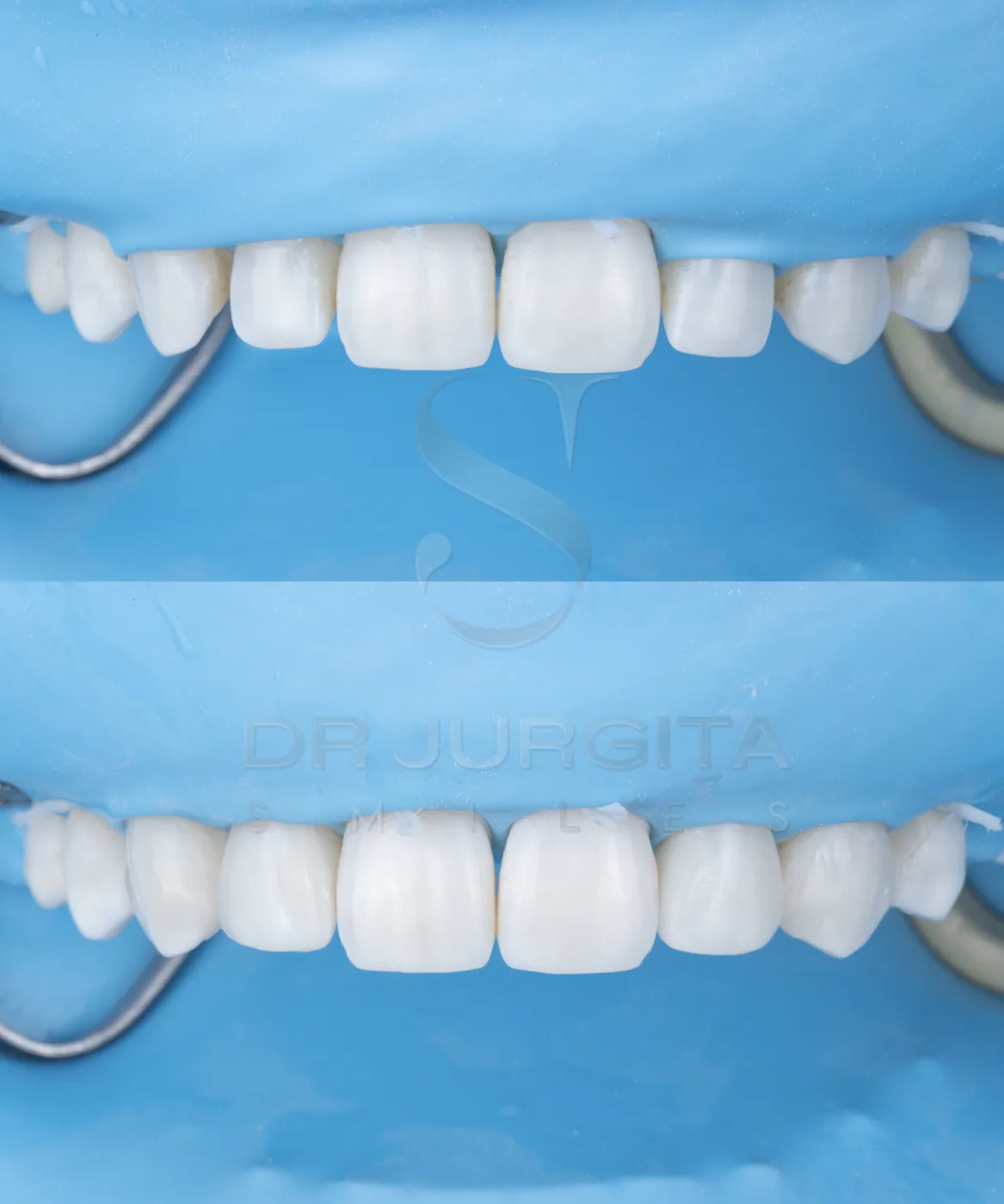
Widths and contact points refined 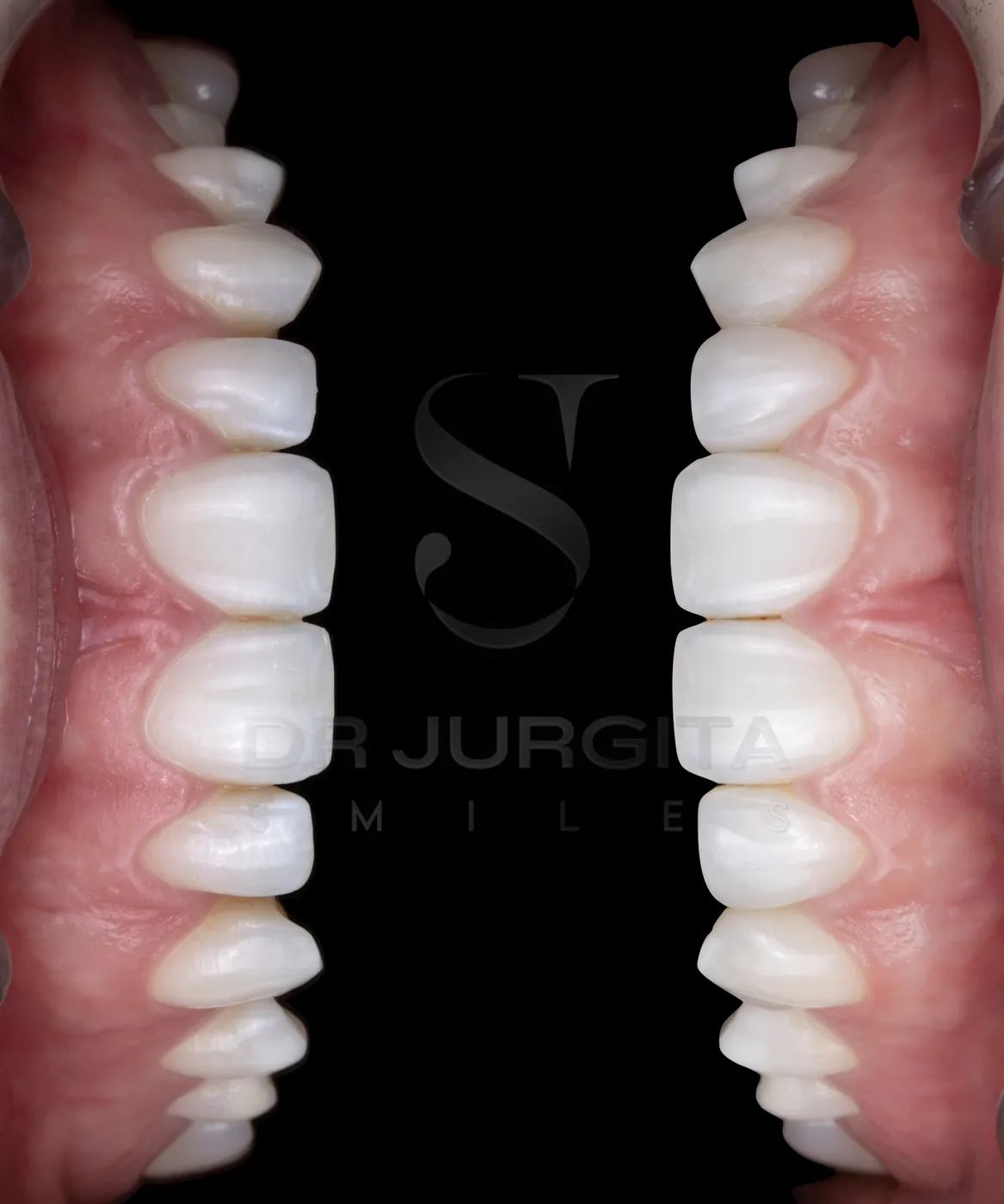
Polished finish and restored smile line - Back to Orthodontic-Restorative Cases
Not sure where you fit?
You don’t have to know which treatment you need — that’s exactly what a consultation or Ask About Your Smile is for.
Treatments in this case
- Composite bonding·from £300
- Gaps & missing teeth · Fees discussed at consultation
Not sure where you fit?
You don’t have to know which treatment you need — that’s exactly what a consultation or Ask About Your Smile is for.