
Invisalign, Gum Contouring & Bonding
This case combined a deep bite with misalignment, both resolved through Invisalign. Before straightening, the specific way the bite was closing had caused significant wear on the two central incisors — the teeth were taking uneven load with every bite, and that wear needed addressing once the teeth were in their corrected position. Composite bonding was used to rebuild that wear, and old fillings in the same teeth were replaced at the same time.
The other issue was gum-related rather than tooth-related: the gum tissue hadn't fully receded away from the enamel as it normally should during eruption, leaving more gum visible than expected and covering a noticeable part of the crowns — making the front teeth look shorter than they actually are. Gum contouring corrected this, exposing the full, natural crown length and bringing the gum line into proportion with the rest of the smile.
Together, the alignment, the bite-related wear, and the gum coverage were all part of the same underlying picture, and addressing all three gave a result that's balanced in bite, tooth shape and gum line alike.
Shared with patient consent. Results are individual to this patient.
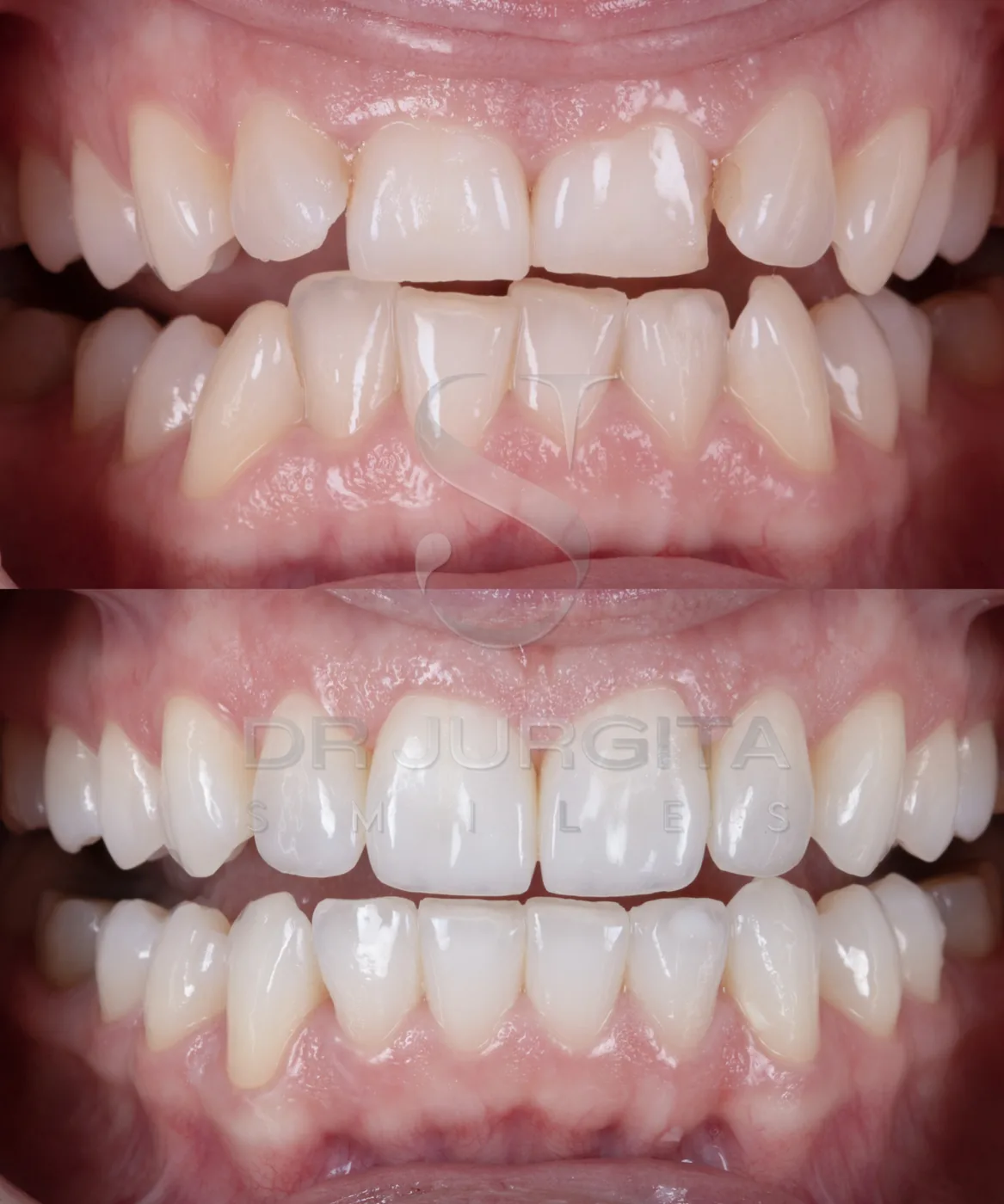
Clinical photos
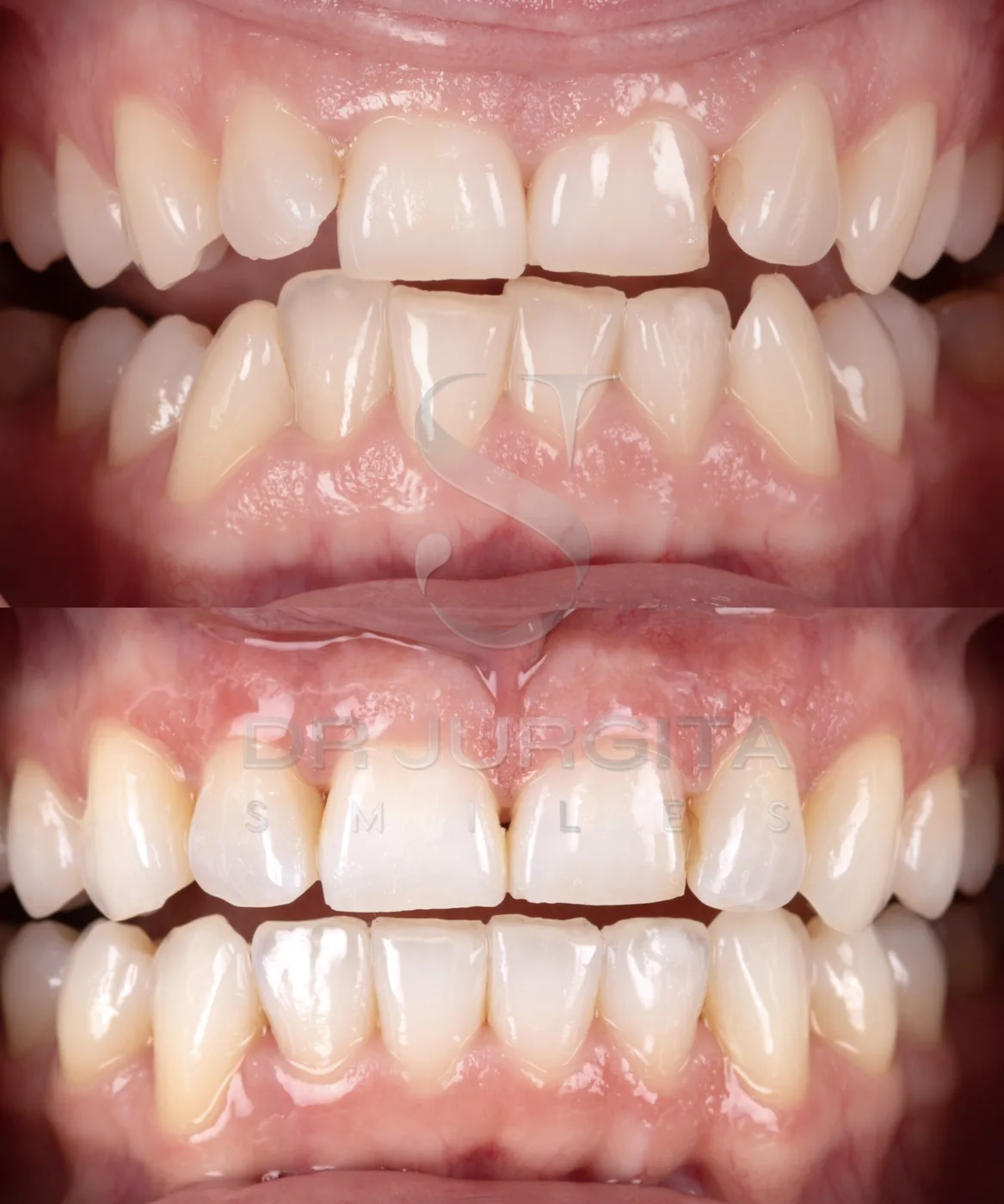
Retracted views — uneven edges and gum levels before, balanced result after 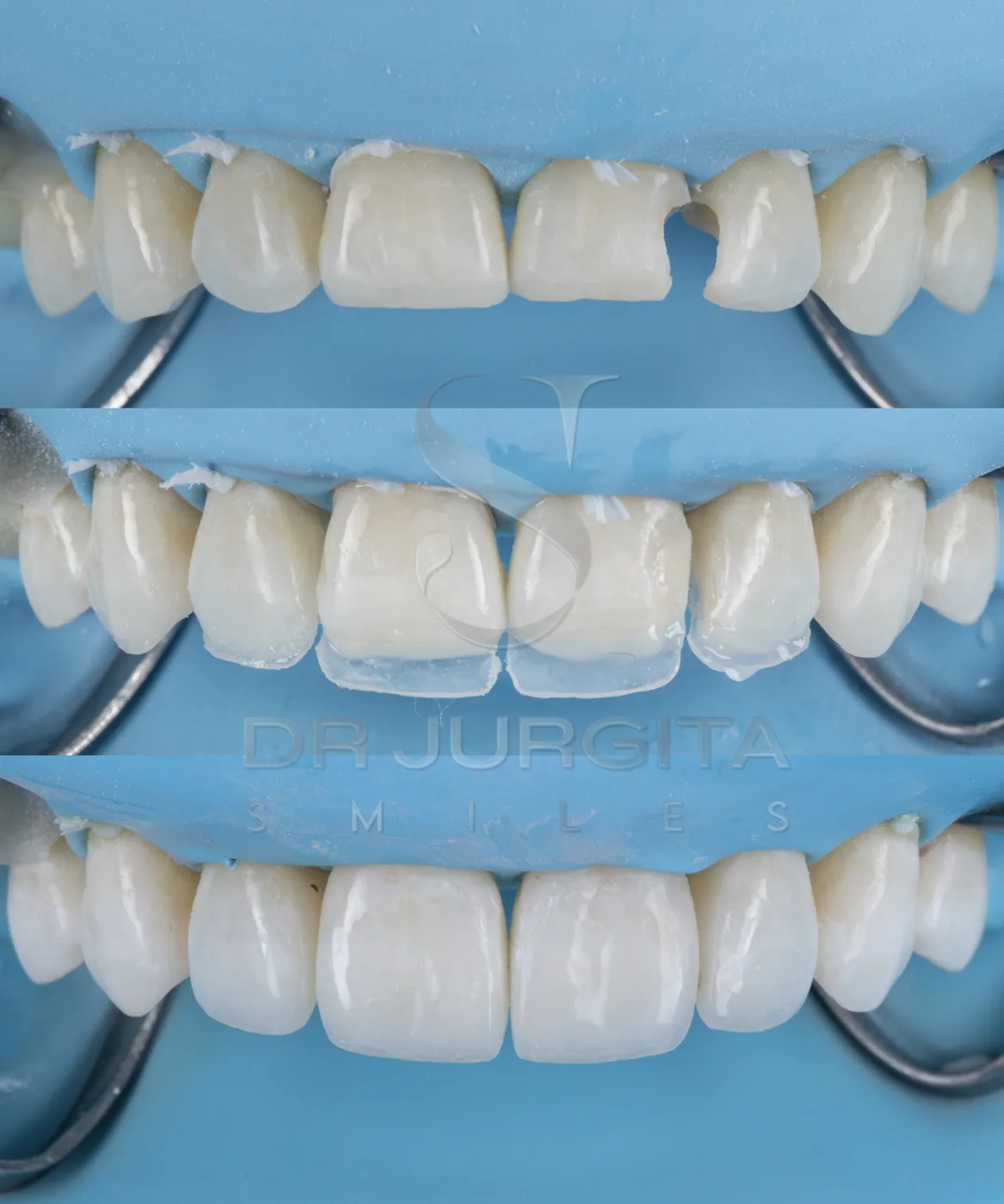
Under rubber dam — composite layered and shaped tooth by tooth 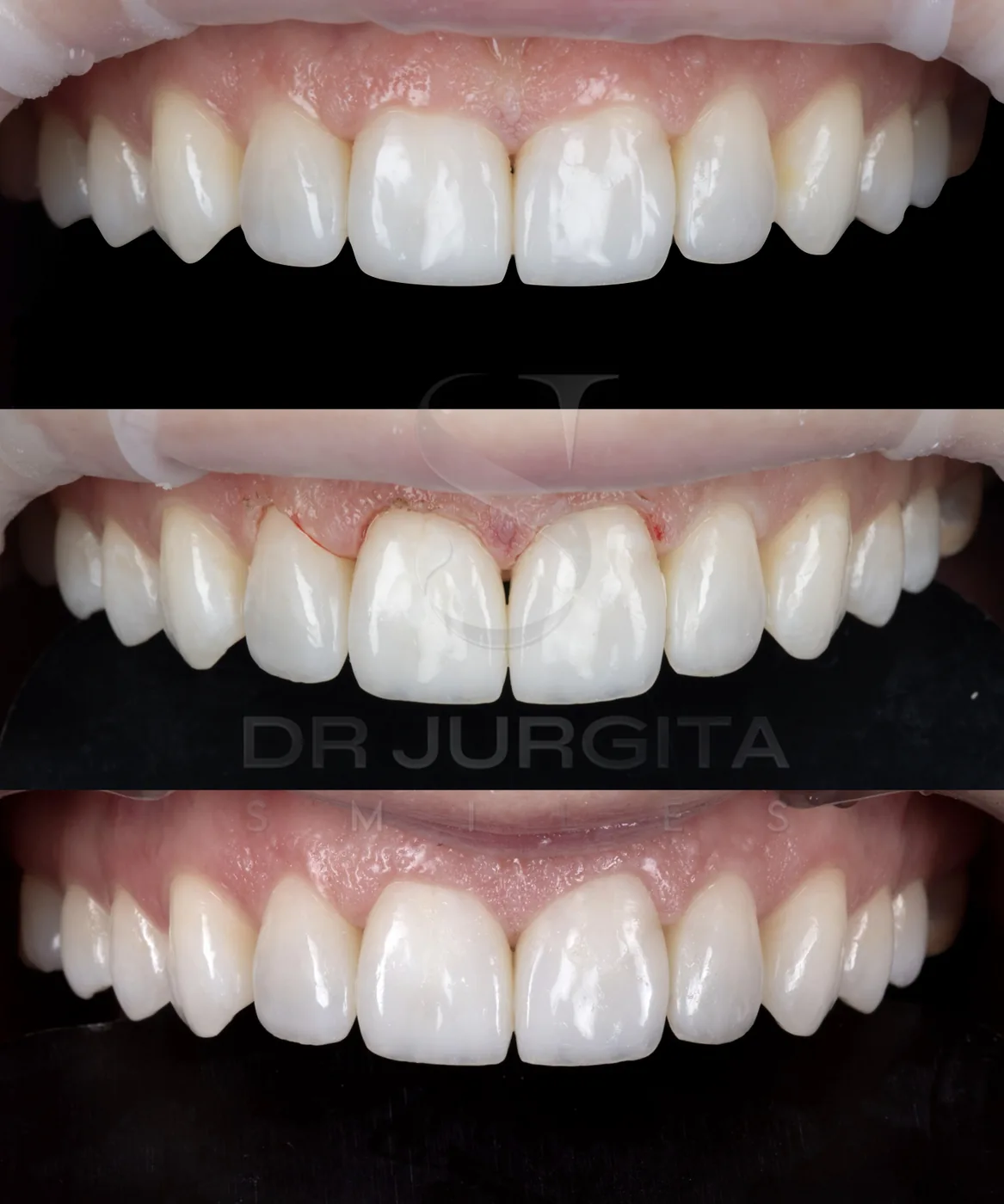
Final result — refined proportions sitting cleanly against the new gum line - Back to Orthodontic-Restorative Cases
Not sure where you fit?
You don’t have to know which treatment you need — that’s exactly what a consultation or Ask About Your Smile is for.
Treatments in this case
- Composite bonding·from £300
- Invisalign·from £3,800
- Gum contouring · Fees discussed at consultation
- Teeth whitening·from £550
Not sure where you fit?
You don’t have to know which treatment you need — that’s exactly what a consultation or Ask About Your Smile is for.