
Invisalign, ICON & Bonding — White Spot Treatment
Significant crowding had created a difficult cycle: crowded teeth are harder to keep clean properly, and teeth the patient isn't proud of are teeth that are easy to stop caring for. Over time, that combination — poor hygiene access plus disliking the smile in the mirror — had let the underlying health of the teeth slide.
Treatment started with health, not appearance. Fillings, root canals, and porcelain onlays and crowns were used where needed to properly stabilise the teeth that had been compromised. Only once that foundation was solid did treatment move on to the crowding itself, using Invisalign to bring the teeth into proper alignment.
With the teeth healthy and aligned, the finishing steps focused on the smile itself: whitening to brighten the overall shade, ICON to reduce the white spots that remained, and composite bonding to complete and refine the result. The outcome isn't just a smile that looks good — it's one built on solid foundations, which is exactly the kind of smile a patient is more likely to want to keep looking after.
Shared with patient consent. Results are individual to this patient.
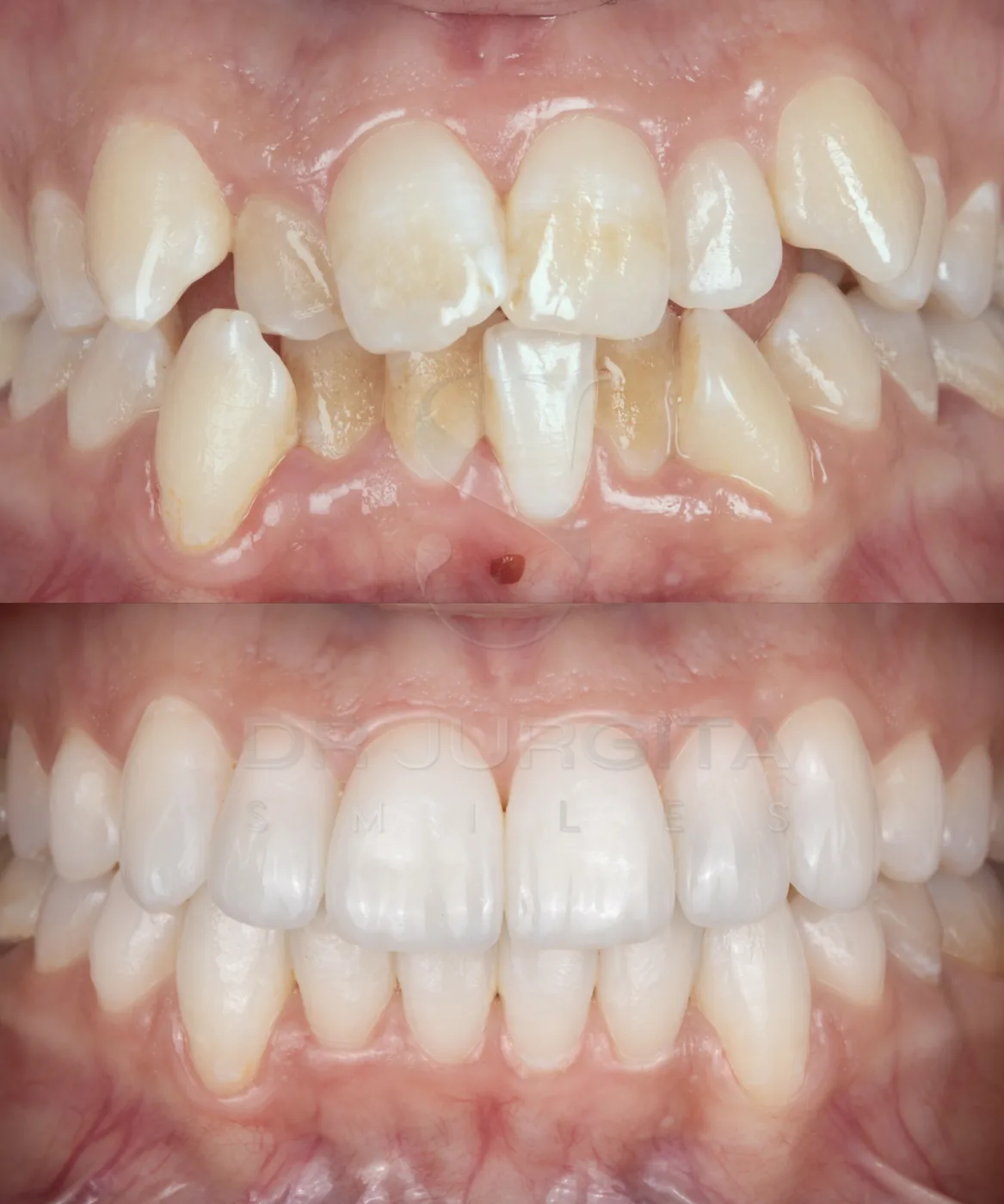
Clinical photos
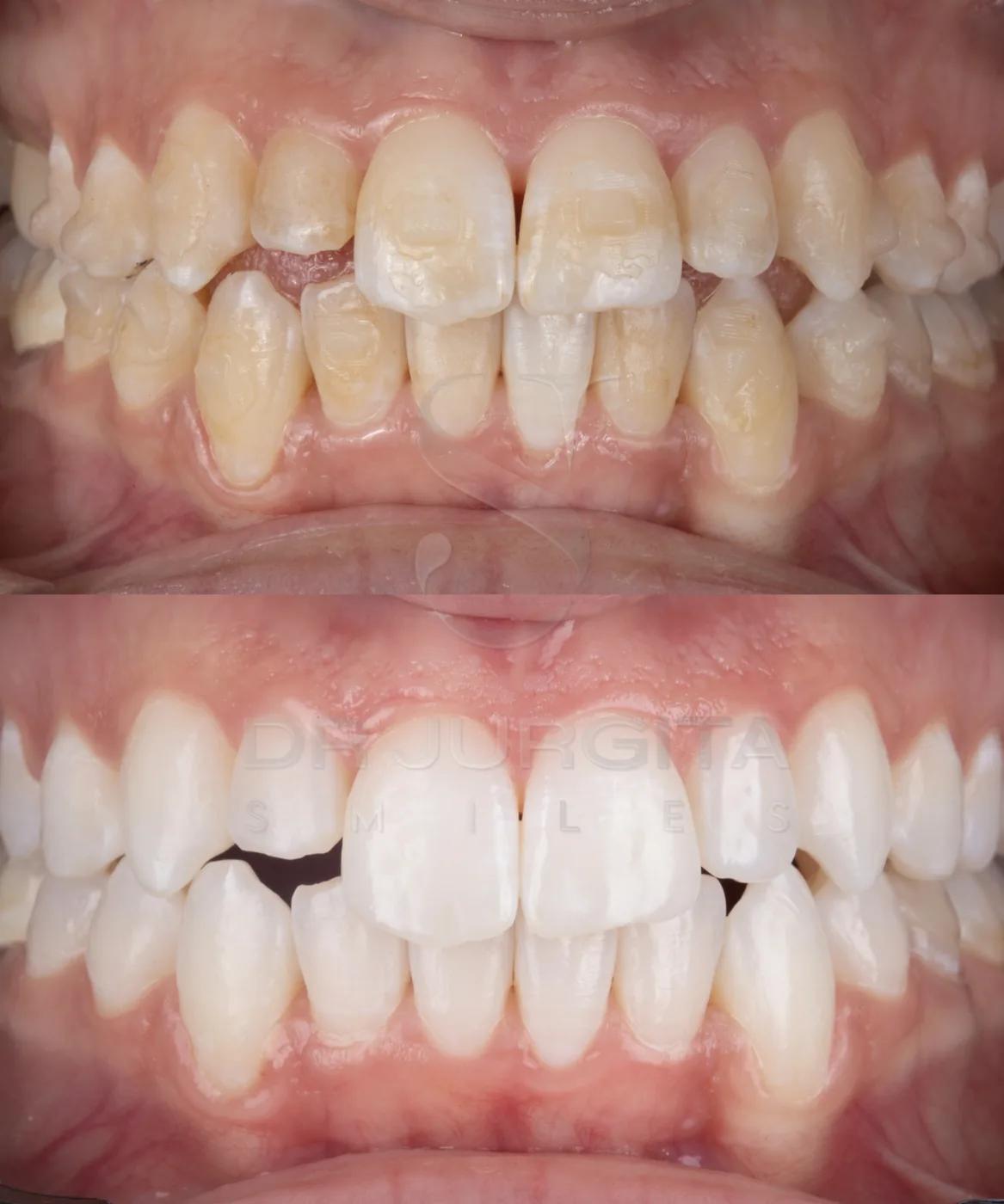
Retracted views — after Invisalign alignment, before enamel treatment 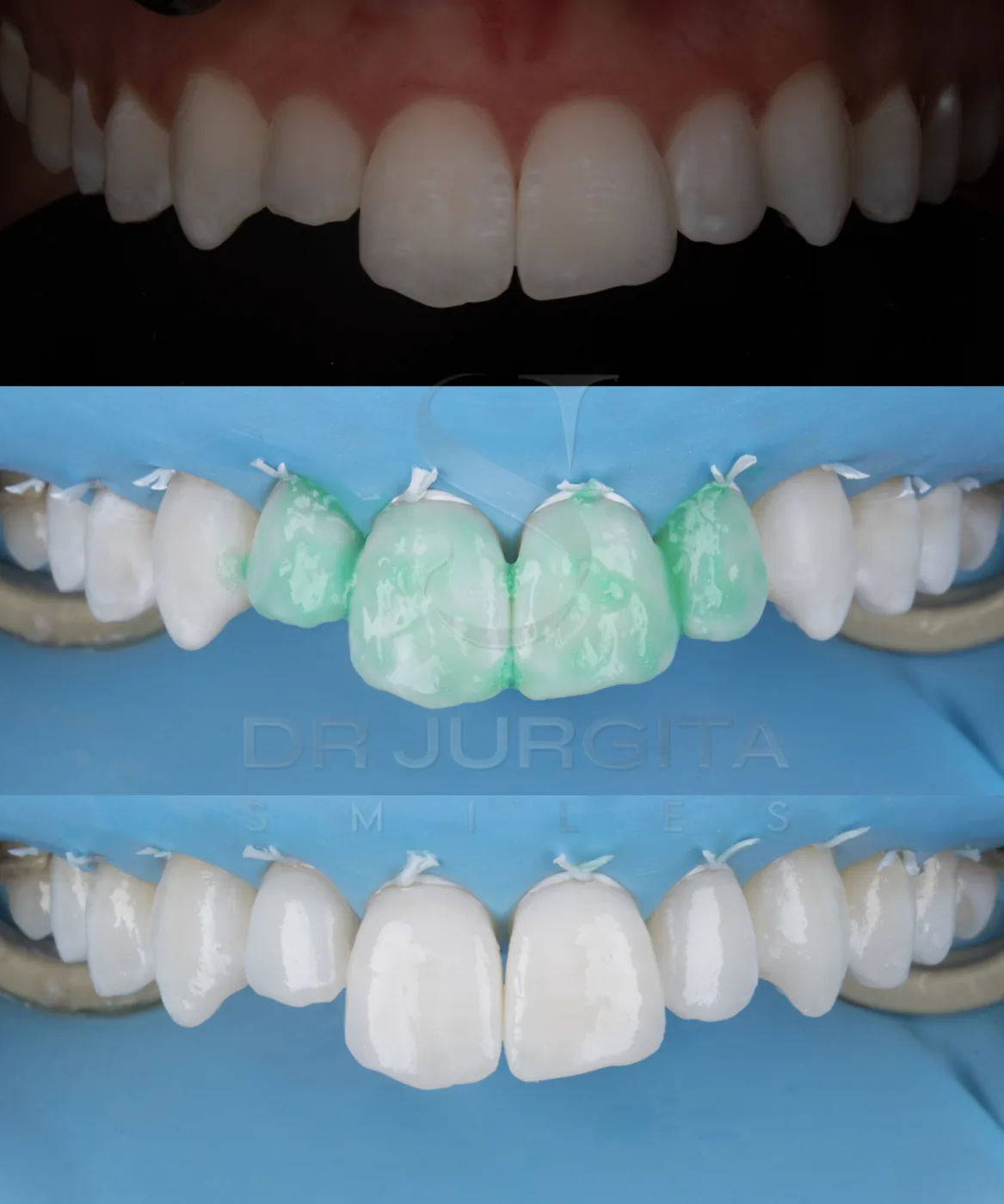
ICON resin infiltration — etch applied, white spot lesions treated without drilling 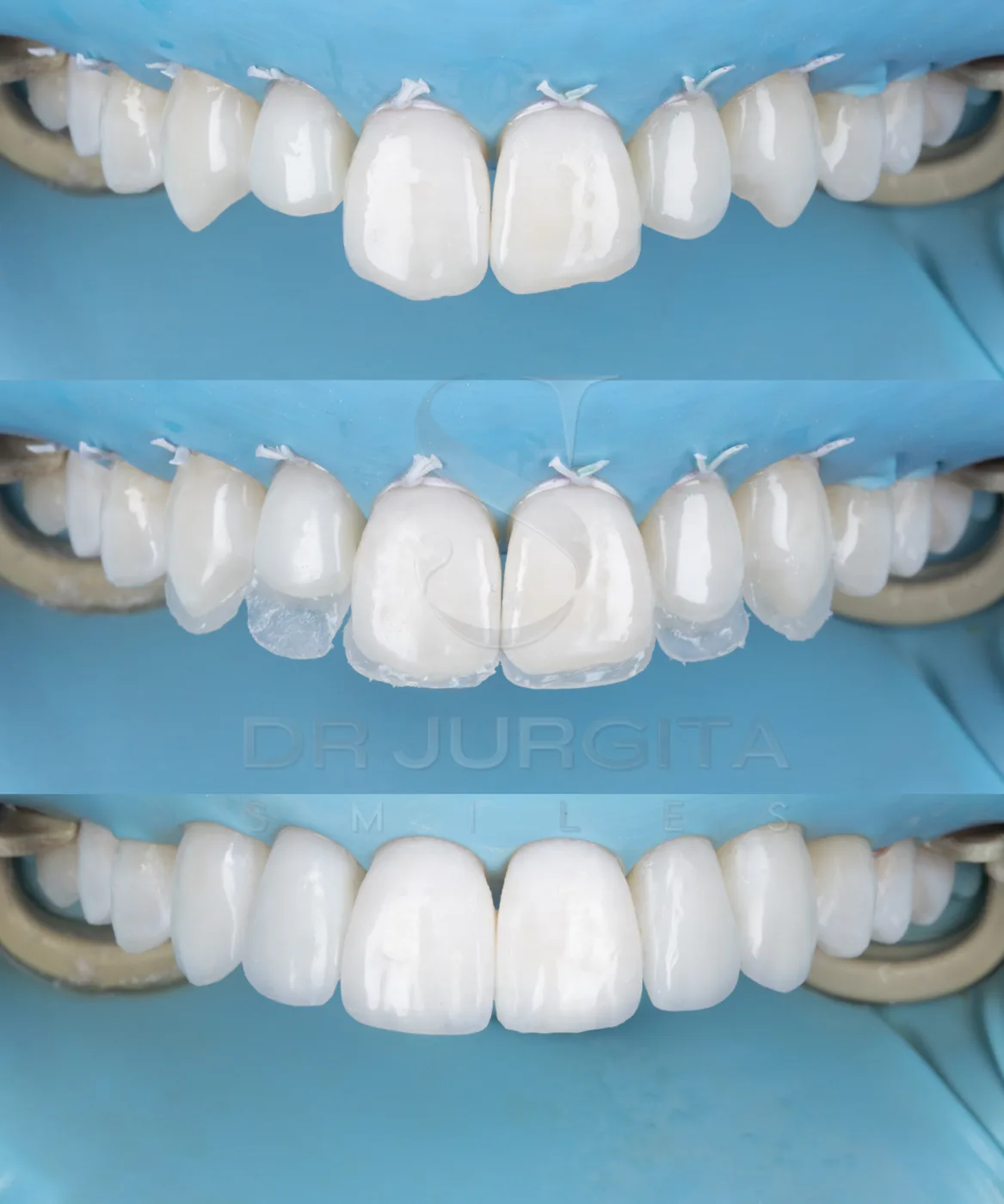
Minimal composite bonding — edges and shape refined, then polished - Back to Orthodontic-Restorative Cases
Not sure where you fit?
You don’t have to know which treatment you need — that’s exactly what a consultation or Ask About Your Smile is for.
Treatments in this case
Not sure where you fit?
You don’t have to know which treatment you need — that’s exactly what a consultation or Ask About Your Smile is for.