
Invisible Chip Repair — Composite Bonding
Young, natural teeth often have a lot of character: subtle texture across the surface, translucency at the edges, a soft opalescent quality, and mamelons — the gentle scalloped ridges along the biting edge that are typical of youthful teeth. All of this makes even a small chip surprisingly difficult to repair invisibly, because the available space to work with is tiny, yet the material has to recreate every one of those traits at once. There's no margin for error.
Despite the size of the defect, a chip like this can still be made to disappear completely with careful, skilled layering — matching not just the colour, but the texture, translucency and shape of the surrounding tooth so the repair blends in rather than standing out.
Just as important is restraint: only the chipped area itself was treated, without extending onto healthy tooth structure to "hide" the fracture. The result is a repair that's invisible not because more was covered up, but because exactly the right amount was added in exactly the right place.
Shared with patient consent. Results are individual to this patient.
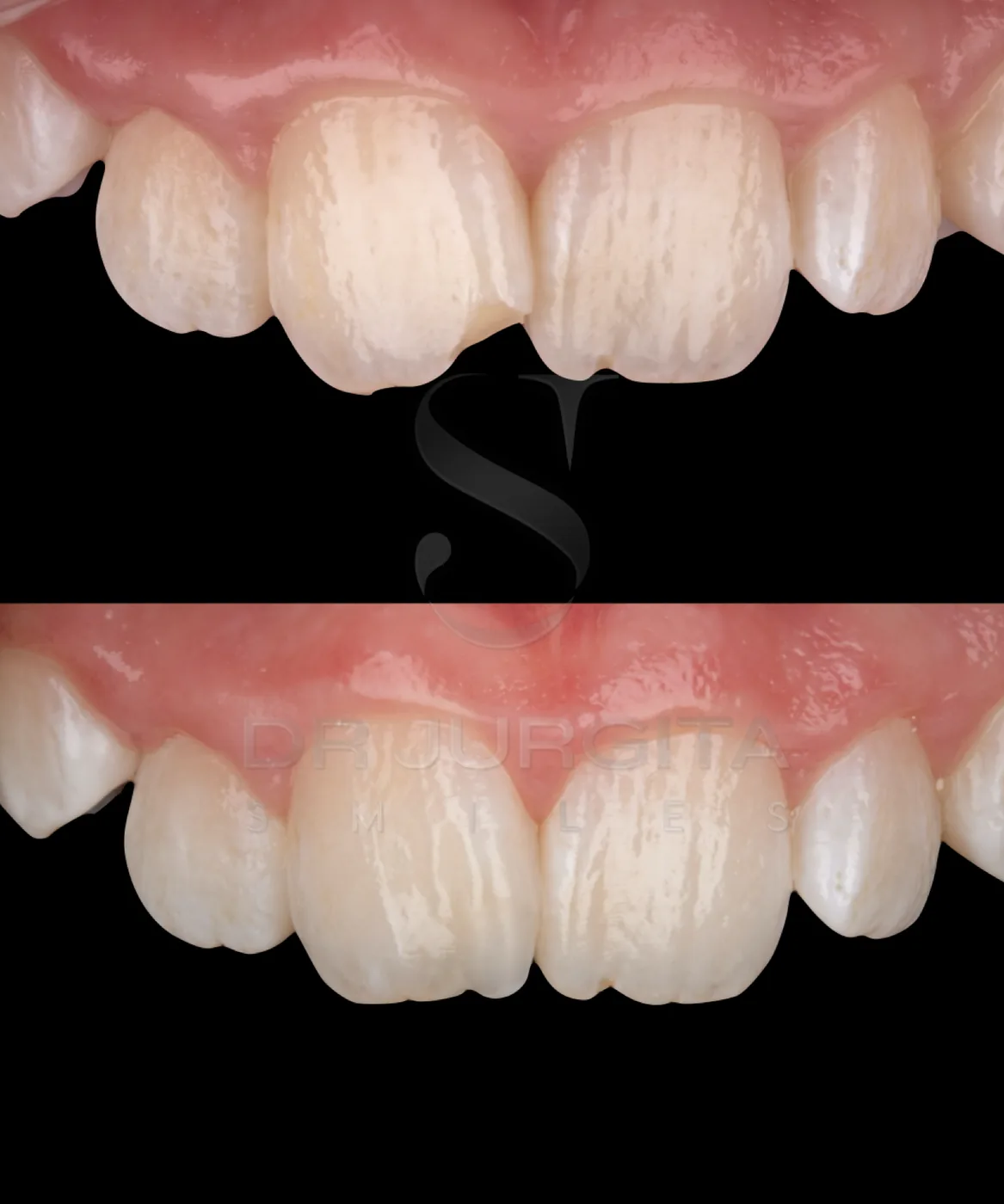
Clinical photos
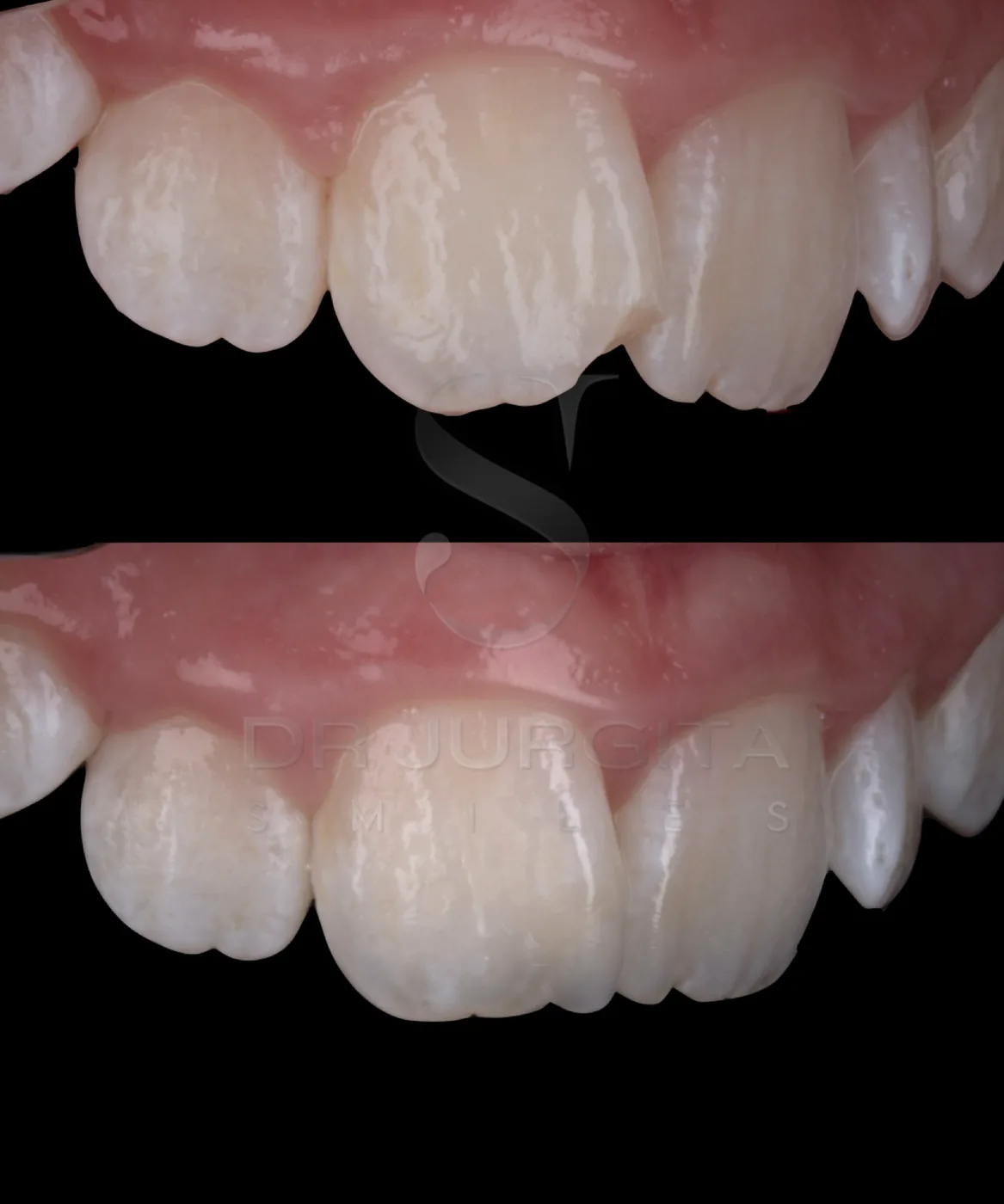
Side view — chipped edge rebuilt to the correct outline 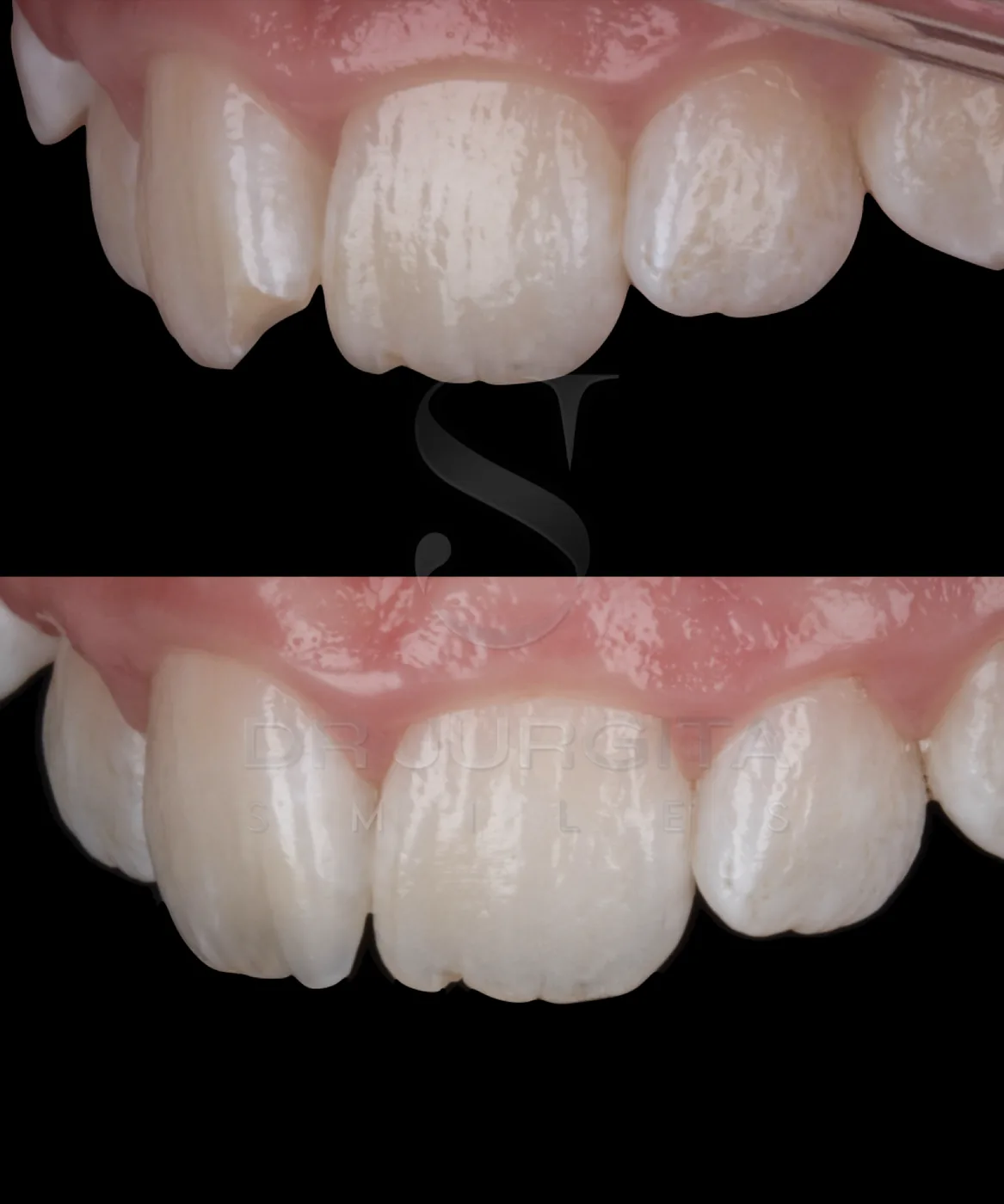
Macro view — layered composite matched to natural enamel 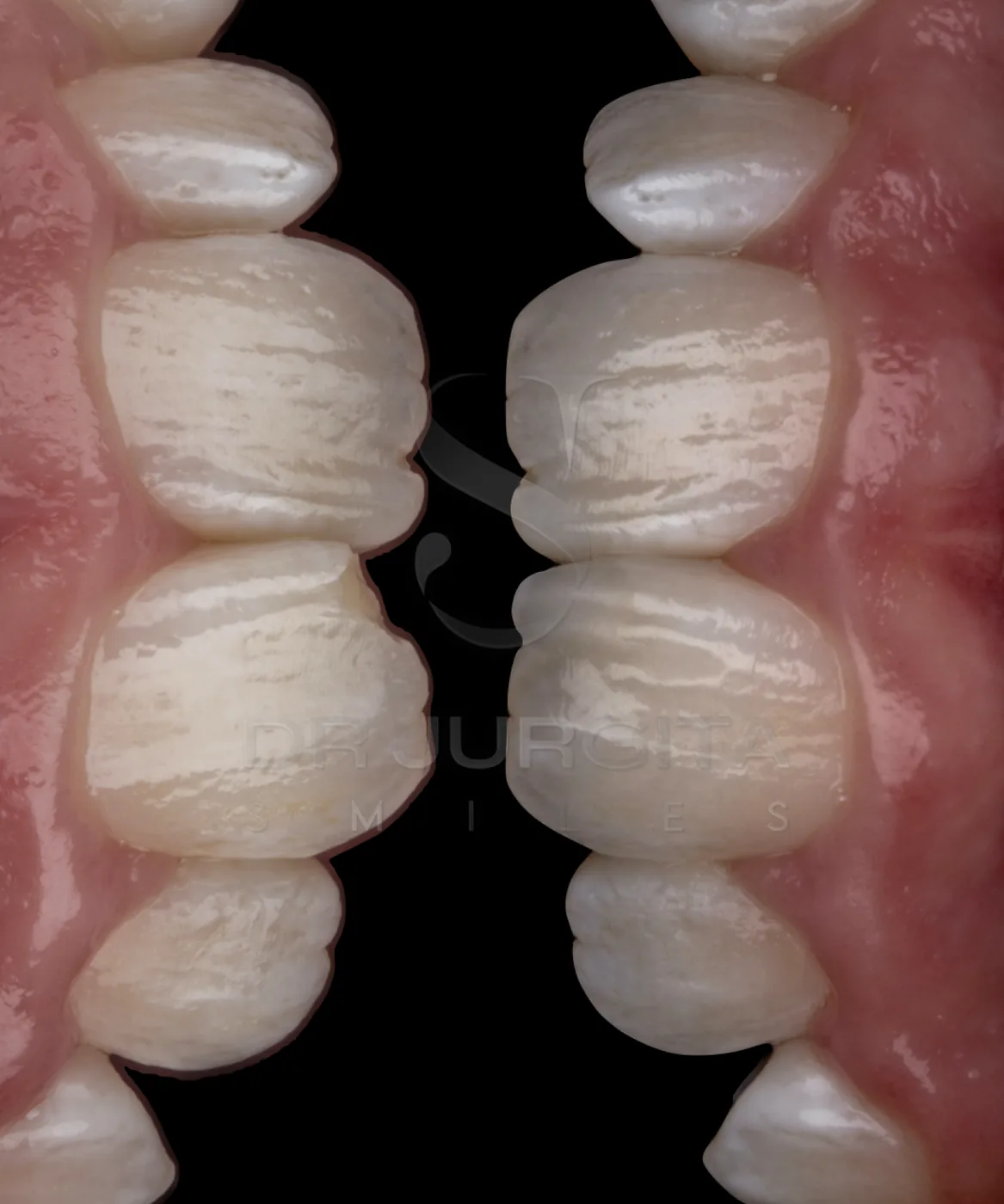
Close detail — polished surface and restored contact - Back to Composite Bonding
Not sure where you fit?
You don’t have to know which treatment you need — that’s exactly what a consultation or Ask About Your Smile is for.
Treatments in this case
Not sure where you fit?
You don’t have to know which treatment you need — that’s exactly what a consultation or Ask About Your Smile is for.