
Metal Crowns Replaced with All-Ceramic — Two Central Incisors
Metal-ceramic crowns on both central incisors had stopped giving this patient the smile she wanted — metal showing through, shapes that didn't quite match each other, and gum slightly inflamed around the margins, all classic signs of ageing restorations. Replacing just two teeth in the middle of a smile is harder than it sounds: the underlying teeth need proper treatment in their own right, but the crowns also have to look better than what they're replacing while still reading as part of the same set of teeth as everything around them, not as an upgrade that stands apart.
The real skill in a case like this isn't inventing an ideal tooth shape — it's reading what's already there and building it back in. That means studying the geometry of the neighbouring teeth: how square or oval they are, how rounded the corners, how wide the gaps between them — a square tooth dropped in next to naturally oval ones reads instantly as foreign, however well-made it is on its own. The same goes for colour, texture and translucency: the type and amount of surface texture, the way light passes through the edges, the subtle optical effects natural teeth have all needed to match the adjacent teeth precisely, not just look good in isolation. Get all of that right, and two new crowns disappear into the smile instead of announcing themselves.
Shared with patient consent. Results are individual to this patient.
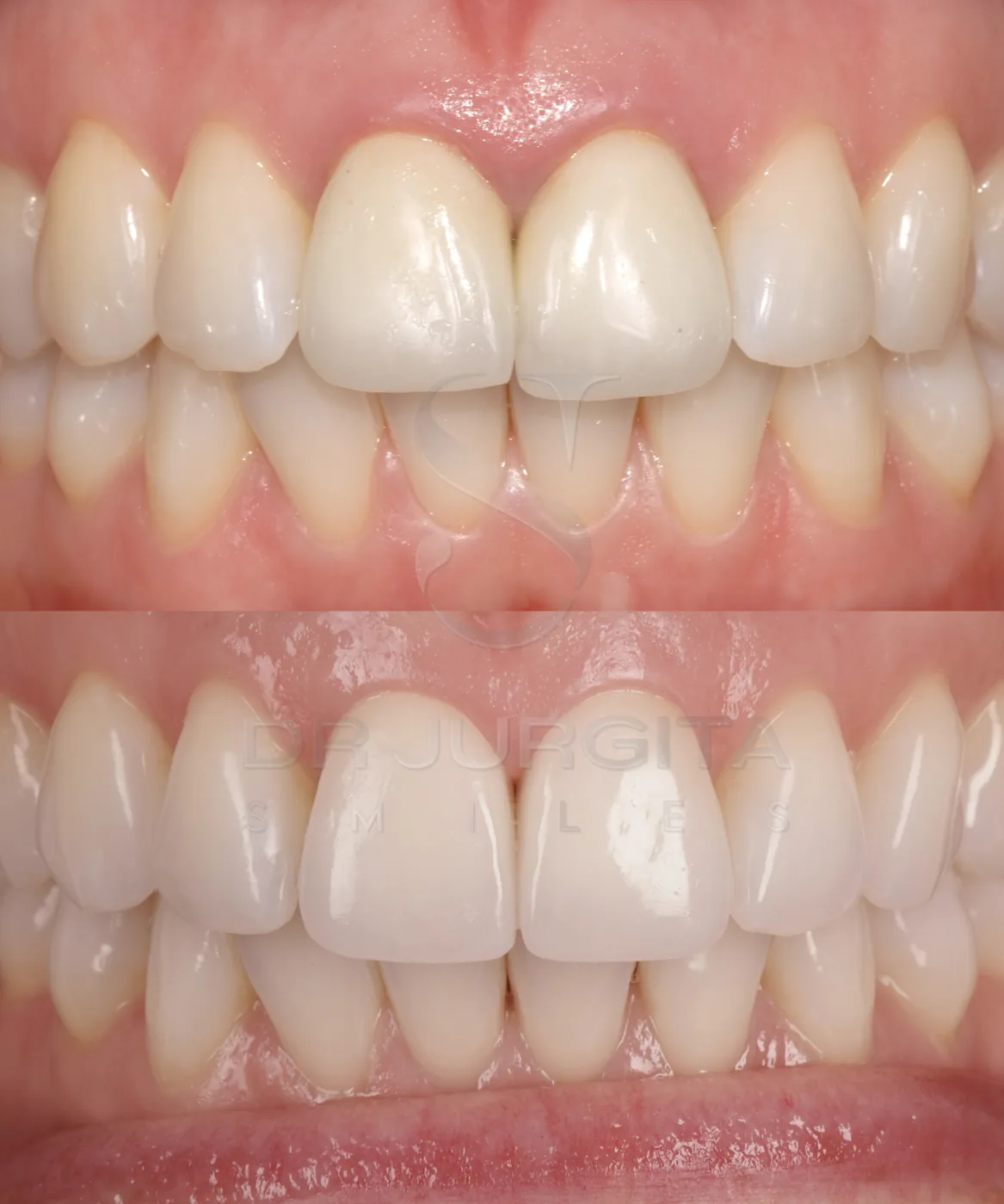
Clinical photos
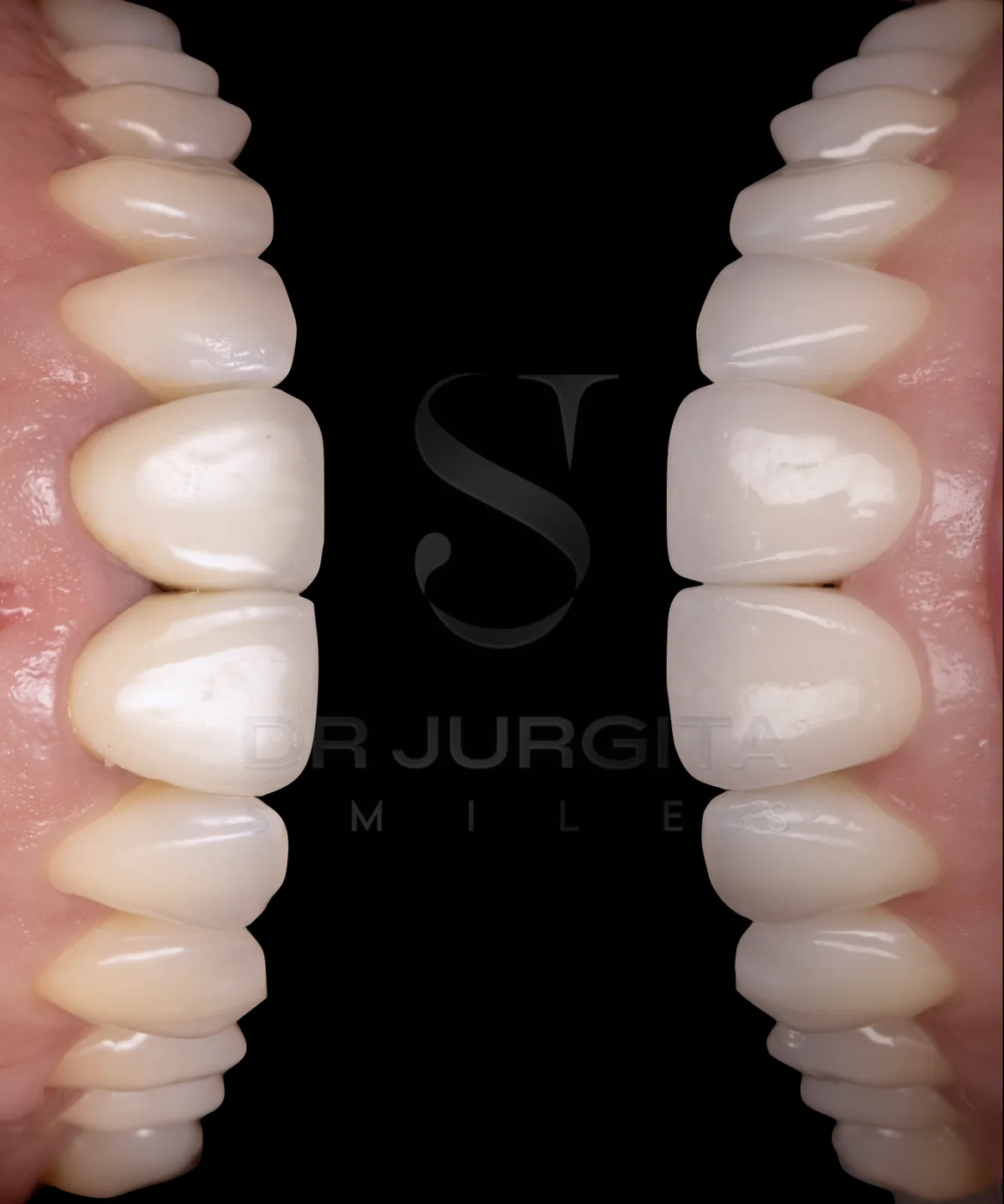
Side-by-side surface detail — old crowns against the new all-ceramic 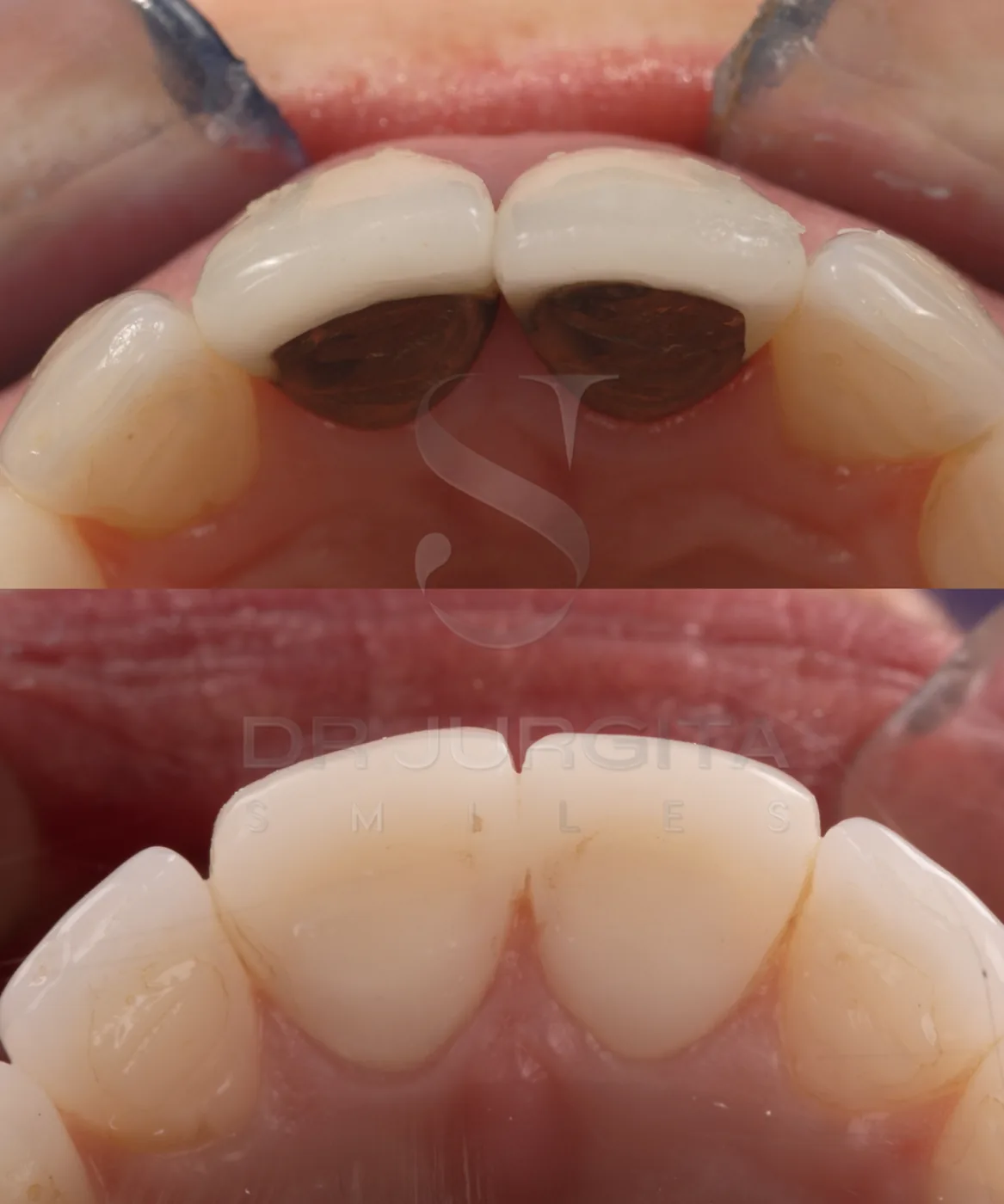
Palatal view — dark metal backing before, clean ceramic after 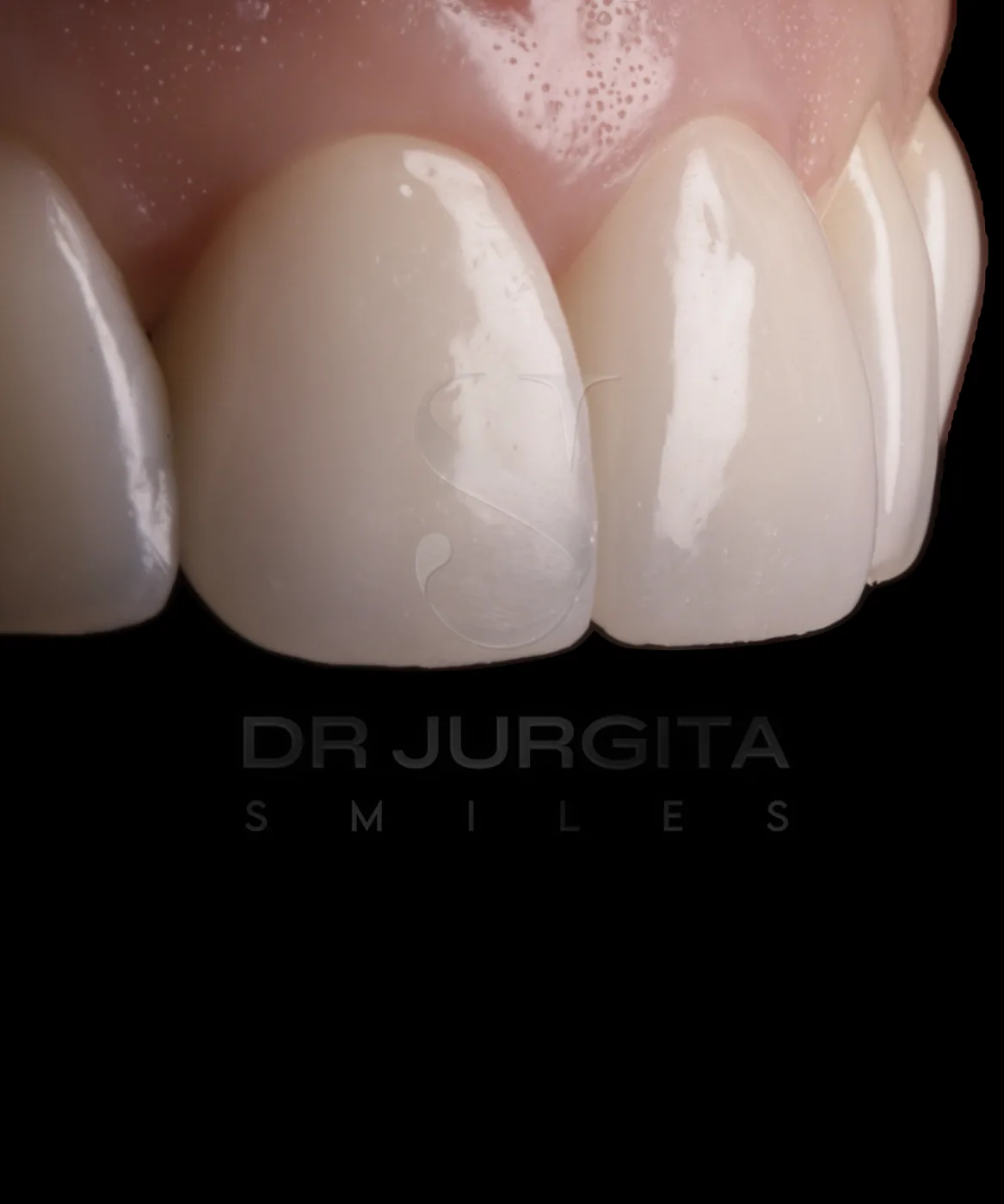
Finished crowns close-up — translucent edge and healthy gum margin - Back to Porcelain Crowns & Veneers
Not sure where you fit?
You don’t have to know which treatment you need — that’s exactly what a consultation or Ask About Your Smile is for.
Treatments in this case
Not sure where you fit?
You don’t have to know which treatment you need — that’s exactly what a consultation or Ask About Your Smile is for.