
Minimal Bonding for Worn Edges After Braces
Braces can straighten teeth, but they can't undo wear that happened before treatment started — and often that wear becomes more visible once the teeth are finally aligned, since crowding used to hide it. This is exactly the situation composite bonding is built for: an ultra-conservative way to add back only what's missing, rather than any broader treatment. Here, the worn edges were built up with a minimal amount of composite, layered to mimic the natural translucency and texture real tooth edges have, rather than looking like a flat, uniform patch.
The patient also had white spots on her teeth — the chalky, opaque marks that often appear after braces, caused by early demineralisation around the brackets. These were treated with ICON, a resin infiltration technique that works without any drilling or tooth removal: a specially formulated resin is infiltrated into the porous enamel of the white spot, and because it has a similar refractive index to healthy enamel, it optically blends the mark into the surrounding tooth rather than physically removing it. Combined with the minimal edge bonding, the result addresses both problems the same braces-aligned smile is often left with.
Shared with patient consent. Results are individual to this patient.
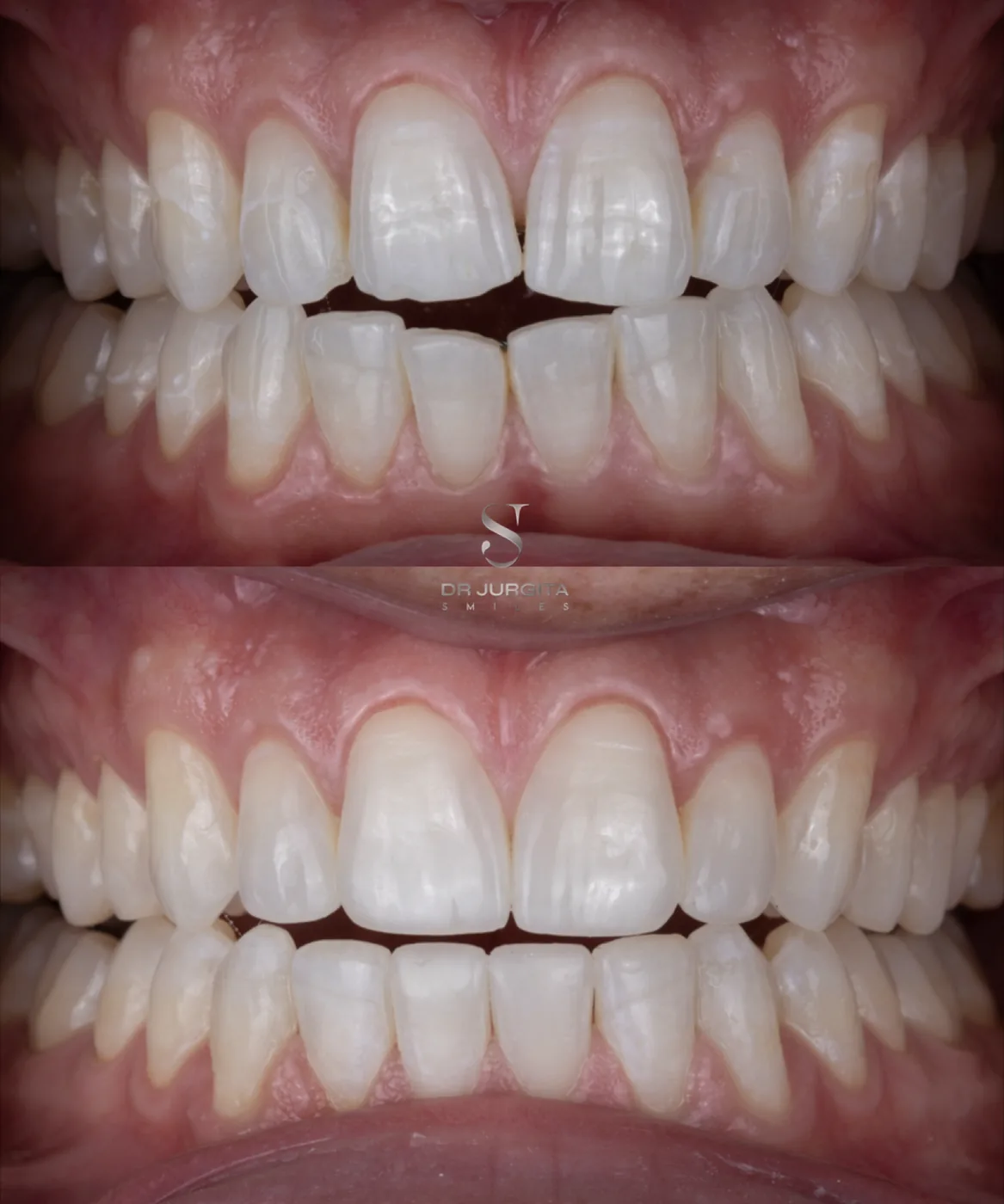
Clinical photos
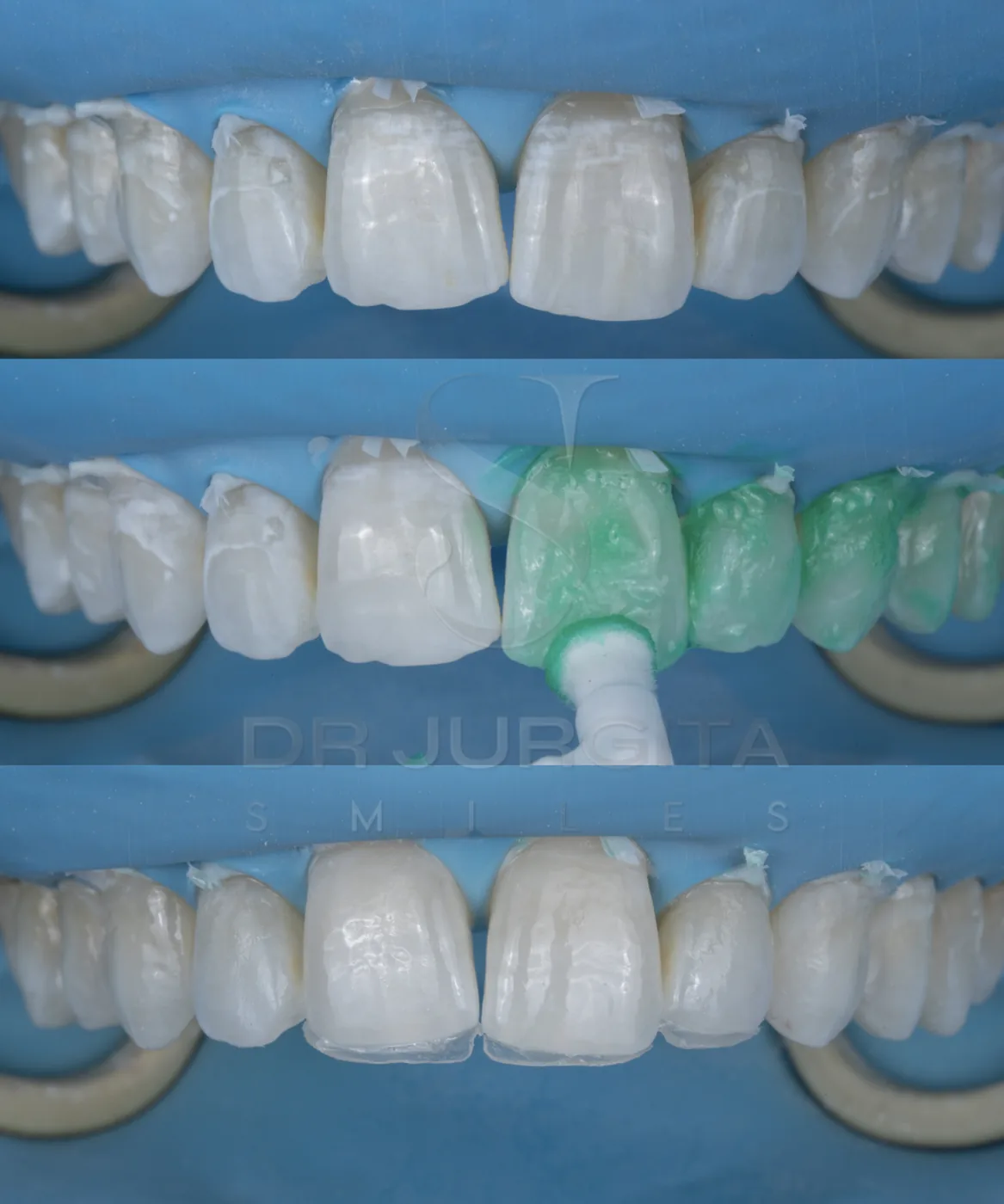
Under rubber dam — surface prepared and composite placed 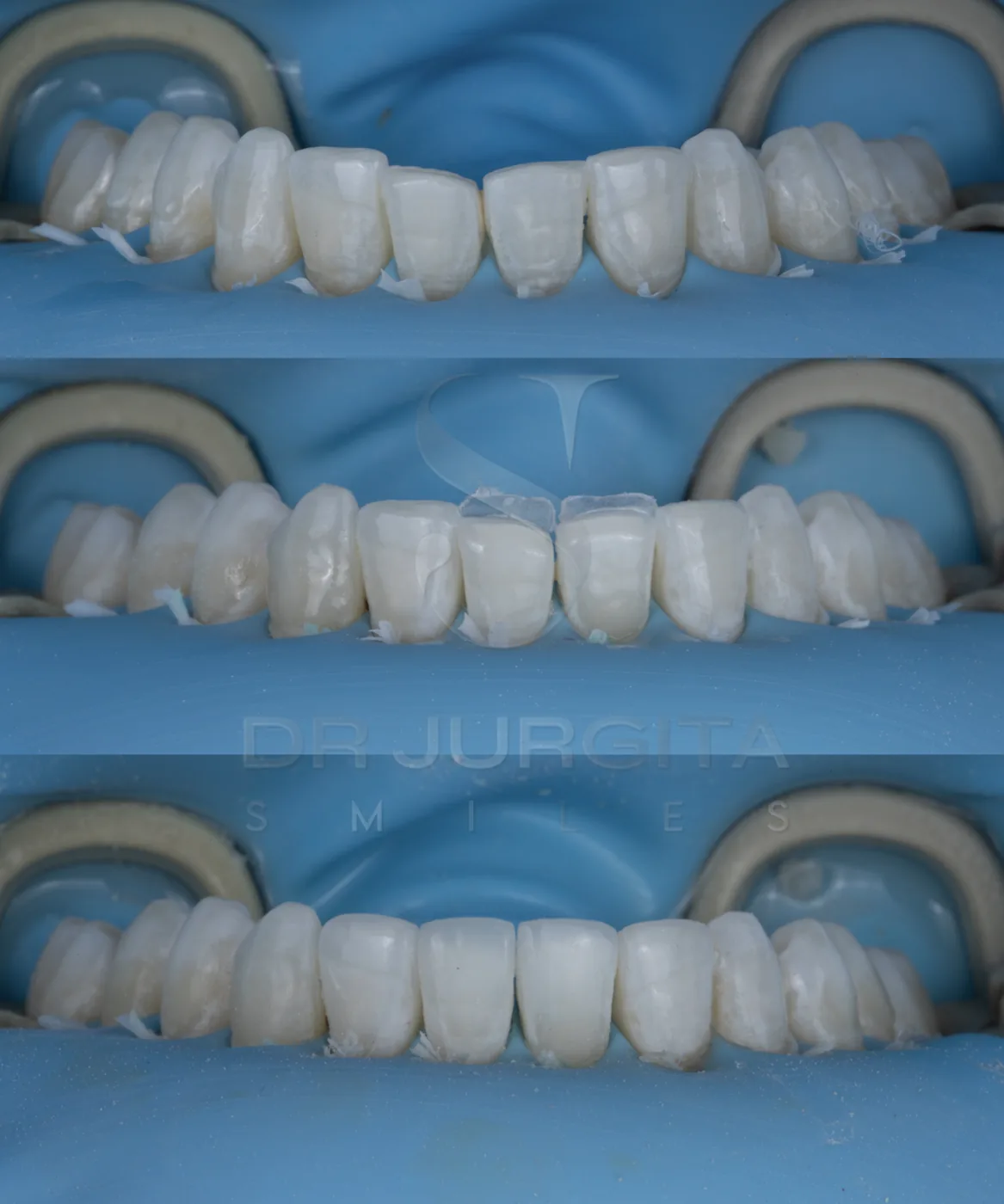
Edge view — worn edges rebuilt and contoured 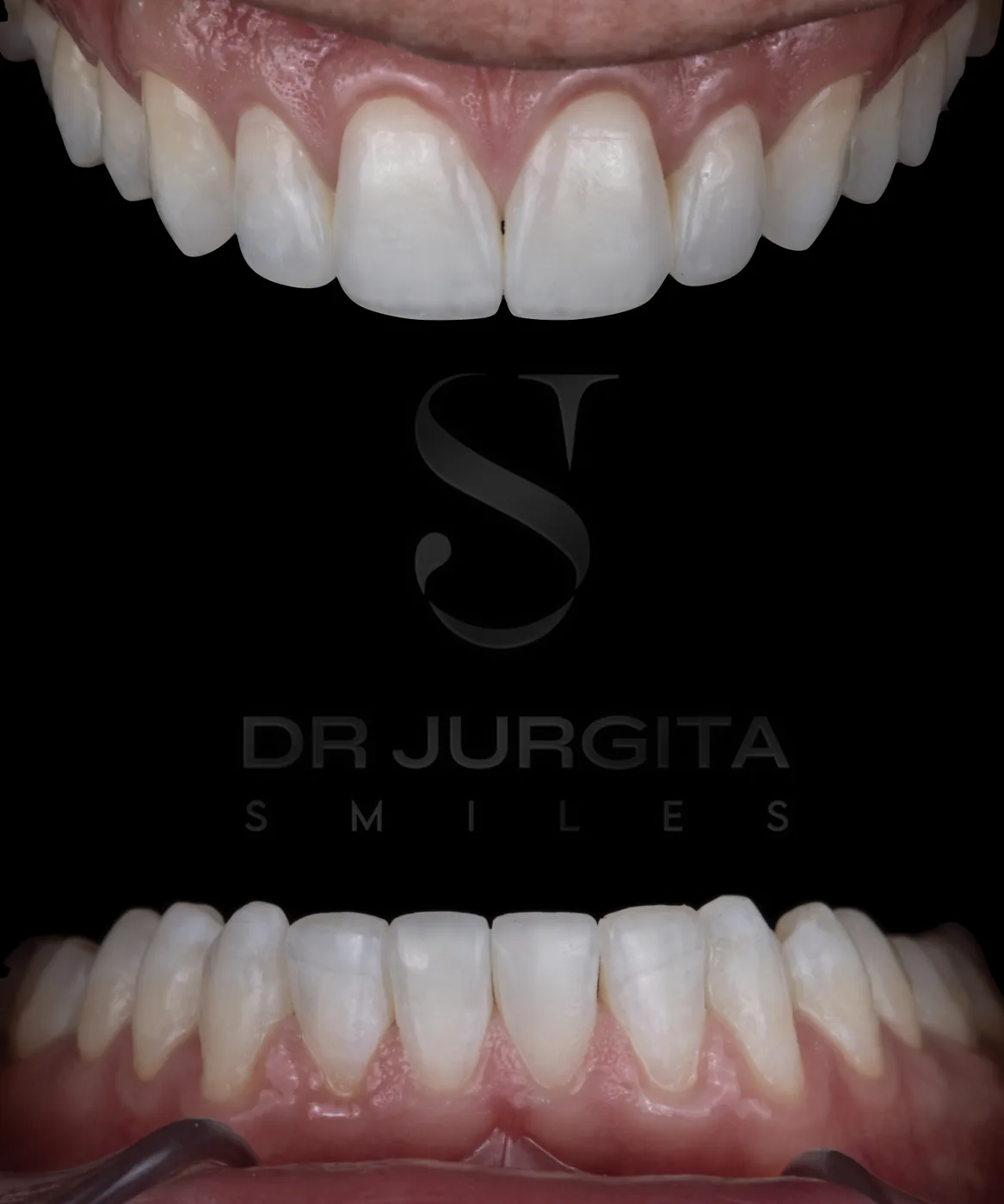
Finished result — even edges, natural translucency kept - Back to Composite Bonding
Not sure where you fit?
You don’t have to know which treatment you need — that’s exactly what a consultation or Ask About Your Smile is for.
Treatments in this case
Not sure where you fit?
You don’t have to know which treatment you need — that’s exactly what a consultation or Ask About Your Smile is for.