
Missing Lateral — Ortho Closure & Bonding
This patient was born without her lateral incisors. An initial round of orthodontics had closed the gaps completely — but doing so pulled the front teeth back further than the face could support, collapsing the profile and giving a result that wasn't acceptable aesthetically. A second round of orthodontics, carried out by the talented Dr Claire Nightingale, reopened those spaces so the teeth could be given proper proportions and the lips the support they needed, avoiding that collapsed look.
Moving the teeth back again to create space for implants or a bridge would have meant reversing movements that had already been carried out, with a significantly increased risk of root resorption — an option that could have been considered right at the start of treatment, but not one appropriate for this patient at this stage.
The restorative goal was to design tooth proportions that genuinely suited her face: reshaping the canines to take on the form of lateral incisors, and the first premolars to take on the form of canines, so the whole arch reads as complete — as if no teeth were ever missing at all.
Shared with patient consent. Results are individual to this patient.
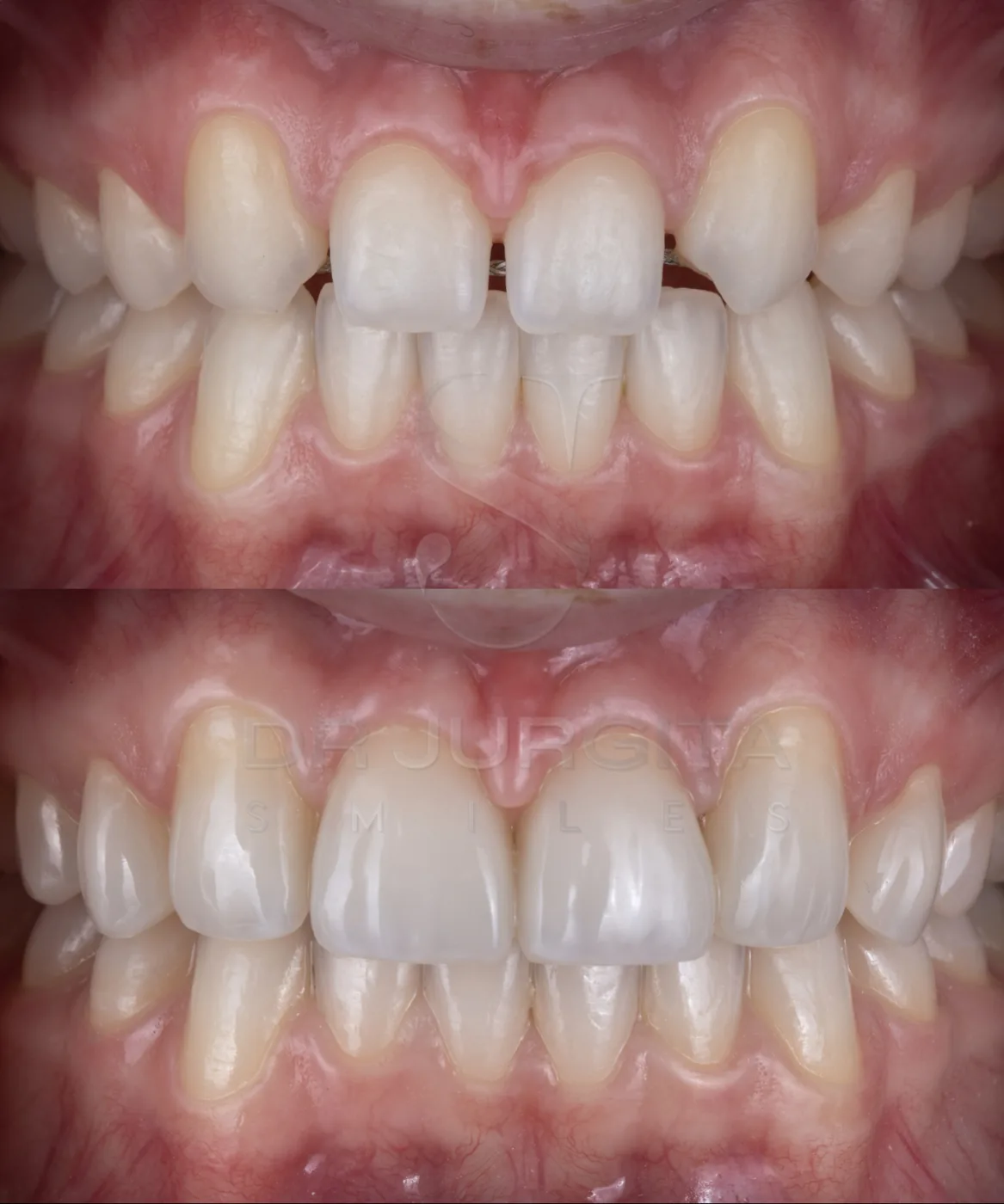
Clinical photos
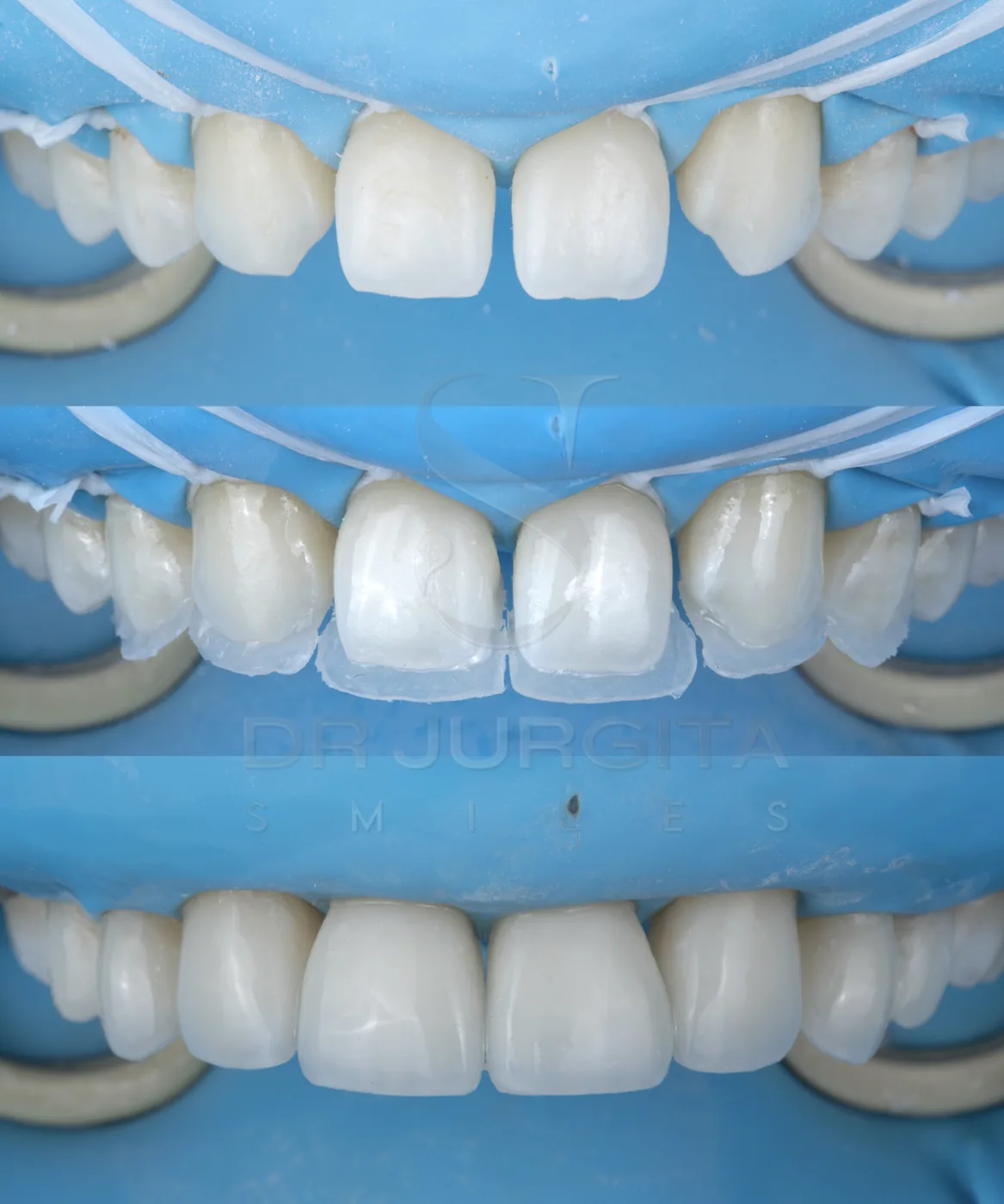
Under rubber dam — bonding built up in layers on the isolated teeth 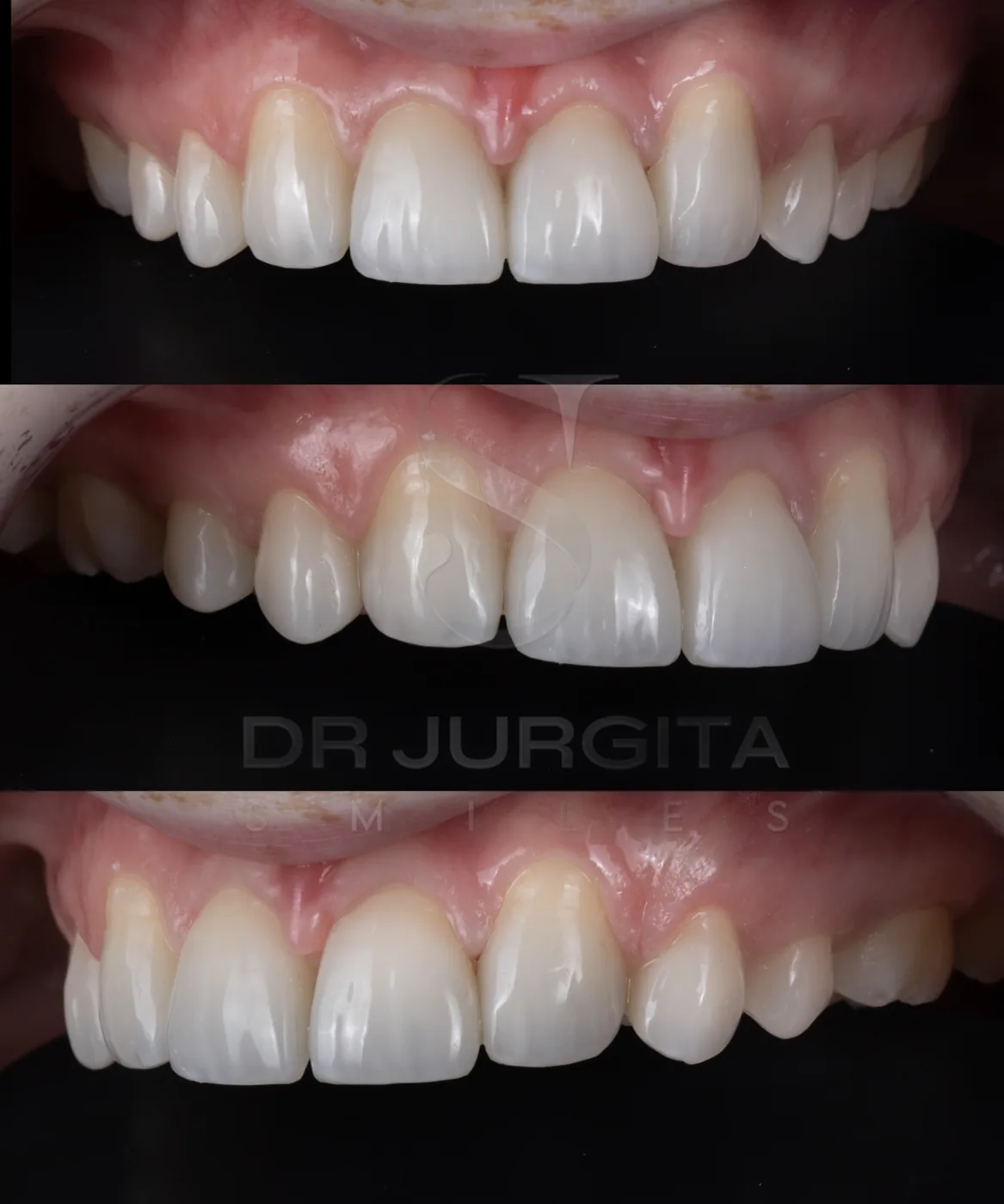
Close-up progression — shape, contour and surface texture refined 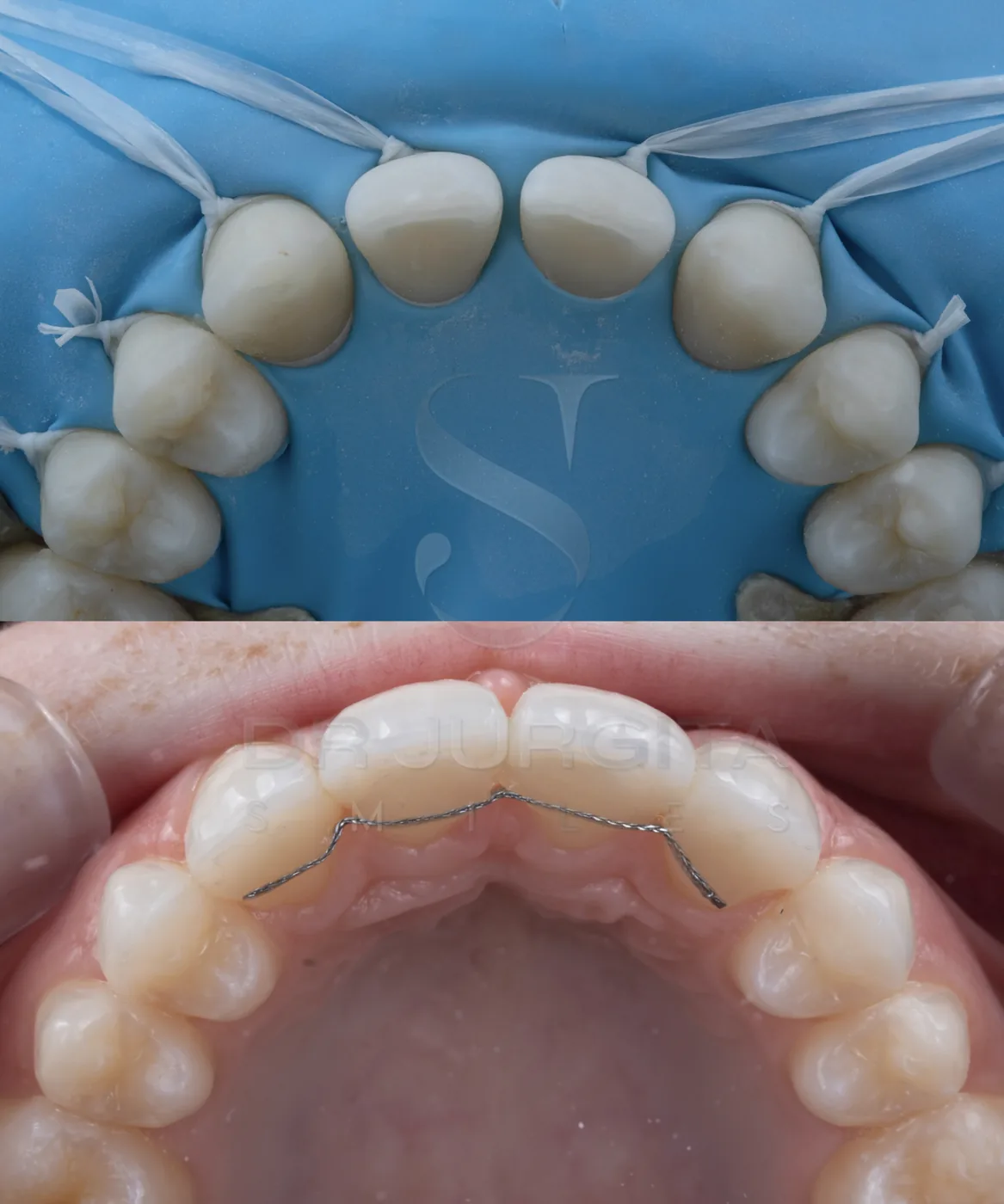
Occlusal views — final contours and the bonded retainer wire in place - Back to Orthodontic-Restorative Cases
Not sure where you fit?
You don’t have to know which treatment you need — that’s exactly what a consultation or Ask About Your Smile is for.
Treatments in this case
- Composite bonding·from £300
- Gaps & missing teeth · Fees discussed at consultation
- Teeth whitening·from £550
Not sure where you fit?
You don’t have to know which treatment you need — that’s exactly what a consultation or Ask About Your Smile is for.