
MIH Staining & Failing Fillings — Composite Bonding with ICON
The old composite in this case was failing — chipping, discolouring, staining, and poorly shaped to begin with. It had originally been placed to hide significant white and brown spots caused by MIH (molar incisor hypomineralisation), a developmental condition where the enamel on certain adult teeth — often the front incisors and first molars — doesn't form properly. The result is enamel that's patchy and weaker than normal, showing up as white, cream or brown discolouration and more prone to breaking down over time.
Because of an intolerance to whitening, the brown staining in this case couldn't be fully lightened with bleaching. The white marks, however, could be reduced using ICON — a resin infiltration treatment that soaks into the enamel and reduces the visibility of white spots without any drilling. That gave a better base to work from before any new composite was placed.
The new composite layering aimed to do more than just mask the remaining discolouration on the central incisors: it was shaped to create a natural, teeth-like effect rather than an obvious "bonded" look, and the contours were carefully managed so they wouldn't interfere with chewing, speaking or biting down — a detail that matters directly for how long bonding lasts. Done this way, composite bonding can address shape, colour and function all at once, not just appearance.
Shared with patient consent. Results are individual to this patient.
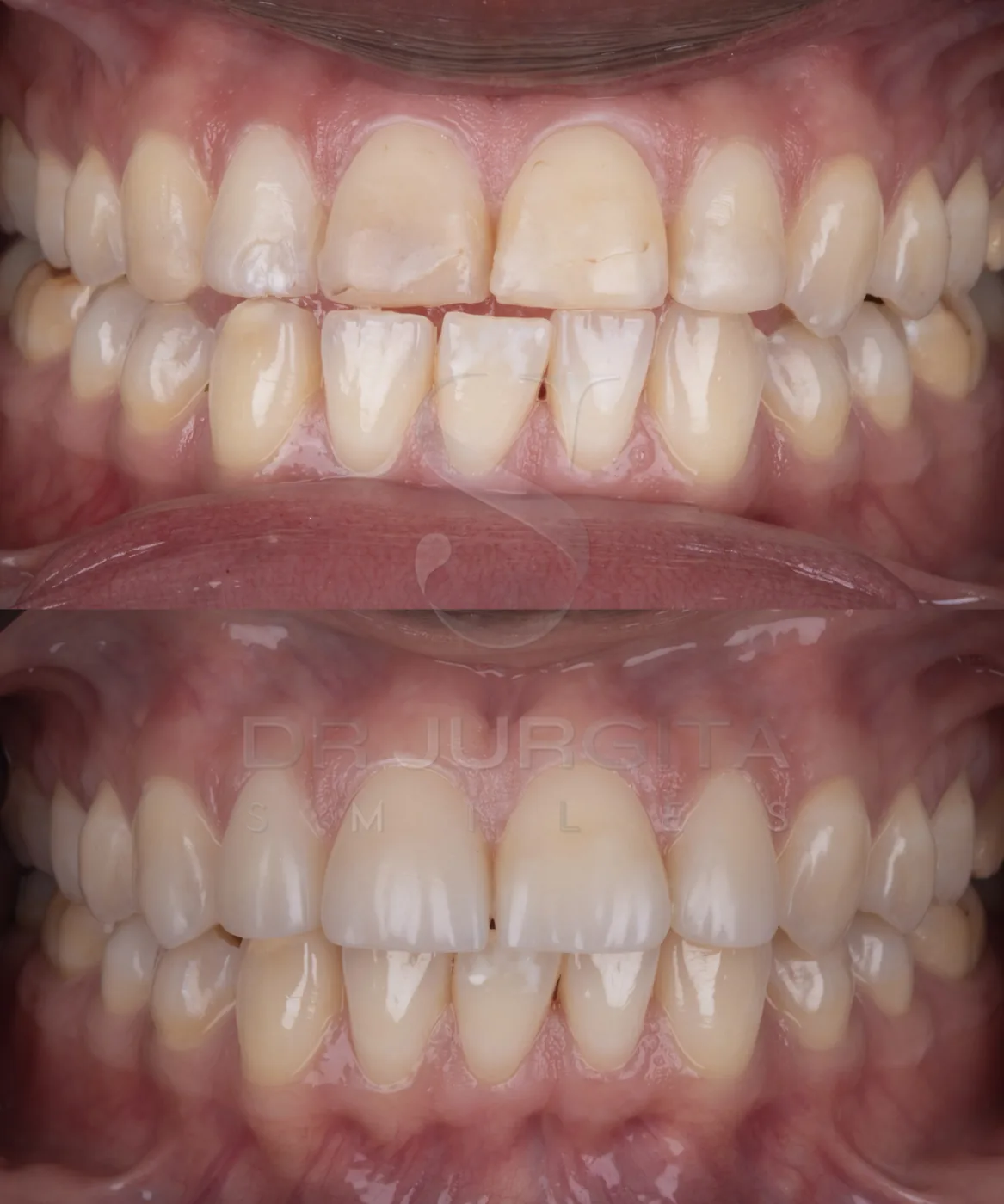
Clinical photos
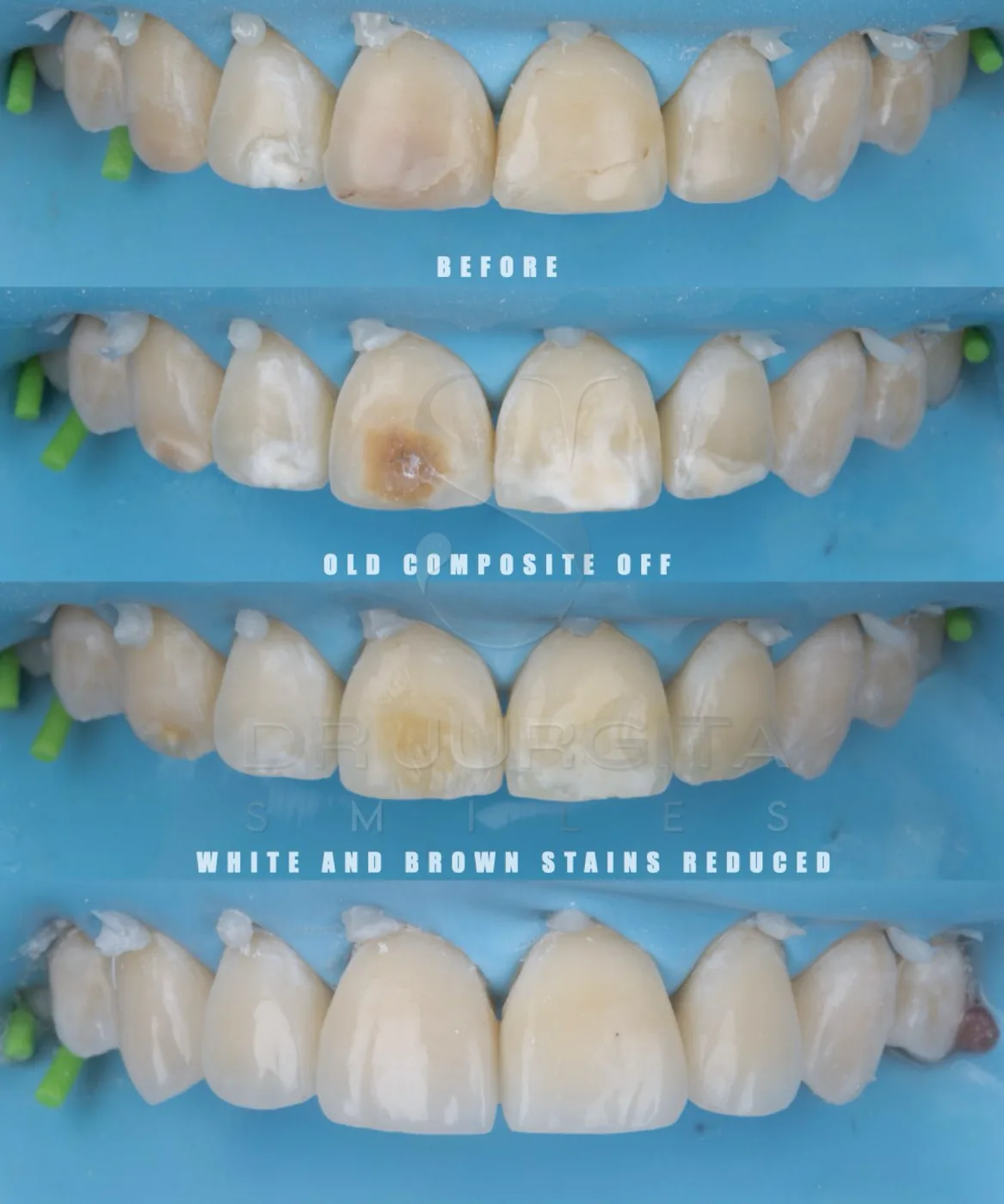
Under rubber dam — old composite off, stains reduced 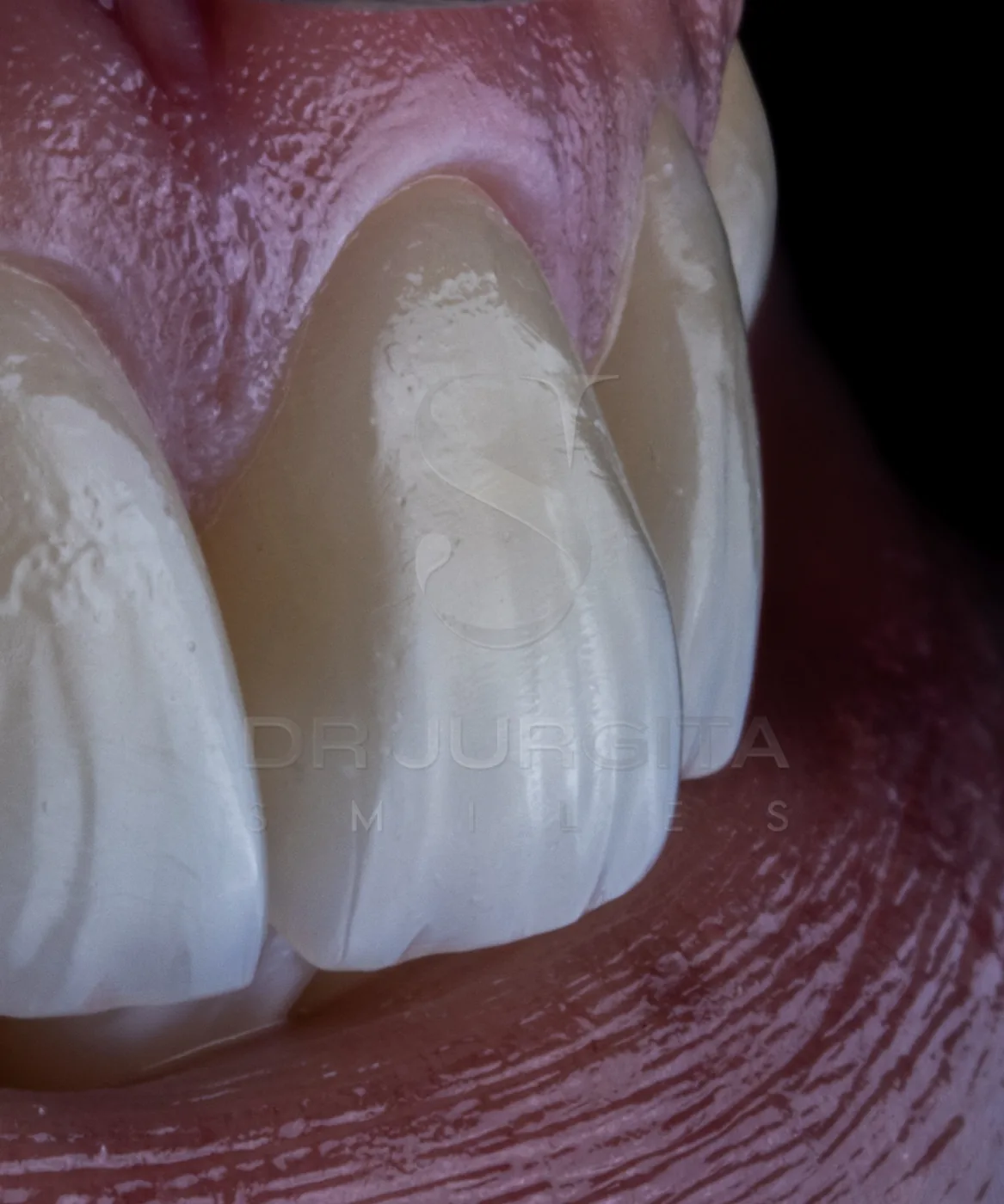
Macro view — layered composite matched to natural enamel 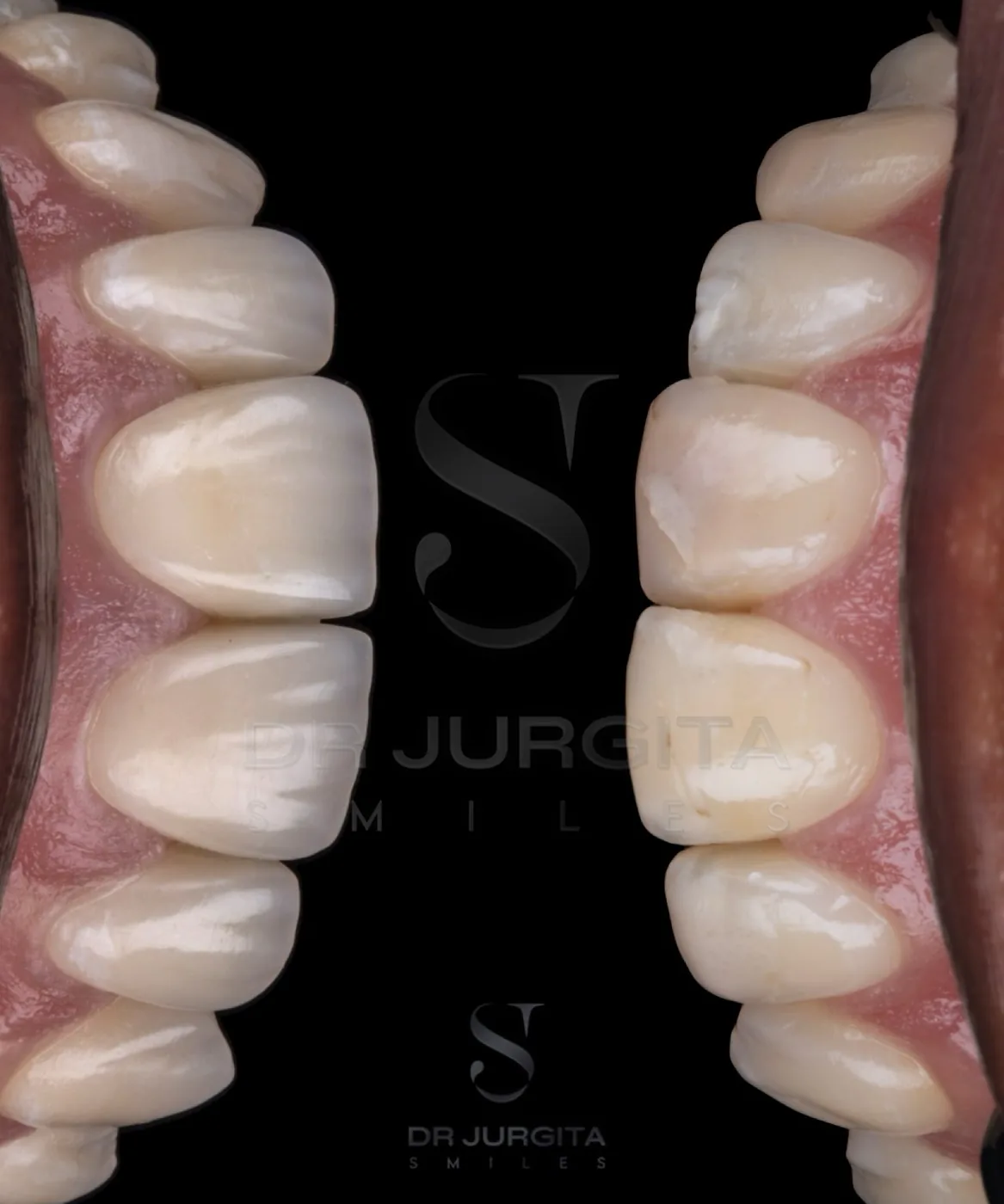
Side views — restored contours and polished surface - Back to Composite Bonding
Not sure where you fit?
You don’t have to know which treatment you need — that’s exactly what a consultation or Ask About Your Smile is for.
Treatments in this case
Not sure where you fit?
You don’t have to know which treatment you need — that’s exactly what a consultation or Ask About Your Smile is for.