
Orthodontics, Composite Bonding & Porcelain Crowns
A deep bite, years of tooth wear, and poor-quality previous dental work had left this patient not just self-conscious about the smile, but genuinely anxious about dental treatment itself — an understandable response to past experiences that hadn't gone well.
Treatment started with the bite, not the teeth. Invisalign was used to move the teeth into positions that were more favourable — not only for how the smile would eventually look, but for how it would function long-term and for how well it would support the restorative work still to come. Getting that foundation right first meant everything built on top of it had a much better chance of lasting.
With the bite corrected, the old, failing crowns were removed, root canal treatment was redone where needed, and new crowns were made. Composite bonding refined the remaining shape and detail, whitening brightened the overall shade, and a retention plan was put in place to protect the result. Step by step, treatment addressed not just the appearance of the smile, but the underlying reasons it had become something to be anxious about in the first place.
Shared with patient consent. Results are individual to this patient.
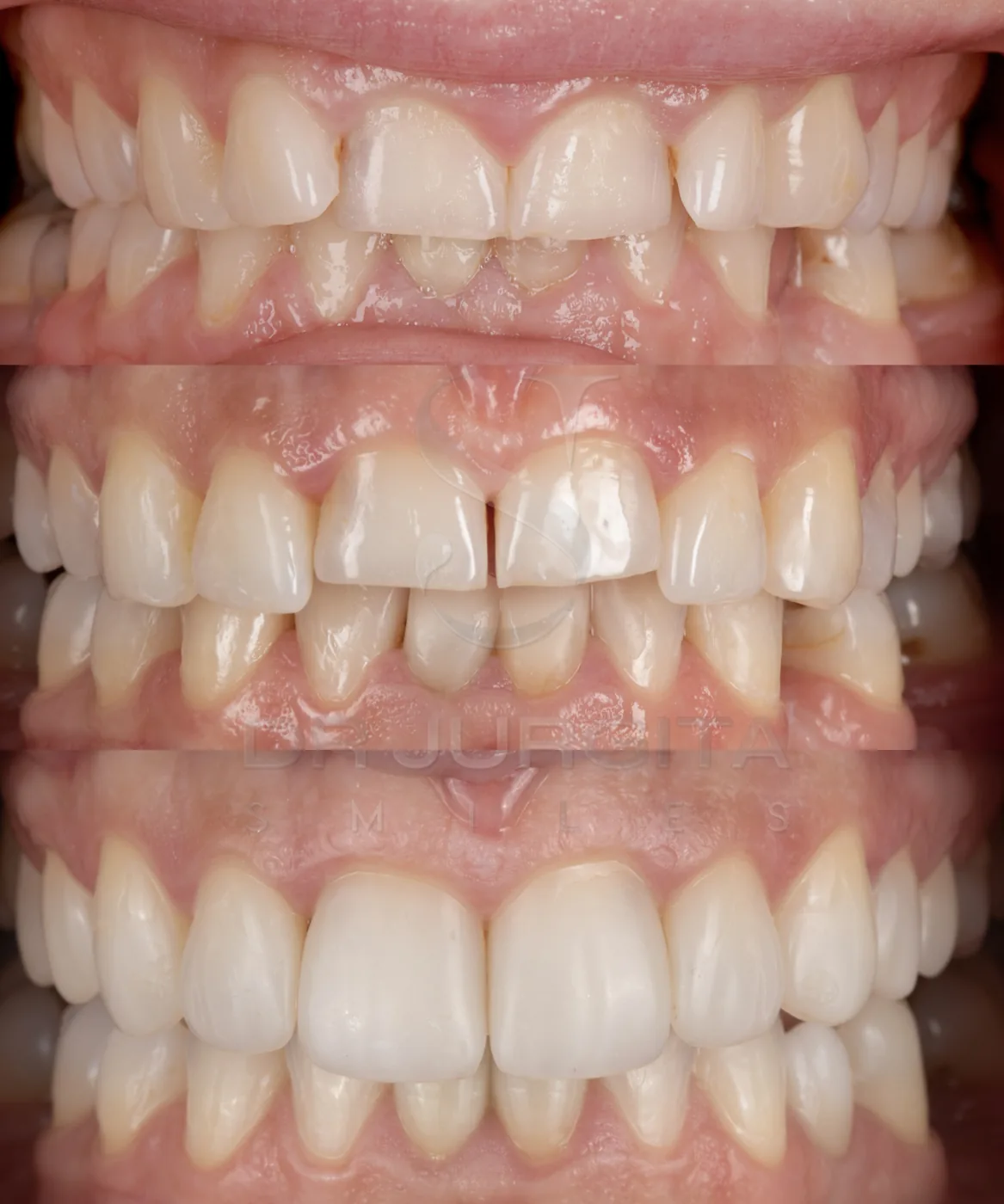
Clinical photos
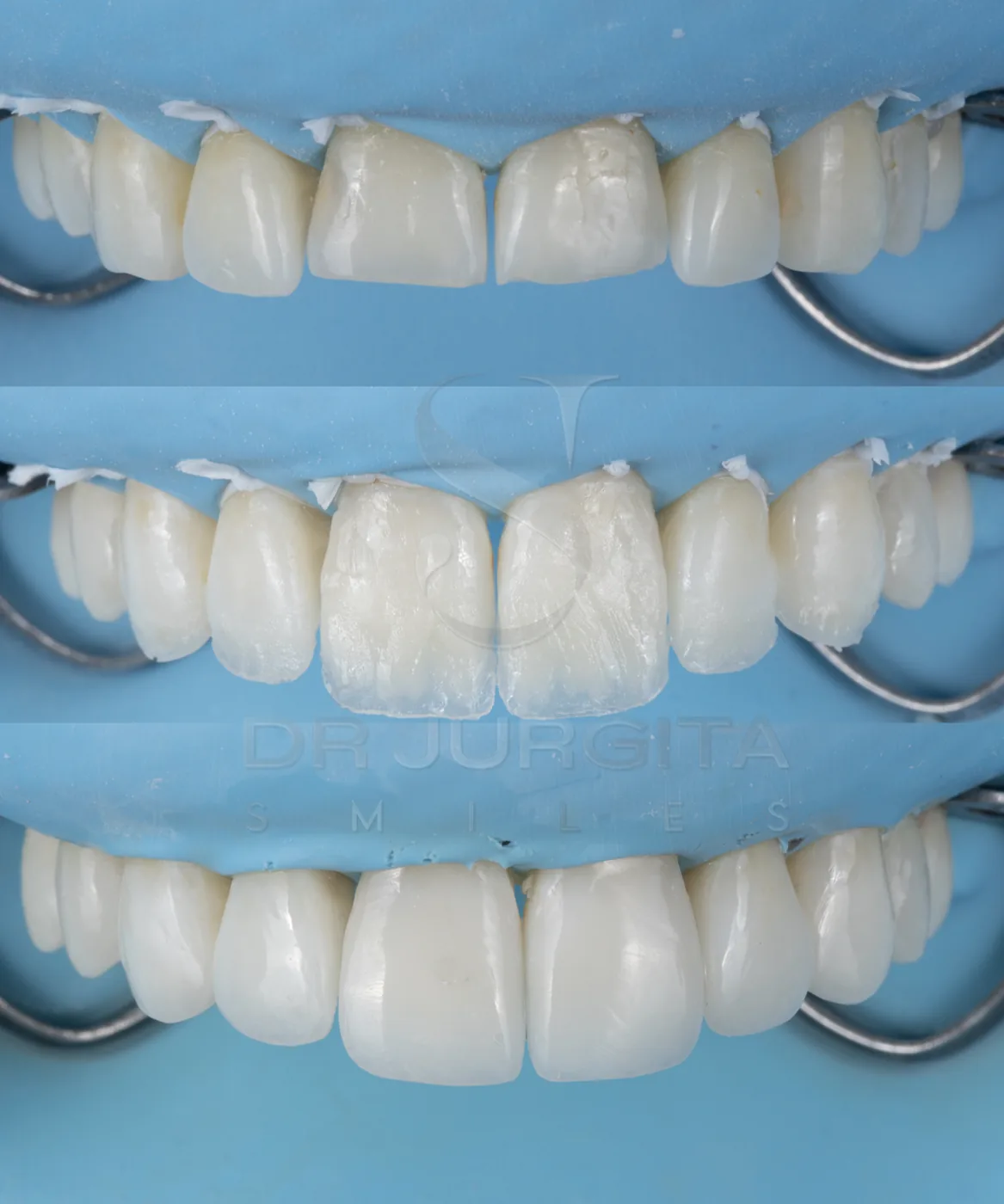
Under rubber dam — shape, proportion and shade checked at each stage 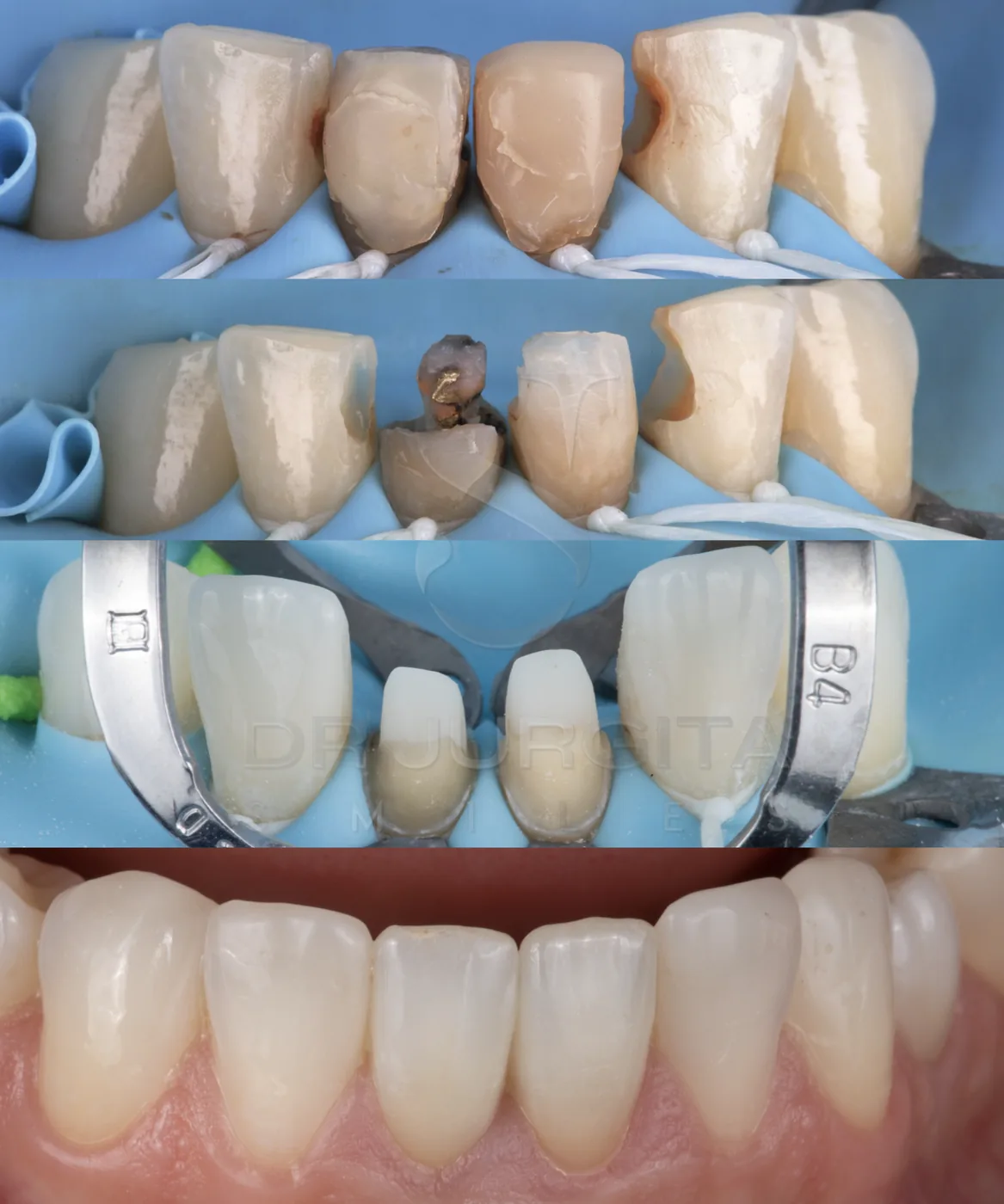
Preparation — heavily broken teeth prepared for porcelain crowns 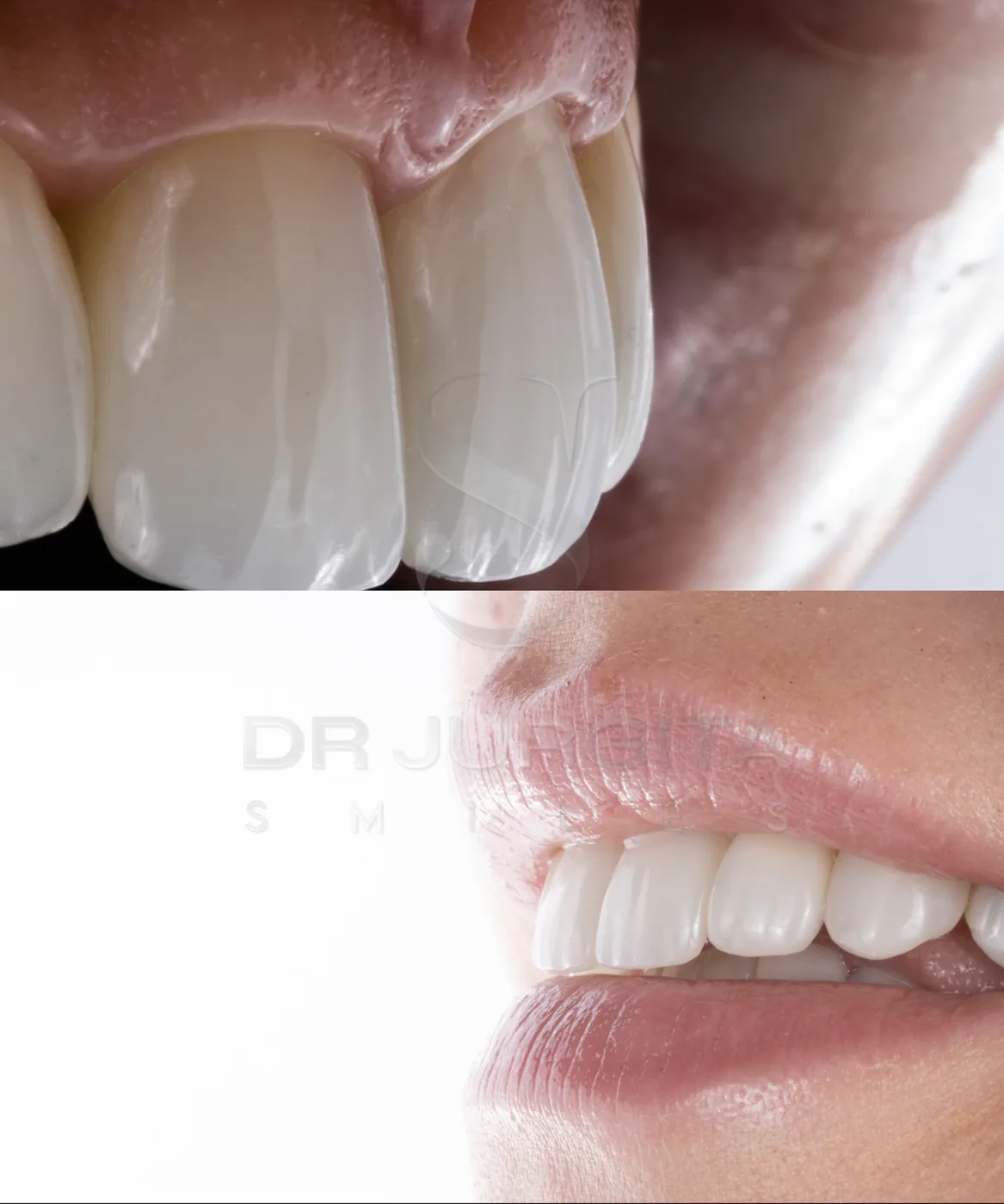
Final result — bonding and crowns blended into one even smile line - Back to Orthodontic-Restorative Cases
Not sure where you fit?
You don’t have to know which treatment you need — that’s exactly what a consultation or Ask About Your Smile is for.
Treatments in this case
- Porcelain veneers·from £1,500
- Crowns·from £1,500
- Composite bonding·from £300
- Invisalign·from £3,800
- Gum contouring · Fees discussed at consultation
- Brown stain removal·from £350
- Implant crowns·from £2,500
- Gaps & missing teeth · Fees discussed at consultation
- Teeth whitening·from £550
Not sure where you fit?
You don’t have to know which treatment you need — that’s exactly what a consultation or Ask About Your Smile is for.