
Replacing Failing Upper & Lower Crowns — Aesthetics, Bite & Gum Health
Twelve anterior crowns — six upper, six lower — were failing in ways that don't always show up in a mirror. The margins had opened up, letting bacteria in underneath; the gums around them were irritated and bleeding; X-rays showed decay starting beneath several of the crowns; and floss was catching and shredding at the edges instead of sliding through cleanly. These are real, physical signs that a crown has stopped doing its job, not just a case of old restorations looking dated.
Old crowns were removed first, and the underlying teeth and gum tissue assessed and stabilised before any decision was made about what would replace them — the type of crown and preparation needed had to be worked out tooth by tooth, based on what was actually left to work with, not a single template applied across all twelve. Well-made temporaries did real work at this stage too: testing how the new shapes would look, function, sound and bite before anything was finalised in porcelain.
The final crowns were all layered zirconia, but the preparation technique differed between arches — a vertical (BOPT) technique for the upper crowns, and a standard margin preparation for the lowers. That difference wasn't a preference; it reflected the actual condition of the tooth structure and gum tissue in each arch. Different techniques, same aesthetic standard, and a bite designed to carry load properly rather than just look right.
Shared with patient consent. Results are individual to this patient.
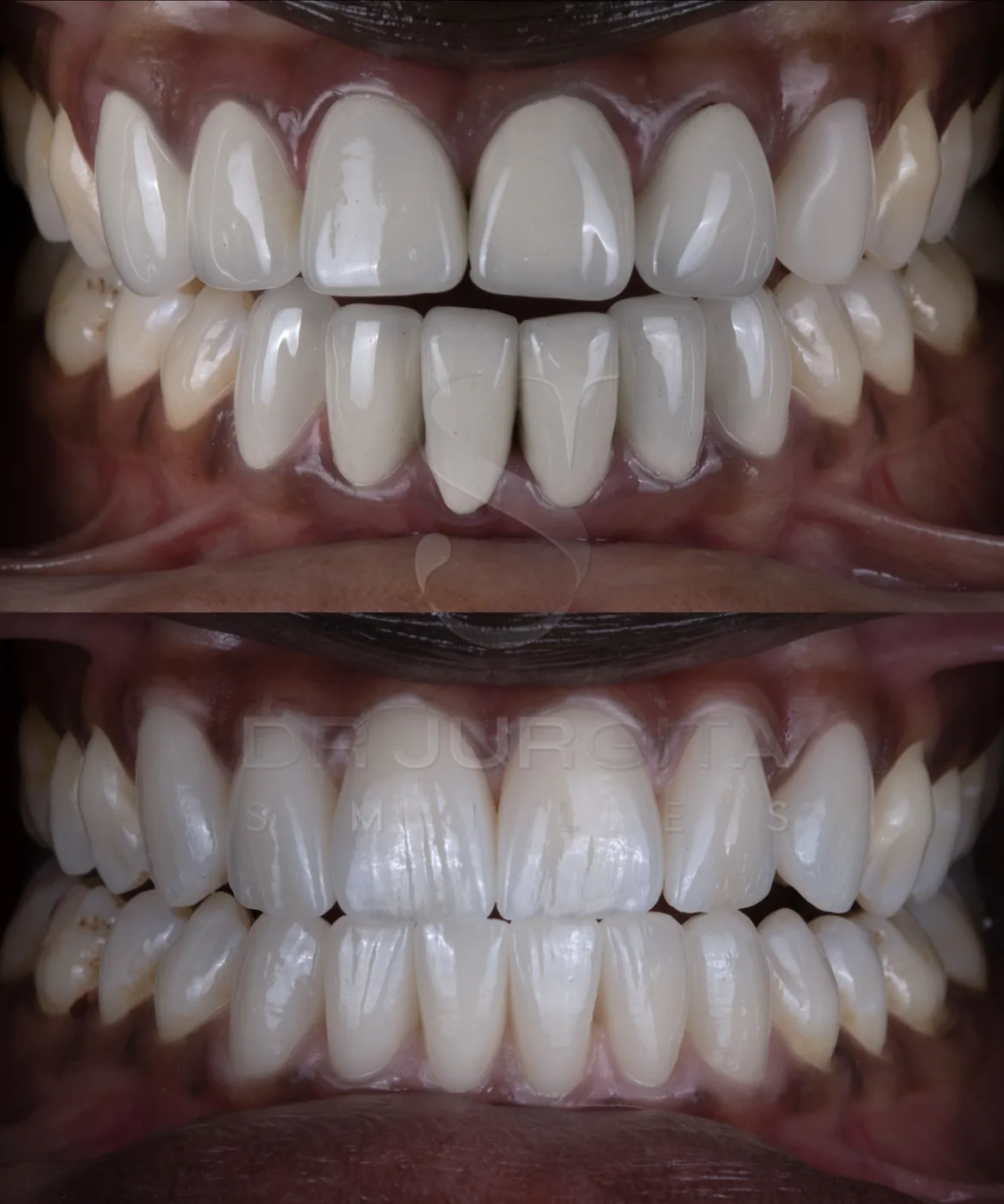
Clinical photos
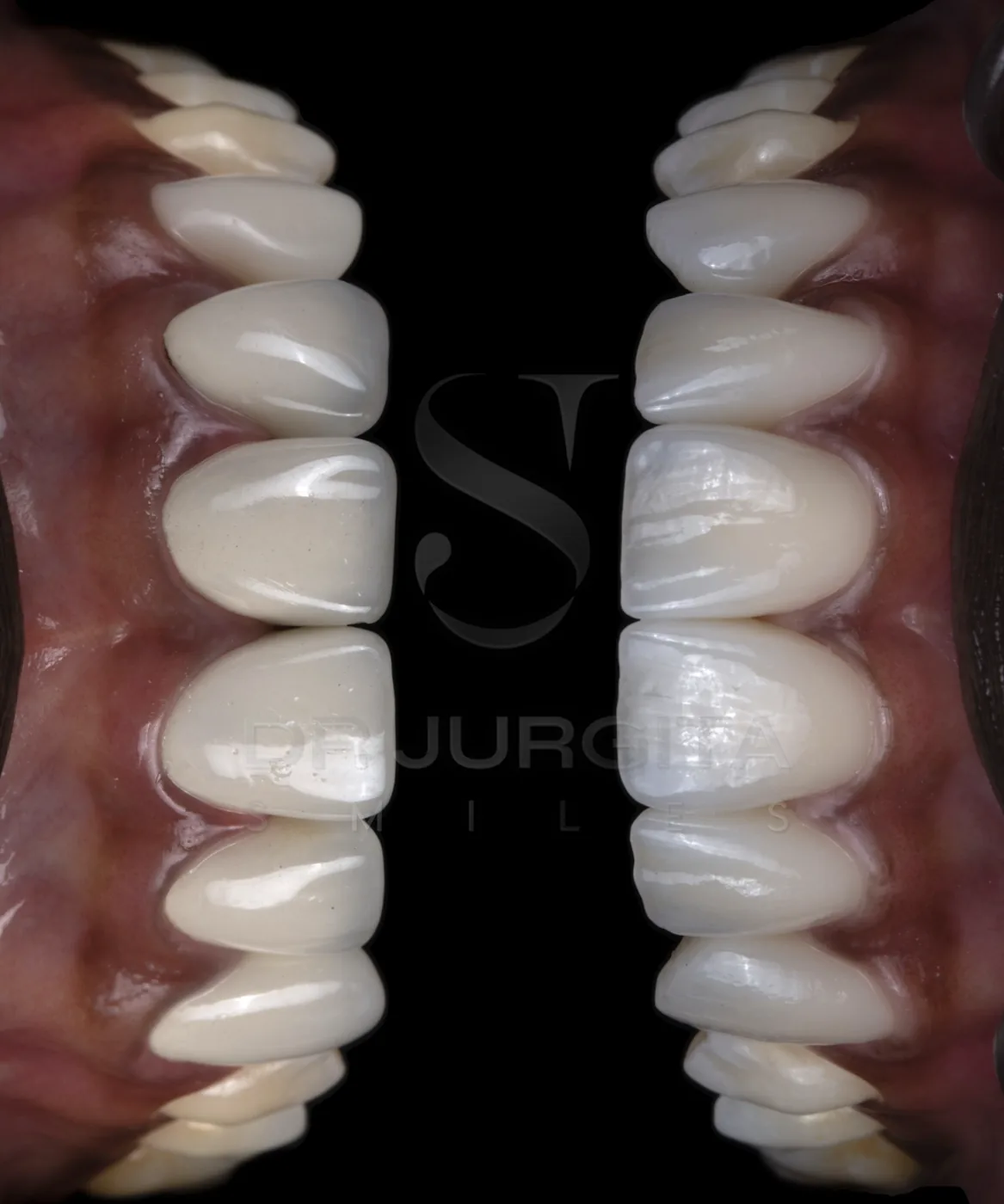
Upper arch before and after 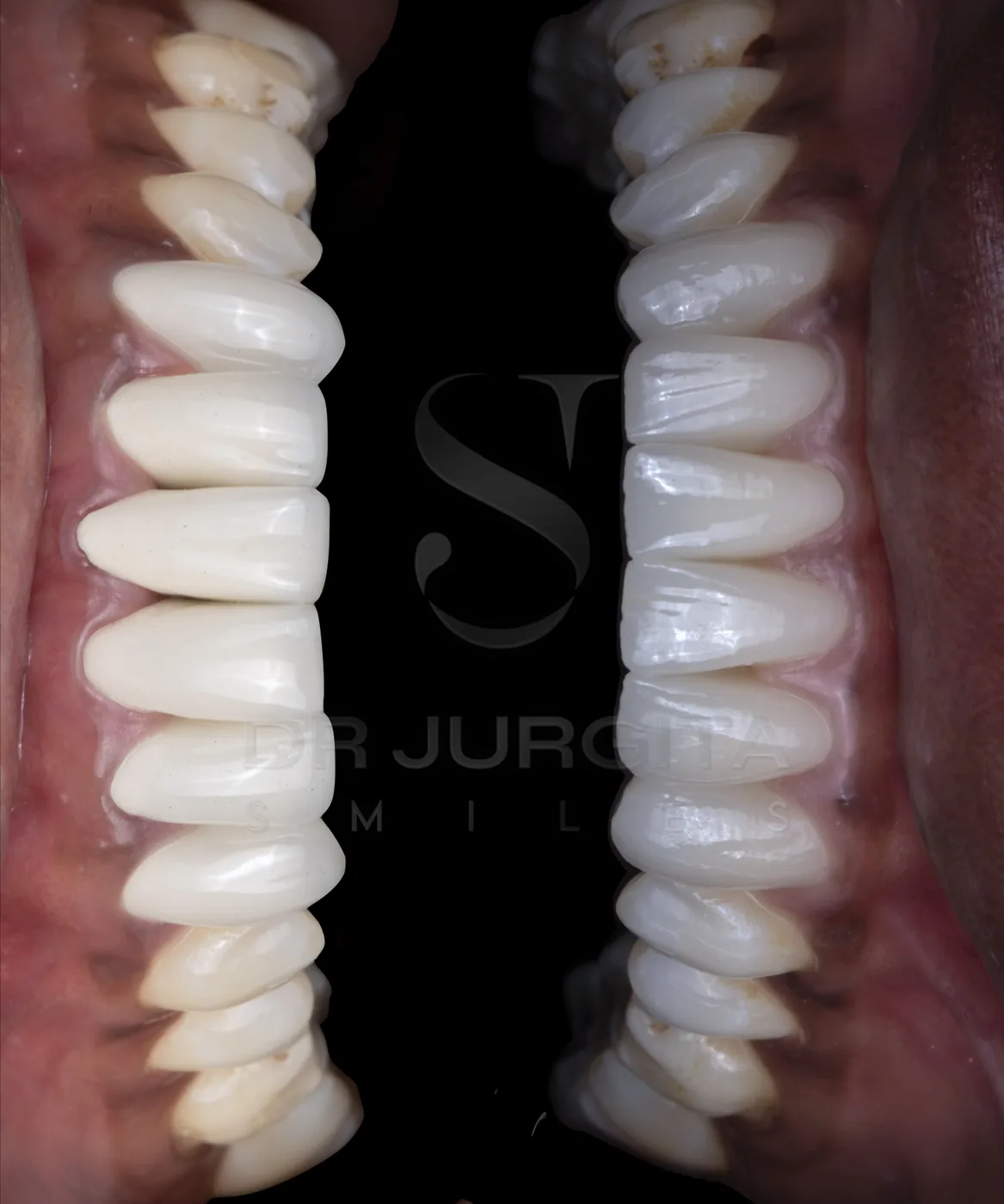
Lower teeth before and after 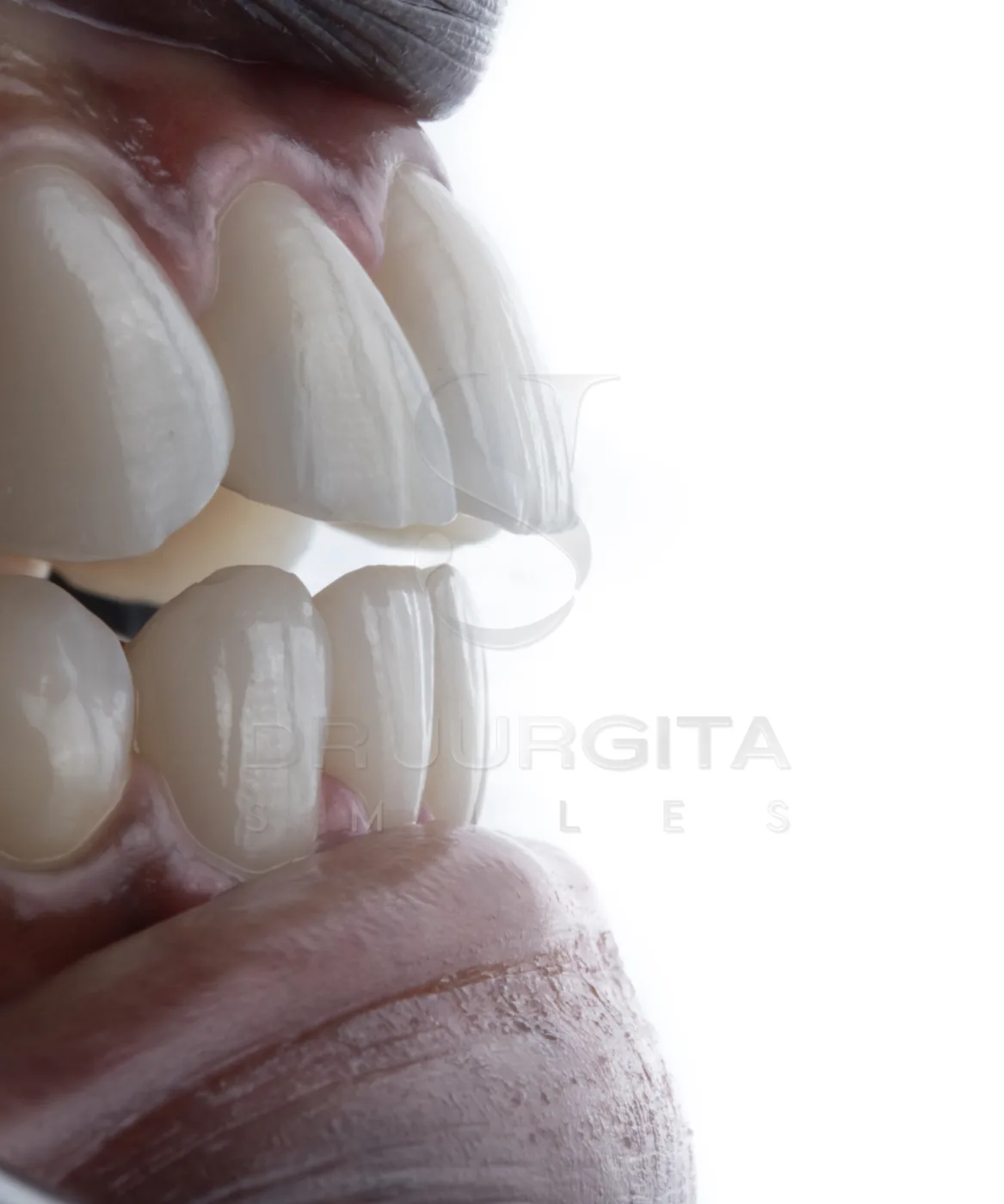
Side view — crowns made to look like real teeth in translucency, texture and shape - Back to Porcelain Crowns & Veneers
Not sure where you fit?
You don’t have to know which treatment you need — that’s exactly what a consultation or Ask About Your Smile is for.
Treatments in this case
- Crowns·from £1,500
- Gum contouring · Fees discussed at consultation
Not sure where you fit?
You don’t have to know which treatment you need — that’s exactly what a consultation or Ask About Your Smile is for.