By Jurgita Sybaite · Restorative & aesthetic dentist, Marylebone
Award winner, Ceramic Smile Makeover
Award winner, Best Composite Smile Makeover
Teaches other dentists how to do composite bonding
MSc Restorative Dentistry, with distinction, UCL Eastman · 18 years in practice
01 · The simple rule
Good teeth, small changes? Composite. A bigger redesign? Porcelain.
Go for composite if
You need a little more of what's already good.
Your teeth are healthy, with good enamel and few or no fillings.
You want small enhancements: edges, chips, small gaps, symmetry.
Your teeth are relatively well aligned — or can be aligned with orthodontics first.
You're happy with the colour — or whitening can get you there.
You're younger, and keeping your natural enamel for the decades ahead matters most.
You're happy with a shorter lifespan and more frequent maintenance.
Go for porcelain if
You need a bigger change.
You want a bigger makeover or a real redesign of shape and proportions.
Your teeth already carry many fillings or old restorations.
You want a bigger colour change than whitening can give.
You have minor misalignment but aren't ready to commit to orthodontics.
The restoration needs to extend under the gum — gums are more porcelain-friendly.
You want a longer lifespan and less upkeep, with fewer touch-ups.
You're mature enough that a more enamel-like material — porcelain — works in your favour.
This is a guide rather than a fixed rule. Composite can also be used for full veneers, and needing a larger change does not automatically mean porcelain. Age provides context, but the condition of your teeth matters more than your age alone.
My guiding principle is the least invasive treatment that can reliably achieve the agreed result — with healthy tooth structure preserved wherever possible.
02 · What each one is
Two materials, one goal.
Composite bonding
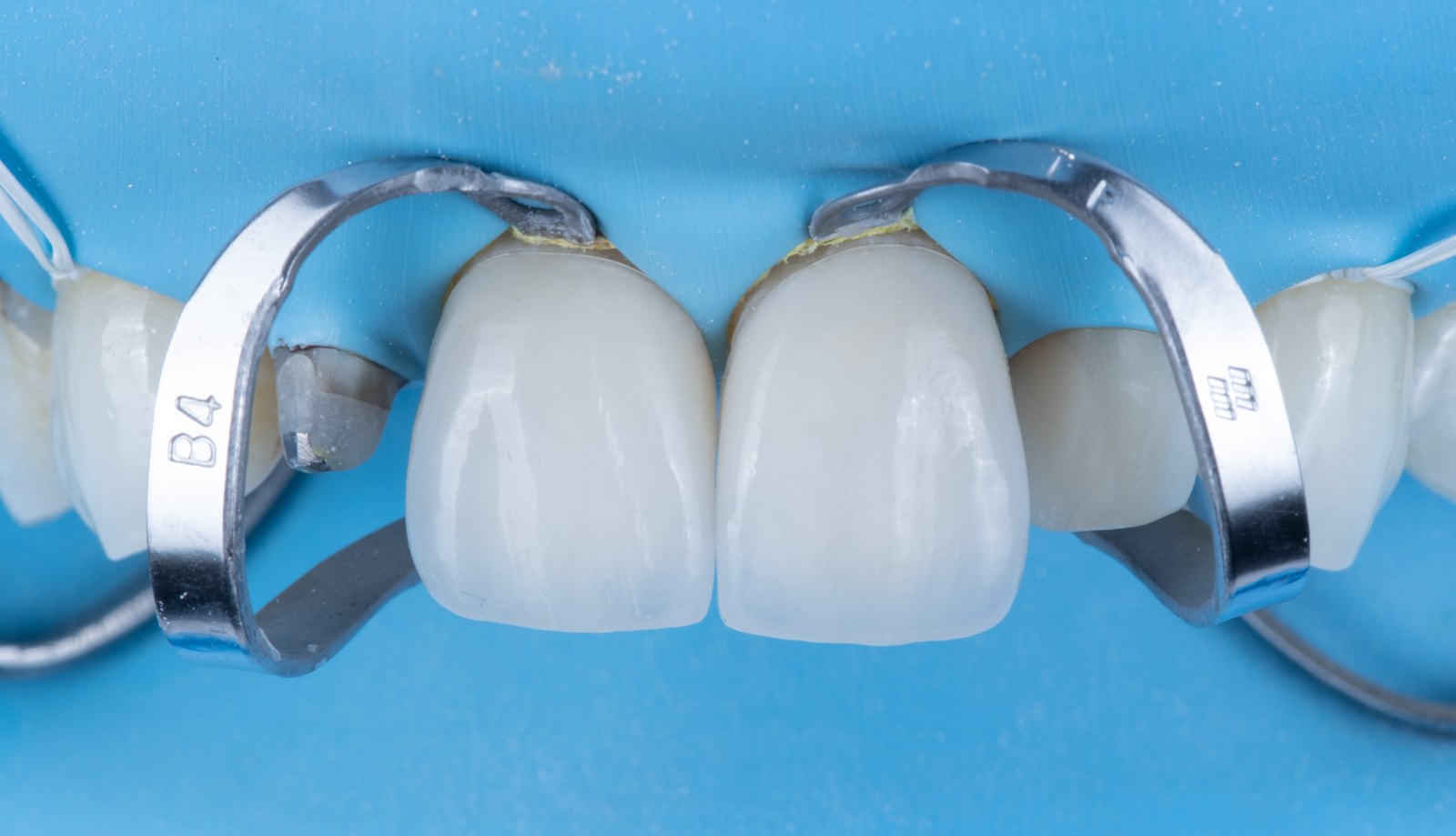
Tooth-coloured resin, built by hand
Added directly onto your tooth, layer by layer, by the dentist at the chair.
Comes in many shades and translucencies, so it can imitate a natural tooth very realistically.
How real the result looks depends entirely on the dentist who places it.
It is a resin, closer to a hard plastic than to glass, so it is less resistant to biting forces and wear — and needs maintenance and repolishing every 6–12 months.
Porcelain veneers
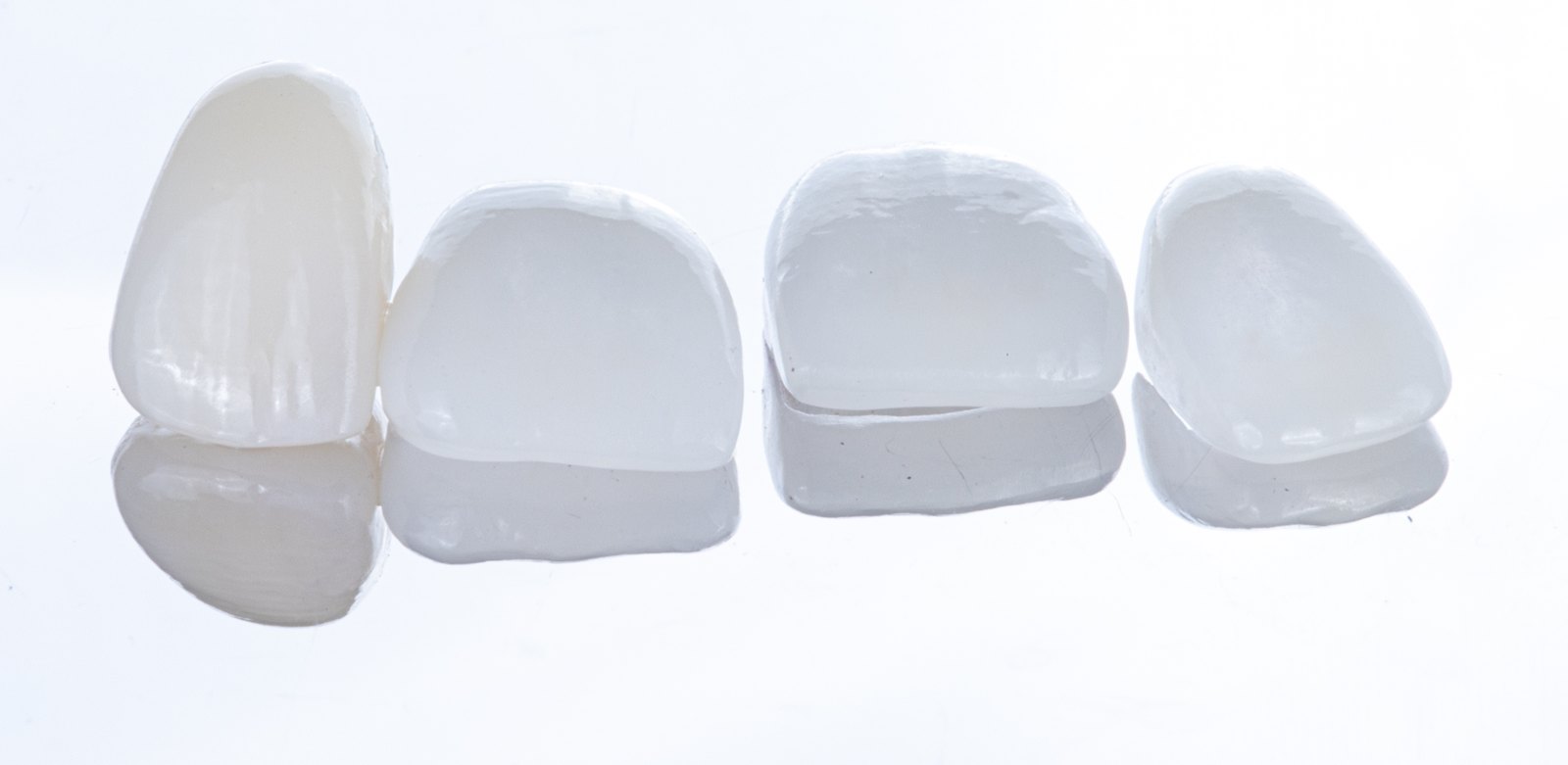
Thin ceramic shells, like a contact lens
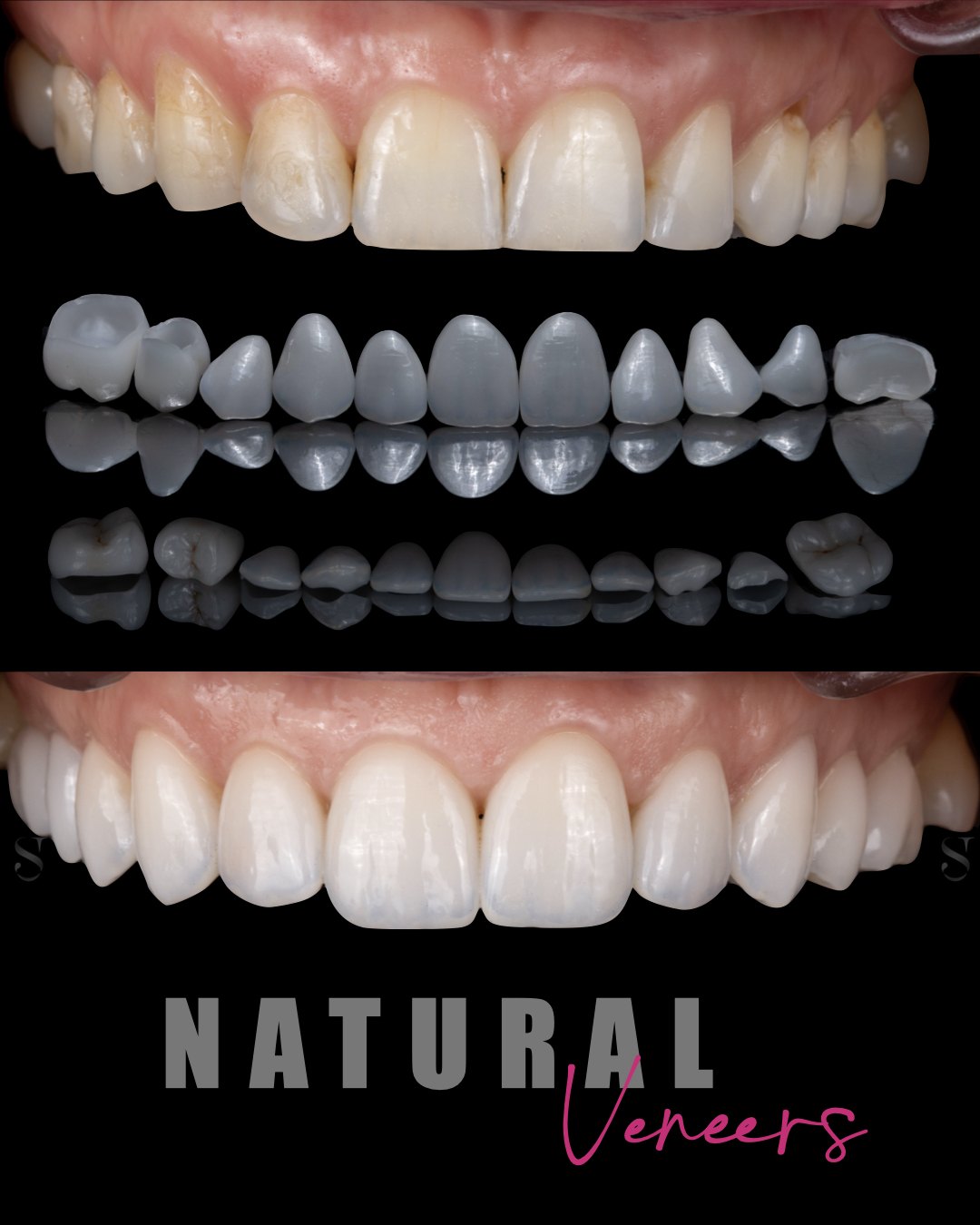
Made in a laboratory by a dental technician, to the shape the dentist has prepared.
Custom-made for each tooth, then tried in and refined so it fits precisely.
Ceramic needs an even thickness across the whole surface, so some tooth preparation may be needed on part or all of the visible surface.
It is closer to glass: once made, it resists wear and keeps its colour and thickness in a way resin does not.
No extra annual maintenance beyond your own daily hygiene and regular check-ups.
03 · Two common misconceptions
Two things patients are often told — that aren't quite true.
Composite
Porcelain
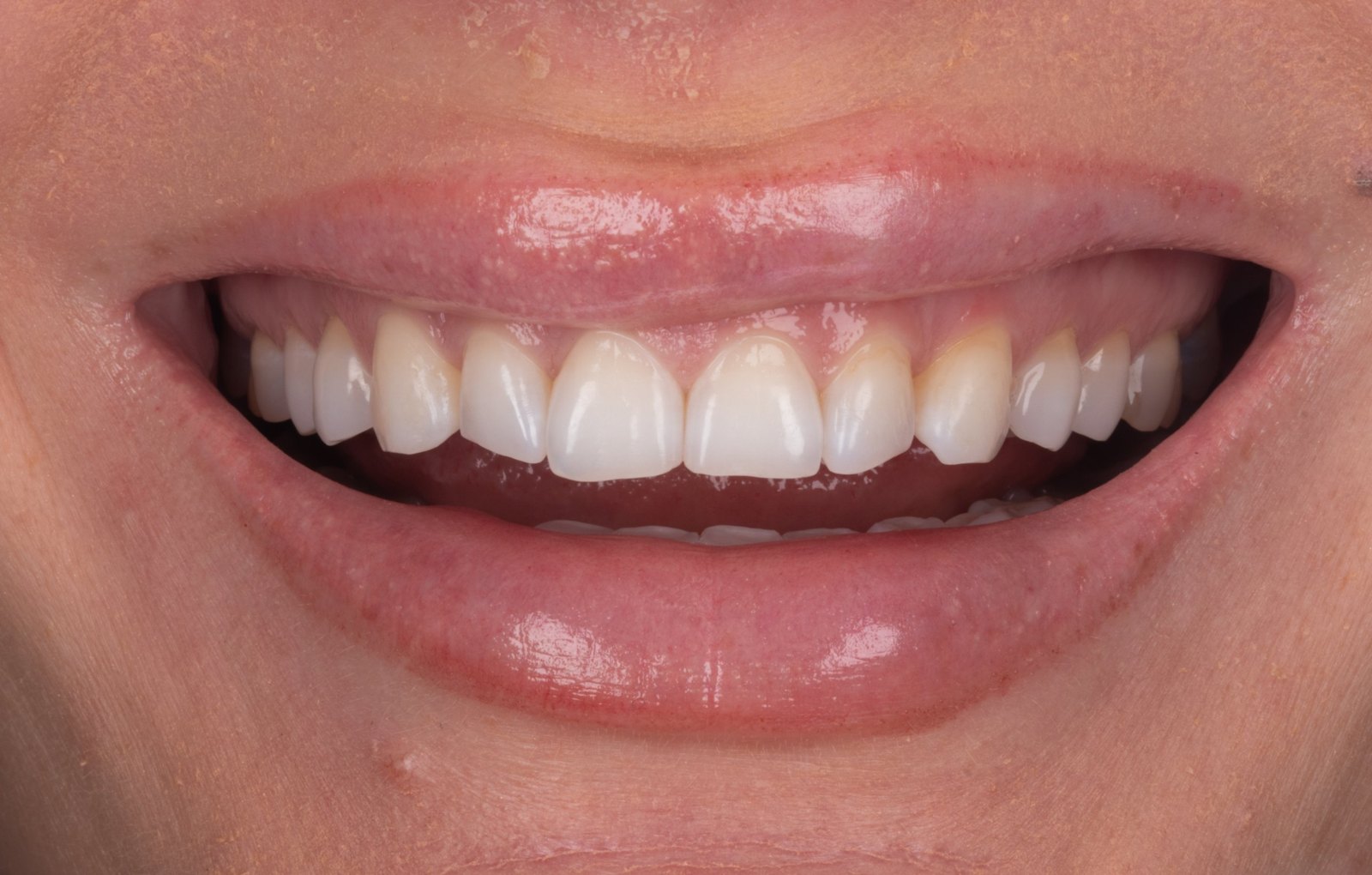
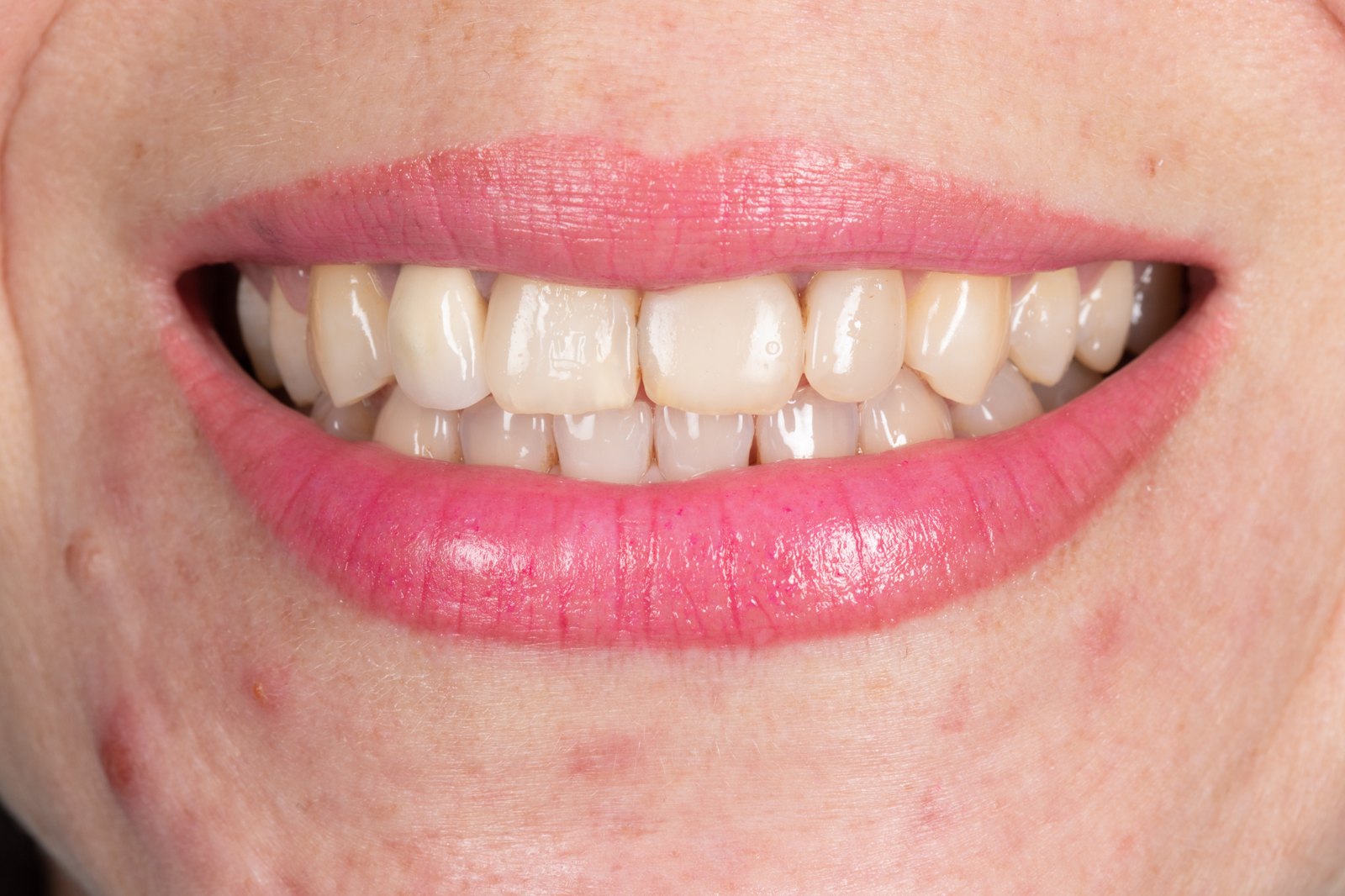
Smile
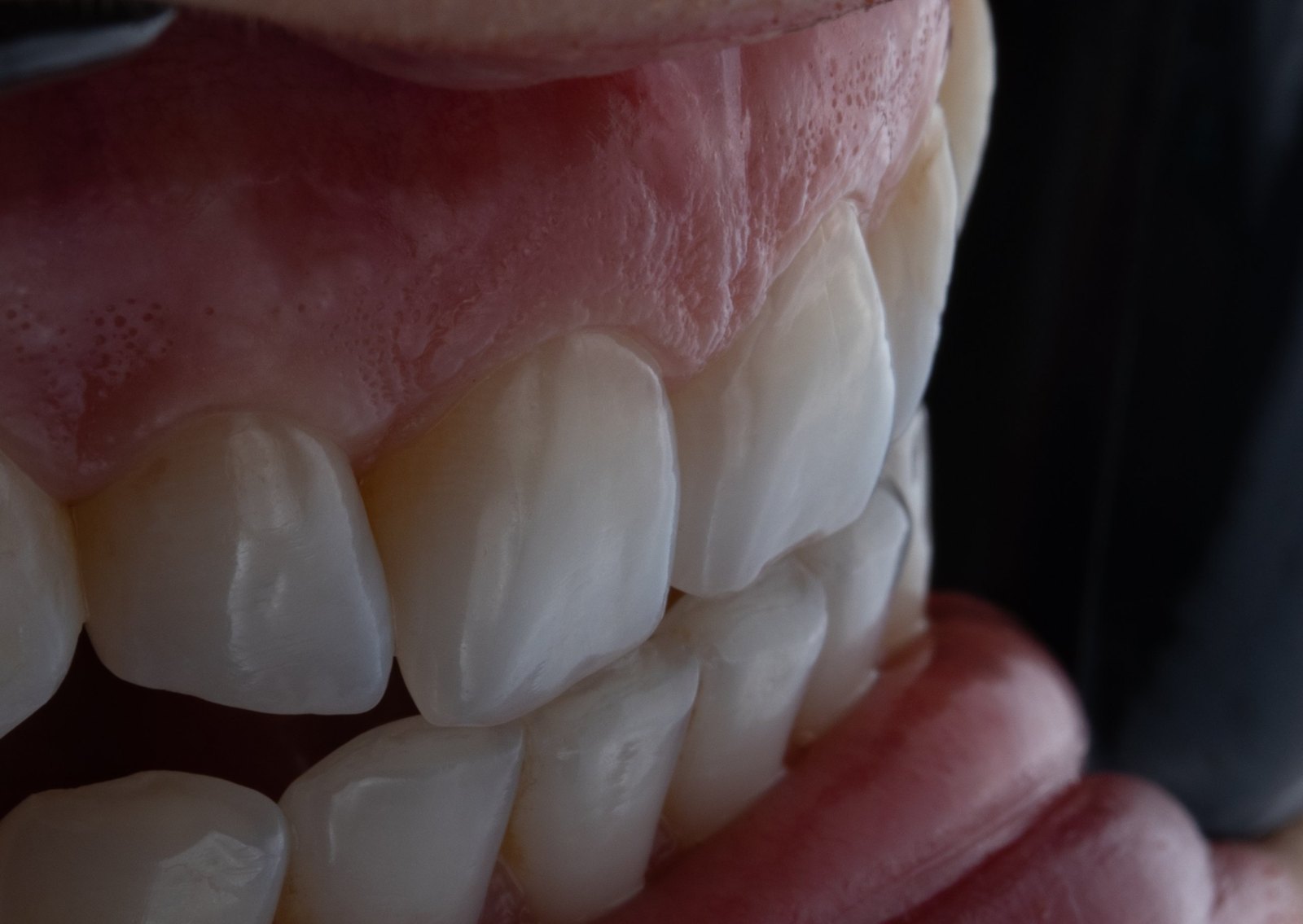
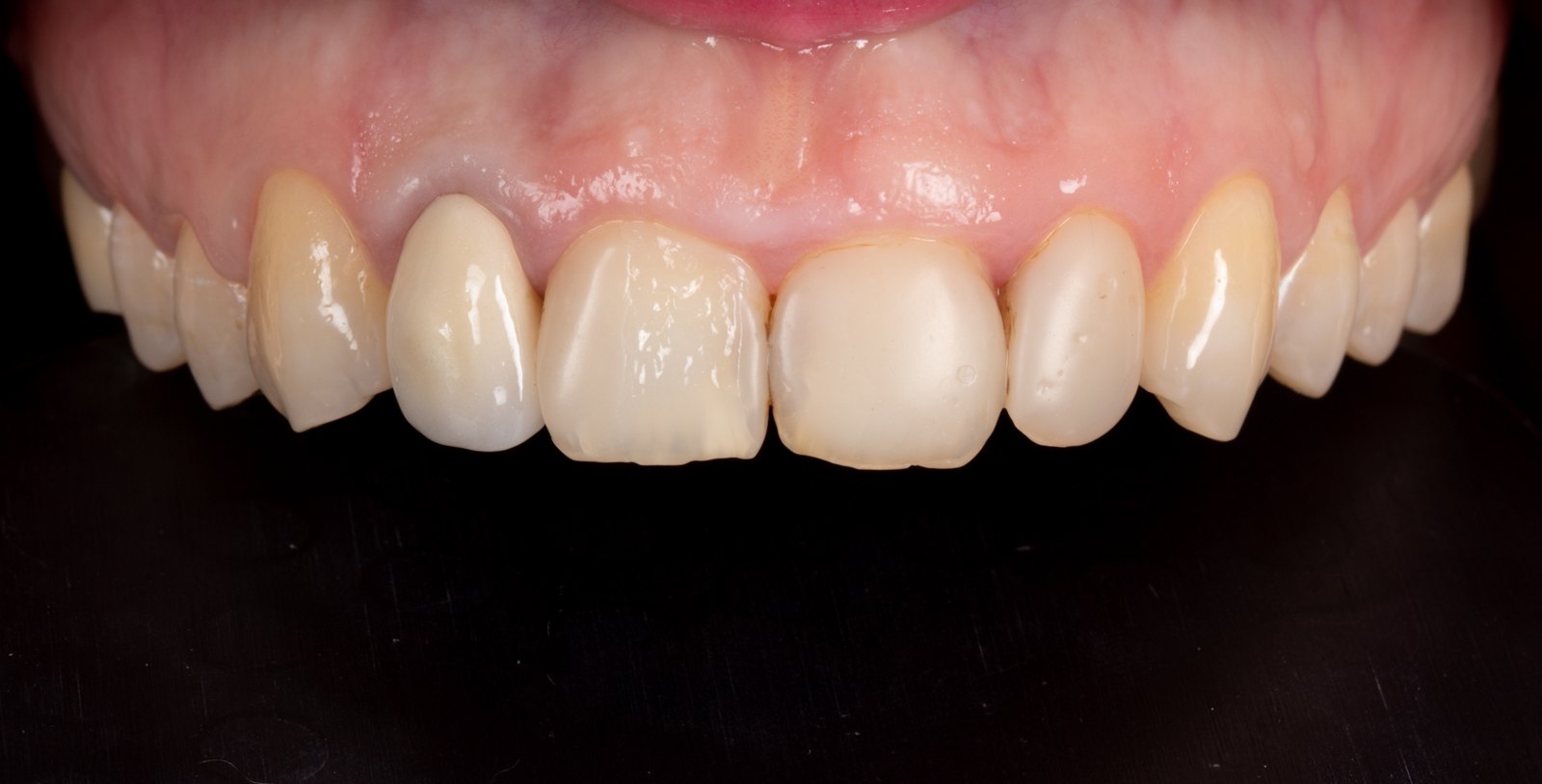
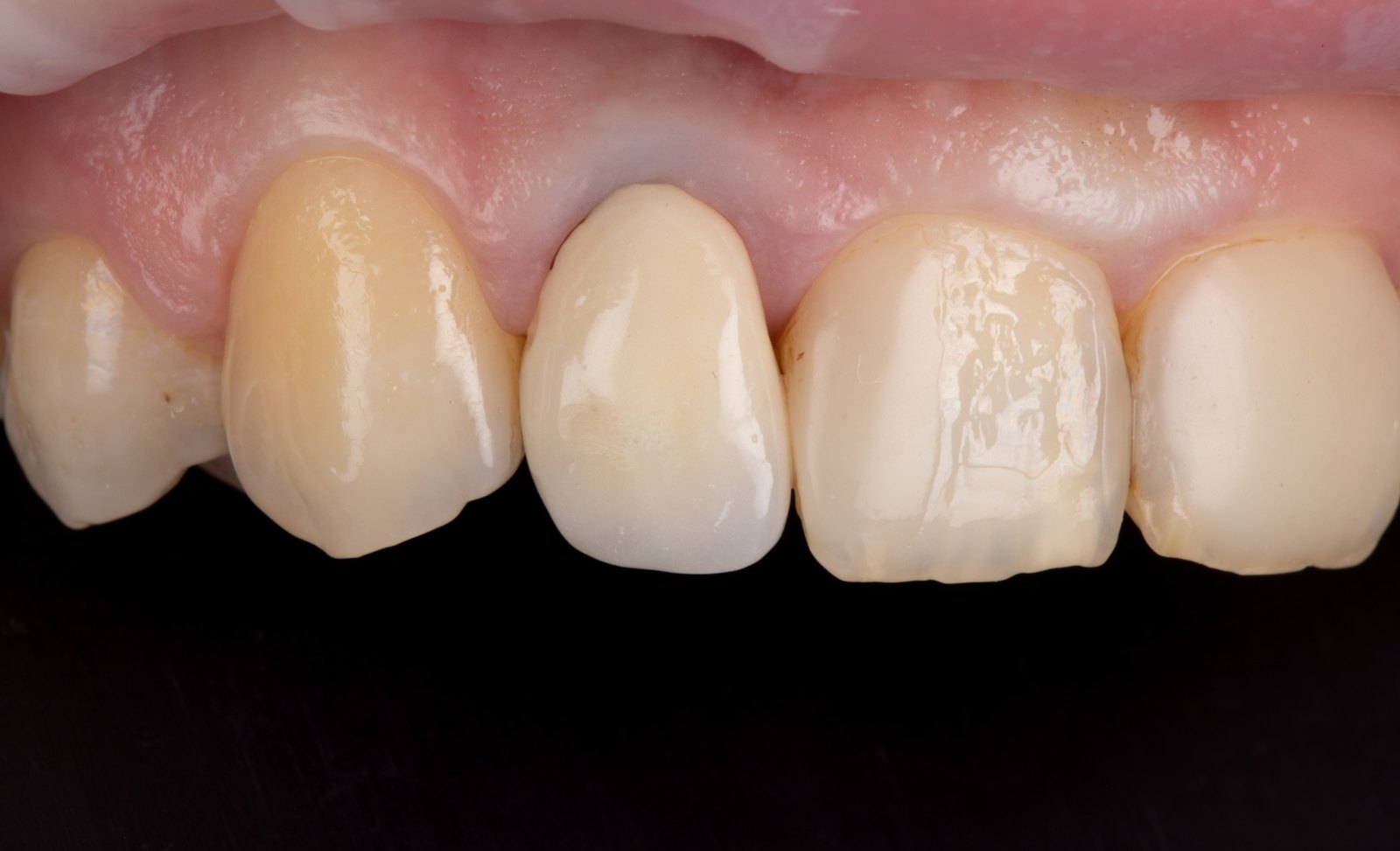
Close-up
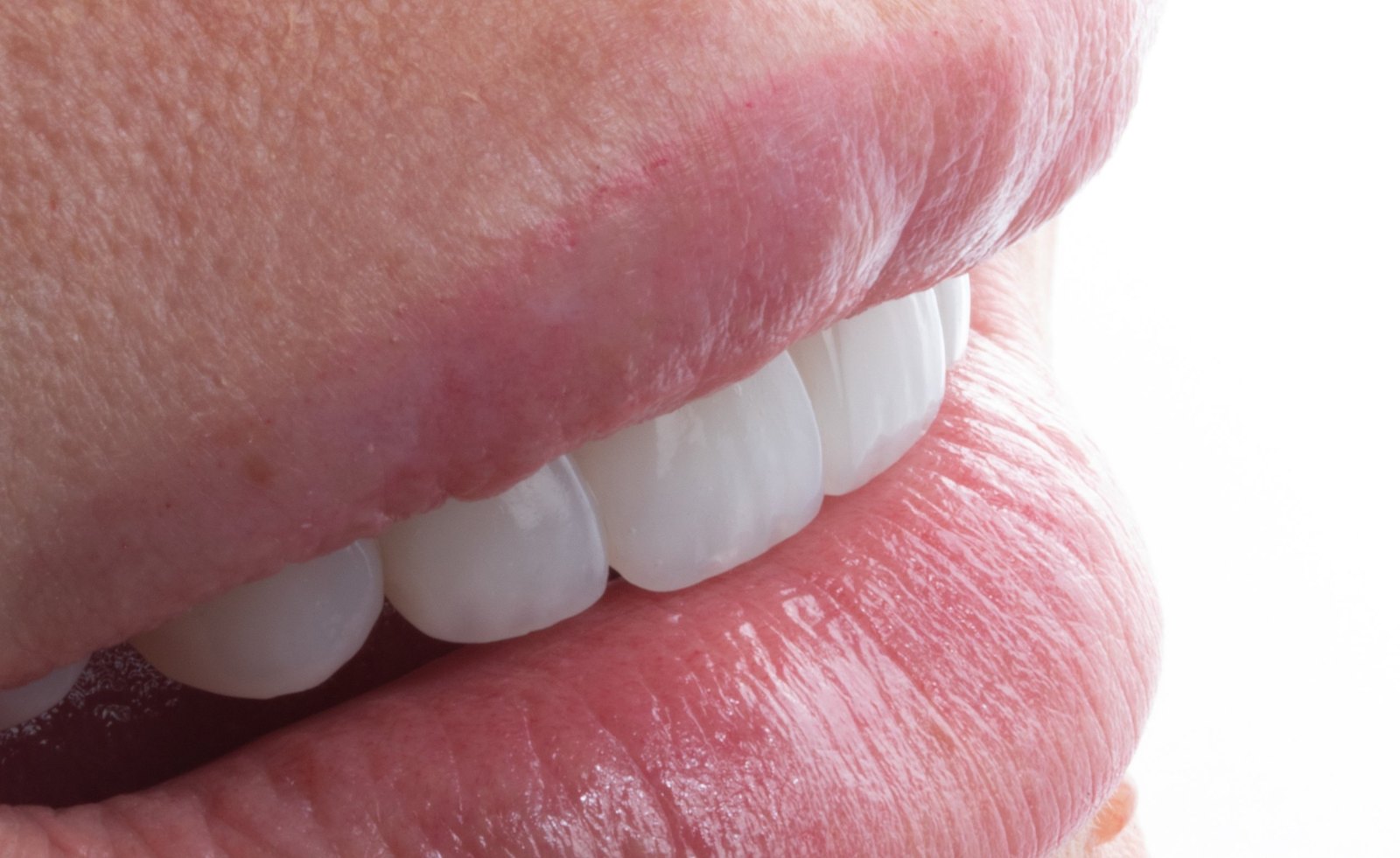
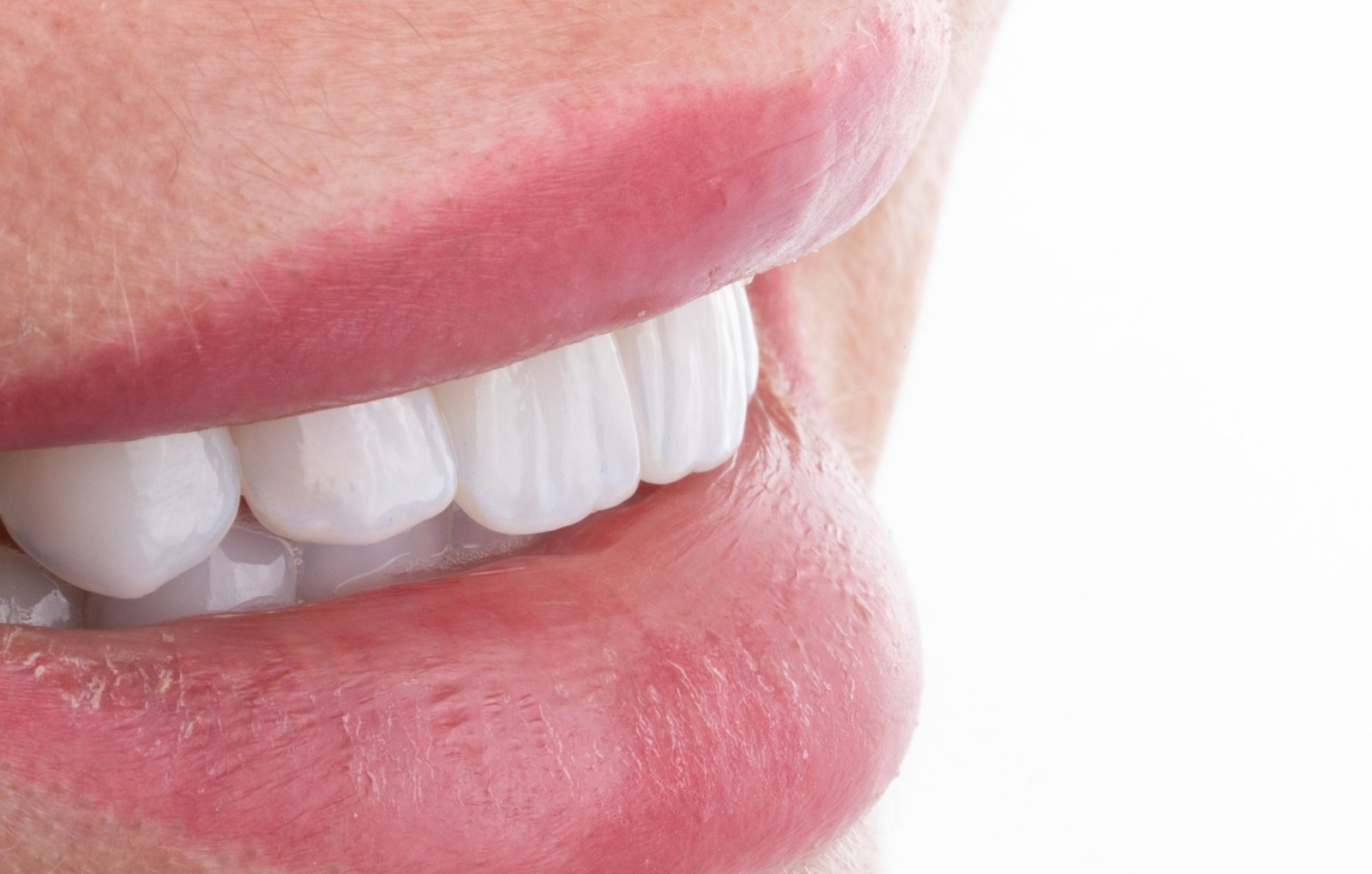
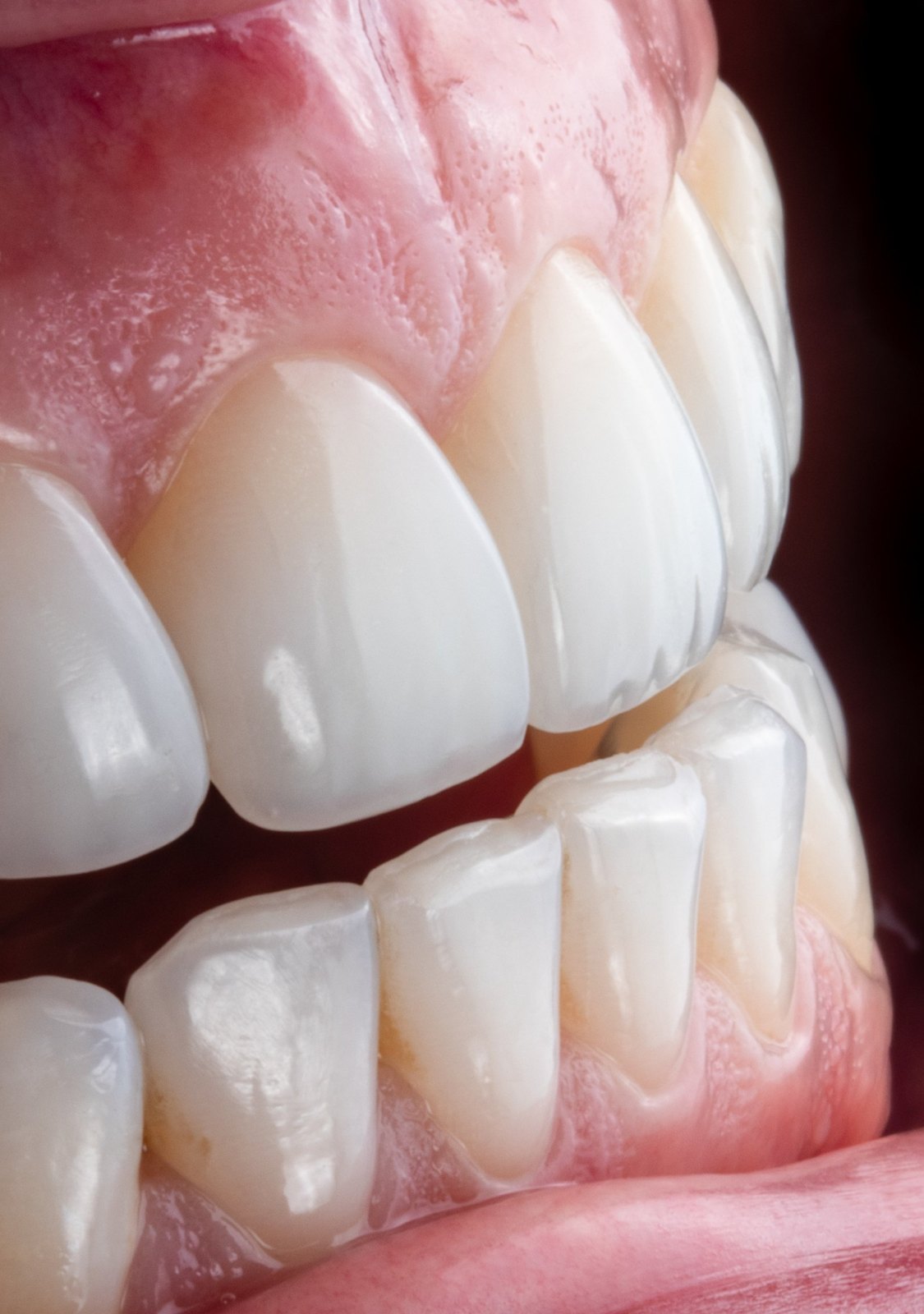
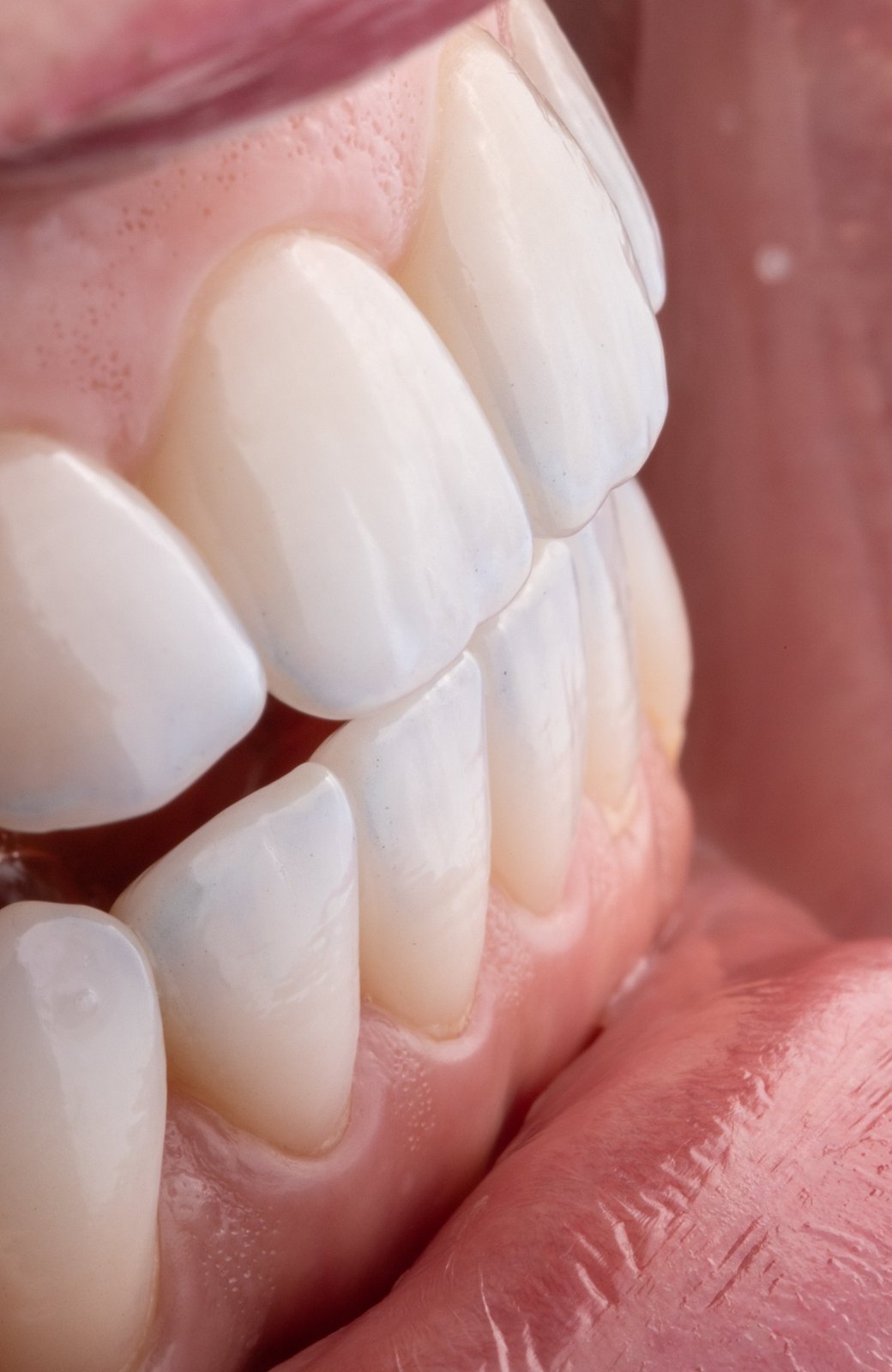
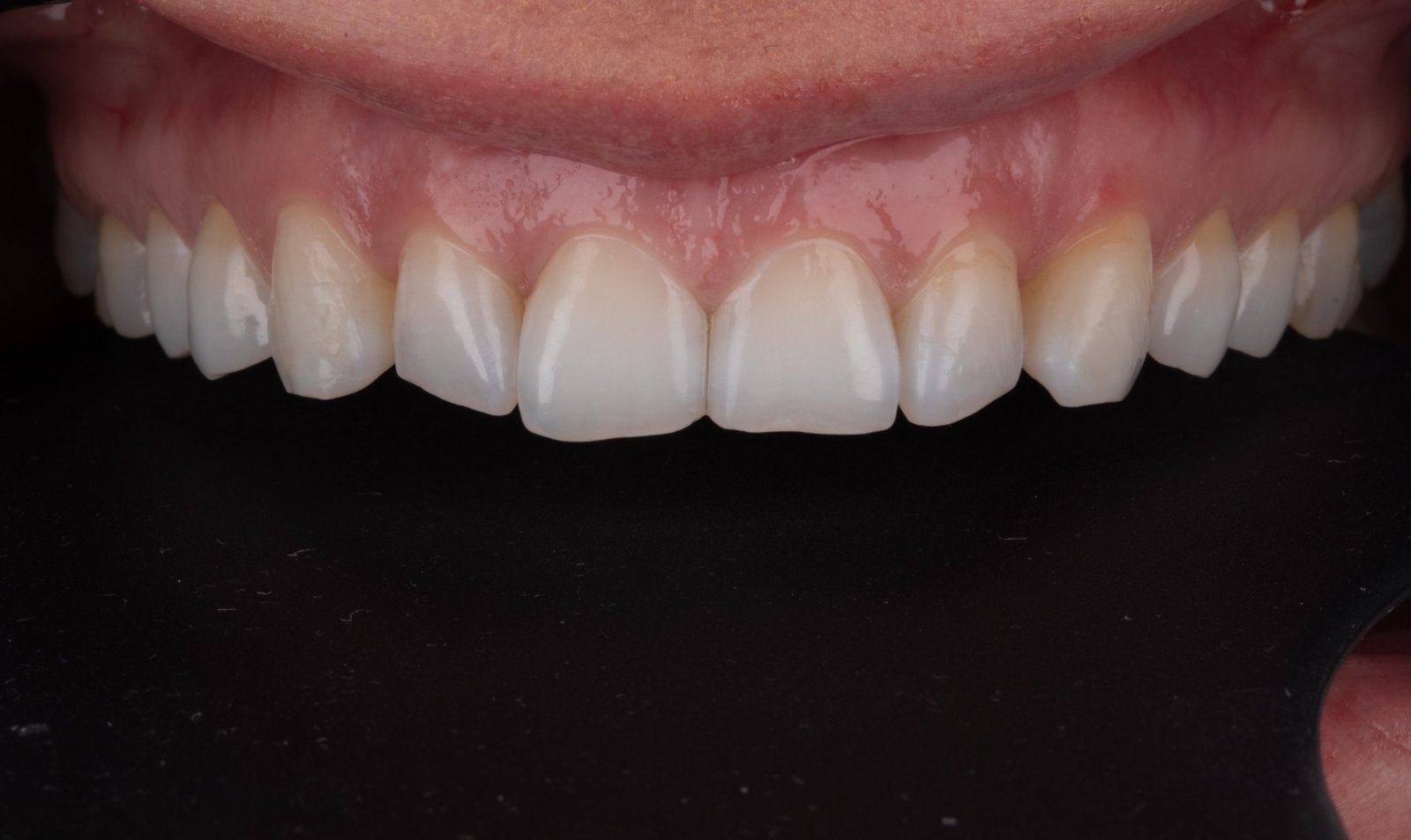
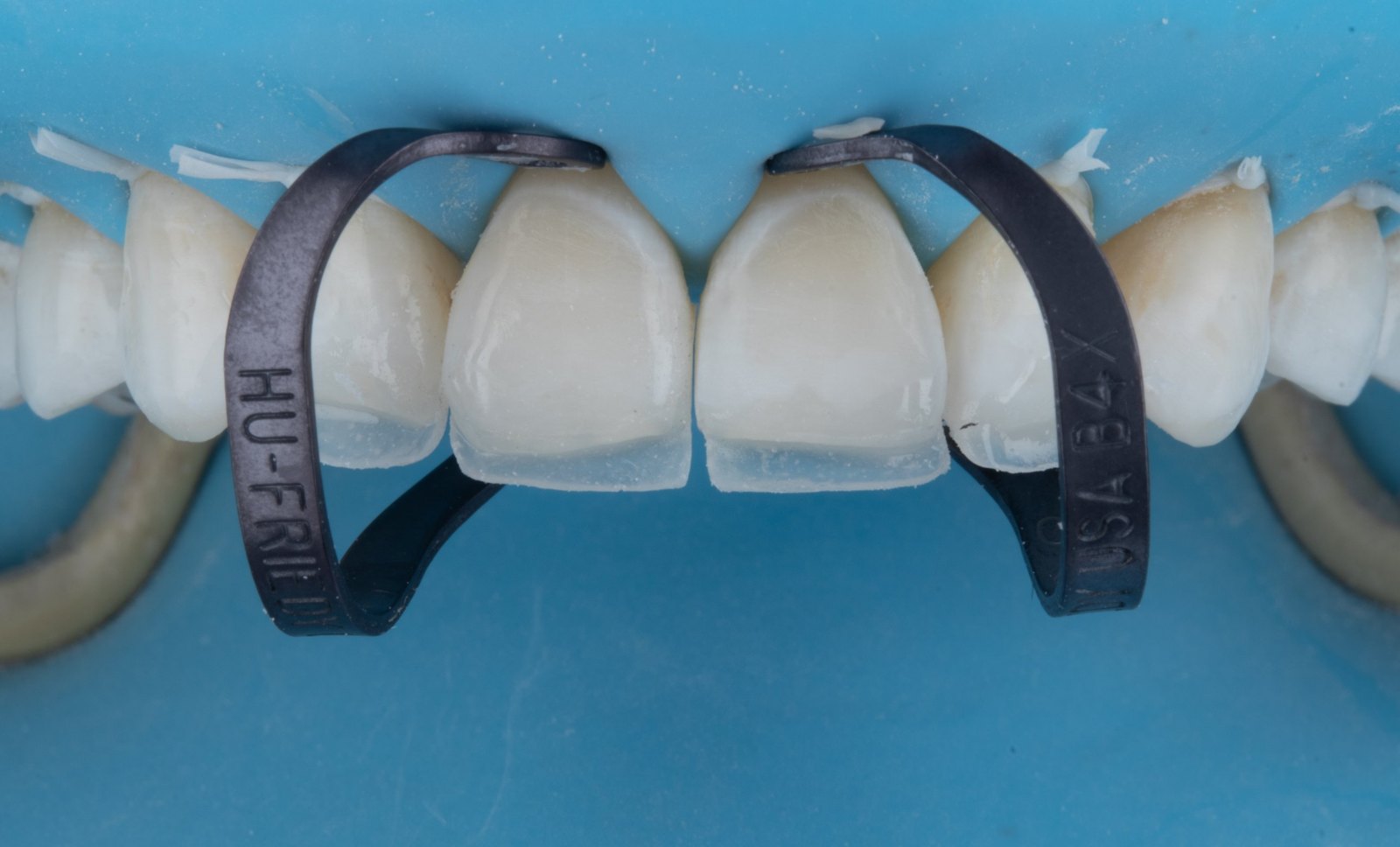
Both can look entirely natural. The price you pay is in longevity.
Misconception 1
"My bonding keeps chipping, so I need a stronger material."
Both composite and porcelain need a good bite — or a bite that has been properly managed before treatment. If the bite isn't right, composite will chip, and porcelain will chip or fracture too.
So if you've been told your bonding keeps chipping and the answer is to switch to porcelain, the switch alone is unlikely to solve it. The cause is the bite, not the material — which is why I assess how your teeth meet before anything else.
Misconception 2
"Veneers look fake. Composite looks more natural."
Both can look entirely natural — or obviously fake. With an experienced dentist who looks after the biology beneath the veneer — tooth and gum — and a technician who is a master ceramist, porcelain veneers are practically indistinguishable from natural teeth. If either is less skilled, they can look and feel artificial, and cause problems in the mouth.
The same is true of composite. It comes in many shades and degrees of translucency, and making it read as a real tooth takes skill and an artist's eye. It can certainly be done. Placed in a single shade, too opaque or poorly shaped, it looks fake — and can harm the teeth and gums around it.
It's the hands, not the material.
Read Smile Science → how smiles are made, and what makes them look natural or fake.
04 · What decides it
Ten factors I consider before choosing a material.
#
Factor
Points towards composite
Points towards porcelain
01
How much you want to change
Small additions: worn edges, chips, suitable gaps, symmetry — adding what is missing to a tooth that already gives us a good starting point.
A more substantial change in shape, proportions or colour across the visible tooth.
02
The condition of your teeth
Healthy teeth with good enamel and few or no fillings.
Heavily restored teeth, many fillings, or old restorations that need replacing.
03
Where the restoration ends
At or above the gum line.
Needs to extend under the gum — gums are more porcelain-friendly.
04
Colour
You're happy with your colour, or whitening can get you there. Whiten first — composite keeps its shade and won't whiten later.
Discolouration that whitening has not adequately improved, or a bigger colour change.
05
Previous dentistry
Unprepared teeth, or old bonding that can be refreshed.
A tooth already prepared for earlier work: porcelain behaves more like natural enamel and restores strength closer to the original tooth.
06
Tooth position
Aligned teeth — or aligned first, so bonding can be purely additive. Orthodontics may be the step that makes that possible.
Veneers change the contours of teeth; they do not move them. I assess whether orthodontics would help first. If a tooth must be prepared to compensate for its position, composite is not the material — only porcelain can properly restore a prepared tooth.
07
Size of your teeth
Healthy, smaller teeth or suitable gaps, where adding material helps.
Teeth already large or prominent: covering them with composite could make them look bulkier.
08
Your bite and habits
Composite chips more easily, but is relatively straightforward to repair.
Porcelain resists wear better, but a fracture is harder to repair. With either, the bite must be managed first. Where teeth must be prepared to correct the bite, porcelain is the material that can restore them.
09
Your age
Younger patients, where preserving tooth structure for the decades ahead is particularly valuable.
Mature patients, where long-term stability matters more. Age gives context; the condition of your teeth matters more.
10
Maintenance and commitment
Maintenance and repolishing every 6–12 months, and more frequent repairs or replacement over time.
No routine repolishing, though regular reviews remain essential.
01How much you want to change
Points towards composite
Small additions: worn edges, chips, suitable gaps, symmetry — adding what is missing to a tooth that already gives us a good starting point.
Points towards porcelain
A more substantial change in shape, proportions or colour across the visible tooth.
02The condition of your teeth
Points towards composite
Healthy teeth with good enamel and few or no fillings.
Points towards porcelain
Heavily restored teeth, many fillings, or old restorations that need replacing.
03Where the restoration ends
Points towards composite
At or above the gum line.
Points towards porcelain
Needs to extend under the gum — gums are more porcelain-friendly.
04Colour
Points towards composite
You're happy with your colour, or whitening can get you there. Whiten first — composite keeps its shade and won't whiten later.
Points towards porcelain
Discolouration that whitening has not adequately improved, or a bigger colour change.
05Previous dentistry
Points towards composite
Unprepared teeth, or old bonding that can be refreshed.
Points towards porcelain
A tooth already prepared for earlier work: porcelain behaves more like natural enamel and restores strength closer to the original tooth.
06Tooth position
Points towards composite
Aligned teeth — or aligned first, so bonding can be purely additive. Orthodontics may be the step that makes that possible.
Points towards porcelain
Veneers change the contours of teeth; they do not move them. I assess whether orthodontics would help first. If a tooth must be prepared to compensate for its position, composite is not the material — only porcelain can properly restore a prepared tooth.
07Size of your teeth
Points towards composite
Healthy, smaller teeth or suitable gaps, where adding material helps.
Points towards porcelain
Teeth already large or prominent: covering them with composite could make them look bulkier.
08Your bite and habits
Points towards composite
Composite chips more easily, but is relatively straightforward to repair.
Points towards porcelain
Porcelain resists wear better, but a fracture is harder to repair. With either, the bite must be managed first. Where teeth must be prepared to correct the bite, porcelain is the material that can restore them.
09Your age
Points towards composite
Younger patients, where preserving tooth structure for the decades ahead is particularly valuable.
Points towards porcelain
Mature patients, where long-term stability matters more. Age gives context; the condition of your teeth matters more.
10Maintenance and commitment
Points towards composite
Maintenance and repolishing every 6–12 months, and more frequent repairs or replacement over time.
Points towards porcelain
No routine repolishing, though regular reviews remain essential.
Sometimes the clinical indications for composite and porcelain overlap — both can address the same concerns about shape, shade or wear. What finally decides the best option is your personal circumstances and expectations. That's why a personal consultation matters most: to find the solution that works best for you.
Your photos are a good first step — send them and I'll reply personally. An examination is needed to confirm your options.
The material matters less than how it is planned and made.
People should compliment your smile — not your dentistry. Whichever material we choose, every plan follows the same five steps.
1
Your teeth and your goal. I start by assessing the condition of your teeth and the change you're hoping for, then look for the least invasive option that can reliably work for you. That's why every plan is made for you — never a package.
2
A bite that can carry it. I assess whether your bite will let the chosen treatment function safely, without leading to failure. If it can't yet, I manage the bite first, creating the right environment for composite or porcelain to work well.
3
A design for your face. I study your face and smile to decide what the teeth need to complement them — size, length, volume, shape, alignment and character — chosen to suit you and your personality, never shaped by default. For porcelain and larger bonding cases, you see a trial of the new shape before anything is committed.
4
A plan for every tooth. Then we decide what each individual tooth needs to reach that result, weighing biological, functional, mechanical and aesthetic factors together.
5
Detail that makes it real. Finally we choose the shade and the degree of realistic character — opacity, translucency, surface texture — to suit your age, your personality and your other teeth.
During treatment I work on every microscopic detail of every tooth. Those details add up to the result we planned from the start: a beautiful, healthy smile that functions as it should. Everything is decided at the beginning — then we test it, and trust the process.
06 · Tooth vs years
Every option trades tooth you keep for years you get — less than you might think.
#
Option
What happens to your tooth
Typical lifespan
01
Composite bonding
Material is added to part of the tooth. It alters your tooth the least.
Replaced on average every 7 years
02
Composite veneers
Usually no tooth is removed, but much more of the surface is covered. Strength isn't lost, but covering more tooth is biologically more involved.
Replaced on average every 7 years
03
Porcelain veneers
Some preparation is usually needed at the start. That biological cost is offset by the longer lifespan.
Replaced on average every 14 years
01Composite bonding
What happens to your tooth
Material is added to part of the tooth. It alters your tooth the least.
Typical lifespan
Replaced on average every 7 years
02Composite veneers
What happens to your tooth
Usually no tooth is removed, but much more of the surface is covered. Strength isn't lost, but covering more tooth is biologically more involved.
Typical lifespan
Replaced on average every 7 years
03Porcelain veneers
What happens to your tooth
Some preparation is usually needed at the start. That biological cost is offset by the longer lifespan.
Typical lifespan
Replaced on average every 14 years
Your own teeth don't stand still either. Natural enamel wears and thins over the years. So over a lifetime, the difference between an untreated tooth and one minimally prepared for porcelain is often smaller than it first seems.
But only when it is done well. Over-preparation, a poor fit or careless bonding change that balance completely — with either material. That is why who does the work matters more than which material you choose.
How long it lasts depends on both of us.
The dentist
How well the treatment is planned and carried out — the bite, the preparation, the fit and the bonding.
You
How well your mouth looks after it: daily hygiene, regular dental care, general wellbeing, diet and lifestyle, habits such as grinding, clenching or nail biting, the products you use, and following the care I recommend — including any night guard.
The same restoration can last far longer in one mouth than in another. Lifespans are always a partnership.
Composite
Loses polish and can stain over time; maintenance and repolishing every 6–12 months are part of my care plan. A small chip does not always mean replacing all the bonding — sometimes a local repair is enough.
Porcelain
Keeps its colour and gloss well, with no routine repolishing. A larger fracture is harder to repair and may mean replacing the veneer.
Lifespans are a guide, not an expiry date. The decision to replace a restoration should follow its condition, your dental health and your preferences — not the calendar alone.
07 · Cost over 10 years
What you spend over 10 years
Six upper front teeth · over 10 years
Composite
£7,300
Porcelain
£9,000
First treatment
Replacement
Maintenance
Composite £7,300 = £2,400 + one replacement (around year 7) £2,400 + maintenance £2,500 — about a third of the total, and the next replacement is due within a few years. Porcelain £9,000 — at year 10 usually still on its first set.
Over 10 years, maintenance costs about as much as the composite itself — £2,500 vs £2,400.
Illustrative only — not a quote. Six upper front teeth. Composite at an average of £400 per tooth (fees from £300), replaced on average every 7 years, with £250 yearly maintenance; porcelain from £1,500 per tooth, replaced on average every 14 years. Today's prices. Excludes consultation, whitening, orthodontics and any treatment needed first. Individual results vary.
The full picture over 30 years
Six upper front teeth · cumulative cost over 30 years
£0£10,000£20,000£30,000£30,000
£27,000£19,500£27,000
07142128
Years
Composite
Porcelain
Composite maintenance
Step chart of cumulative cost over 30 years for six upper front teeth. Composite rises in £2,400 steps at years 0, 7, 14, 21, 28, plus £250 a year maintenance, reaching £19,500 at year 30. Porcelain rises in £9,000 steps at years 0, 14, 28, reaching £27,000 at year 30.
Cumulative cost by year, six upper front teeth
Year
Composite
Porcelain
0
£2,400
£9,000
7
£6,550
£9,000
10
£7,300
£9,000
13
£8,050
£9,000
14
£10,700
£18,000
21
£14,850
£18,000
27
£16,350
£18,000
28
£19,000
£27,000
30
£19,500
£27,000
Composite costs less at every point. Porcelain's costs come in larger, less frequent steps; composite's in smaller, more frequent ones — plus maintenance, which reaches £7,500 over 30 years, more than three sets of composite.
Illustrative only — not a quote. Six upper front teeth. Composite at an average of £400 per tooth (fees from £300), replaced on average every 7 years, with £250 yearly maintenance; porcelain from £1,500 per tooth, replaced on average every 14 years. Today's prices. Excludes consultation, whitening, orthodontics and any treatment needed first. Individual results vary.
Composite isn't redone forever. The chart assumes composite can simply be replaced again and again — in reality, that is not always possible. Removing composite and returning the tooth to its original condition are not always the same thing, and with each round the tooth tends to carry more restoration. Composite also struggles once teeth are heavily restored or need a genuine redesign. That is why, over a lifetime, most composite cases eventually move to porcelain. Starting with composite simply means getting there later, with more of your own tooth preserved until then.
A cheaper start can be wiser for a young patient with healthy teeth. The dearer one can be wiser where teeth are already heavily restored, or where a bigger change is needed now.
Your own figures come in a written plan with fees for each stage, and payment generally follows treatment as it progresses.
08 · What should really decide it
Not price. Not lifespan. What your teeth need.
Cost and longevity matter, but neither should drive the choice. The first question is always biological: what your teeth need, and the least invasive way to achieve the result you want.
Price
By year 10, composite has usually been replaced once and its next replacement is due within a few years; porcelain is usually still on its first set. Choosing on price alone rarely saves what it seems to.
Longevity — of your tooth, not only the material
Composite — On a well-chosen case, placed correctly, composite is additive. It can extend the life of the tooth itself, even though the material will need replacing again and again. Most bonding cases do eventually become porcelain cases.
Porcelain — Done correctly and minimally invasively, the preparation costs a little tooth structure. But the material lasts so long that this is largely offset.
So let your teeth lead
Good teeth, small changes: composite. When it eventually needs replacing, another composite is often a good option.
A bigger transformation: porcelain — done well, minimally invasive, and made to last.
Minimal invasiveness is the key. It is what allows a future set of veneers to be made without losing more of your tooth.
09 · From my Smile Stories
How the decision plays out in real cases.
Composite
Bonding & composite veneers after orthodontics
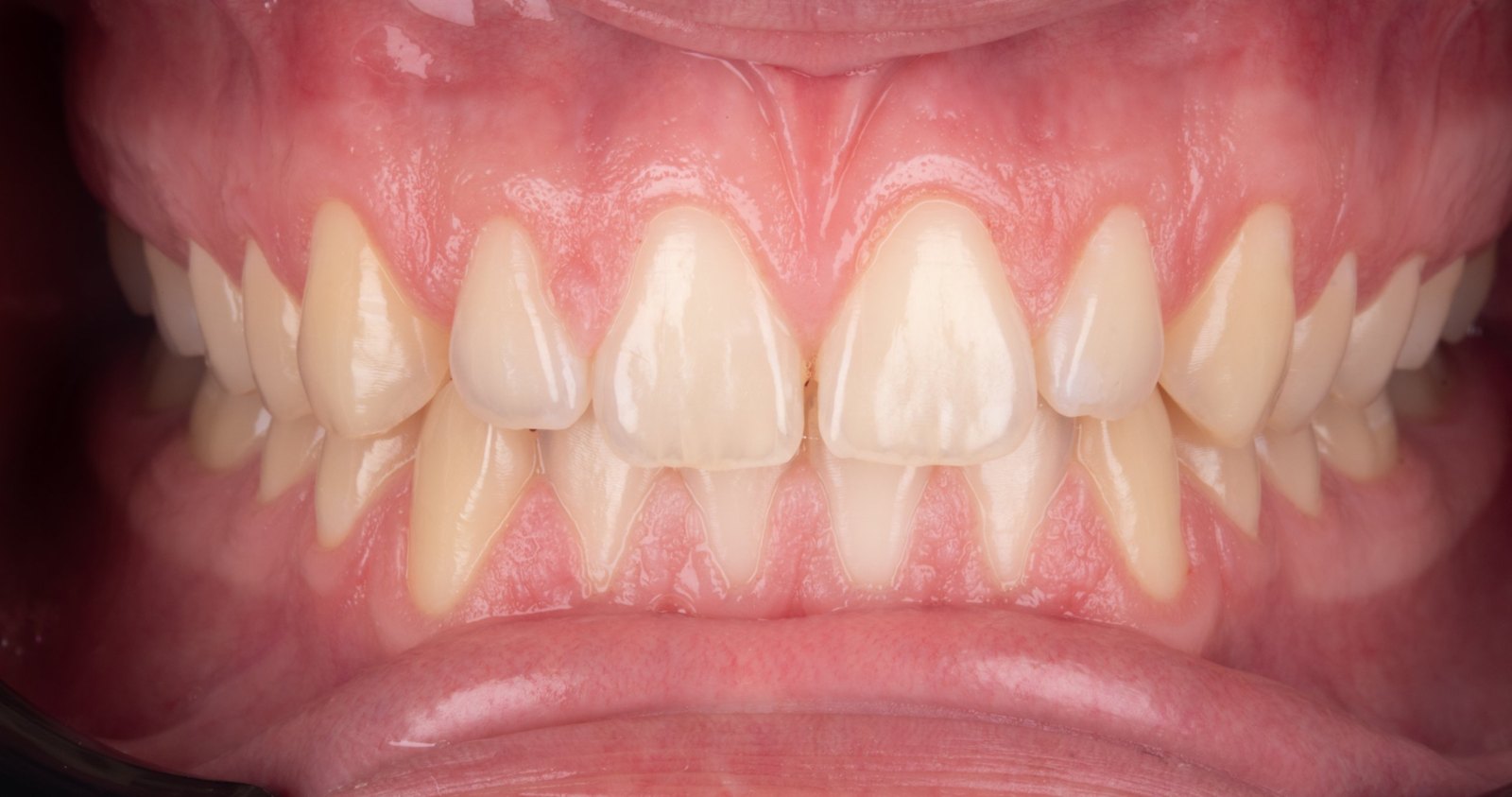
Straightened teeth showing old wear and erosion. Good position, good bite, healthy teeth — the ideal case for composite, kept as minimal as possible.
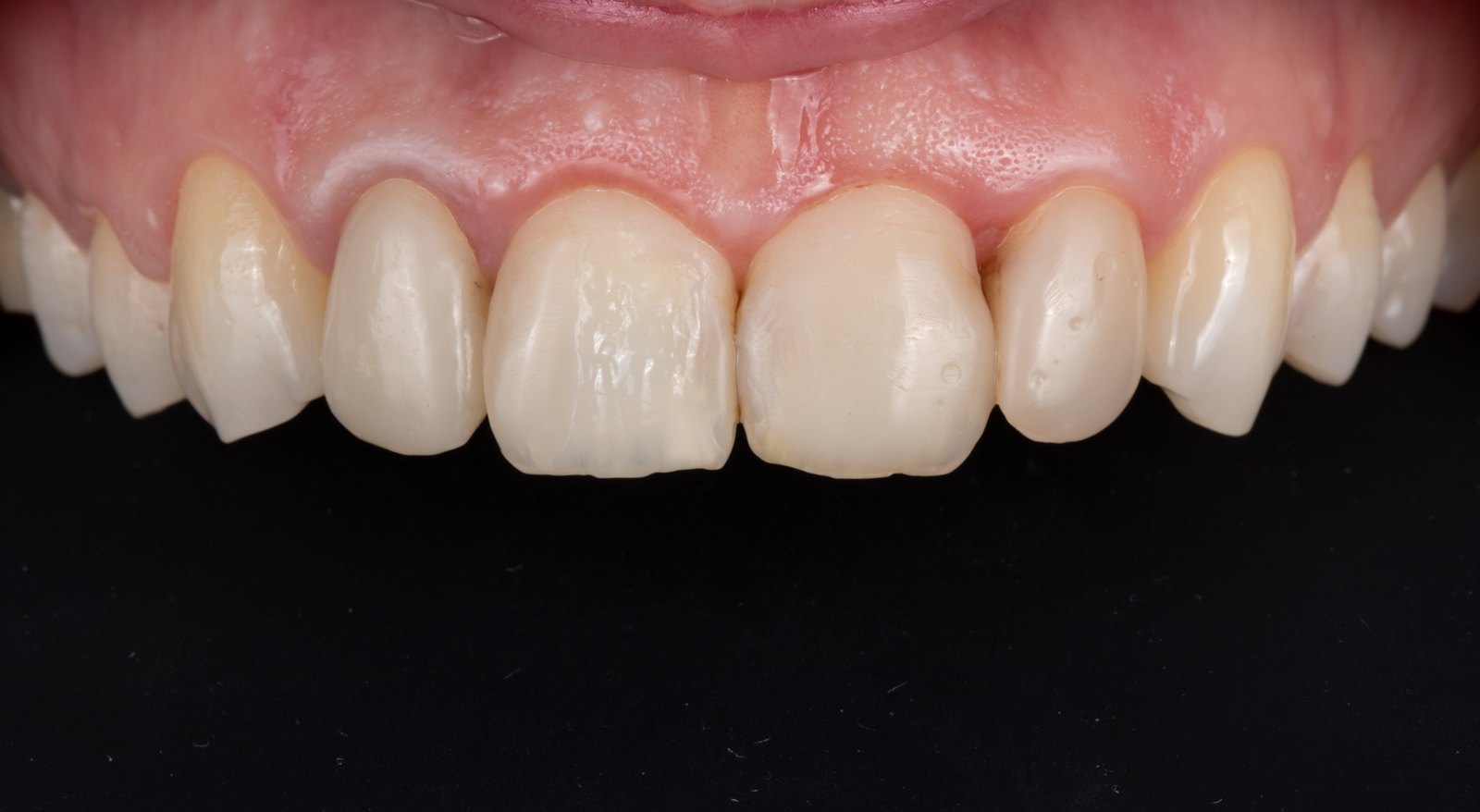
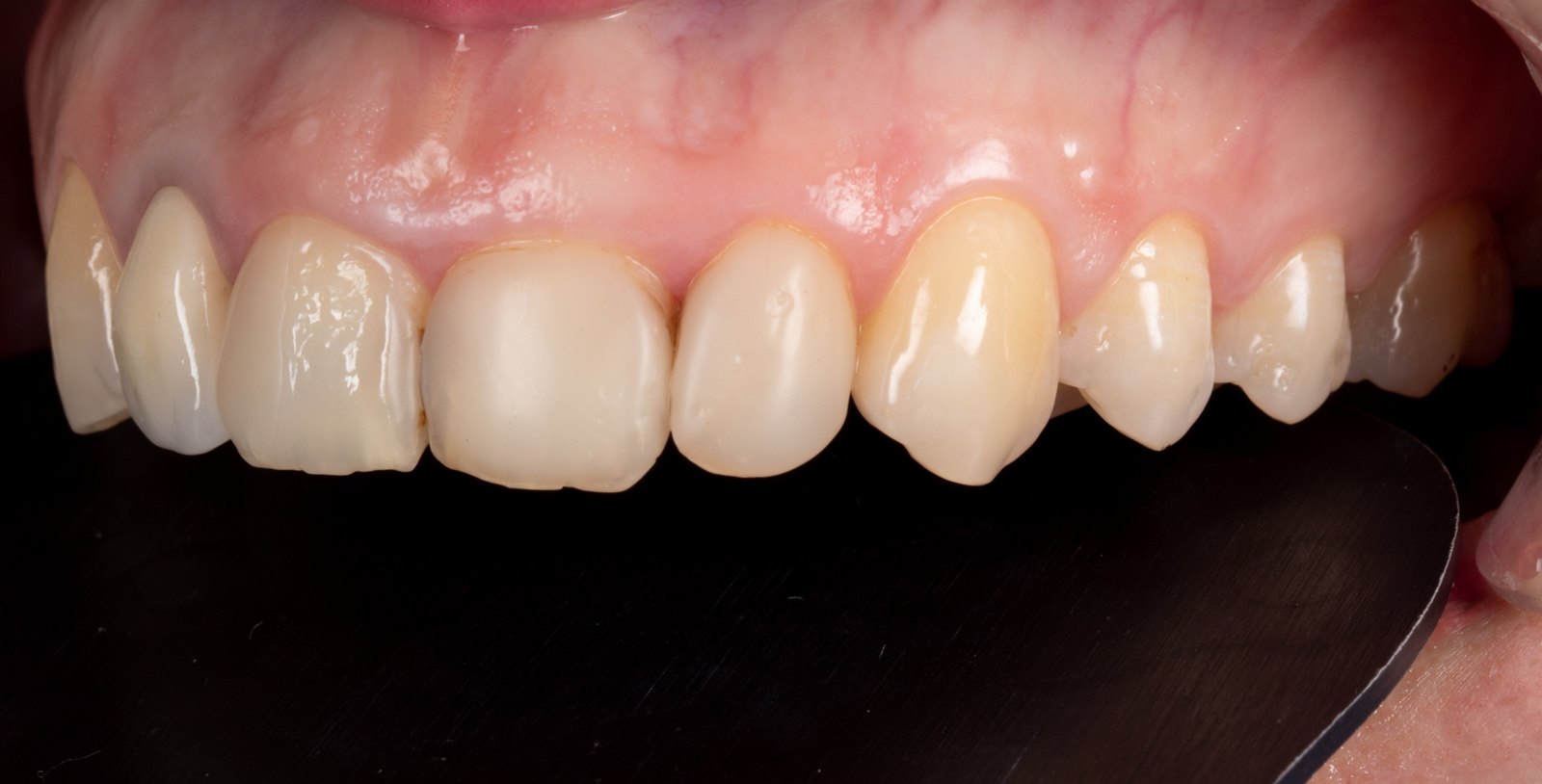
Orthodontics brought her teeth into the right position first. Once teeth are straight, the wear left by their old positions starts to show — worn edges, chipped corners, uneven lengths. That is why aligning teeth alone is rarely enough: a final restorative touch is usually needed. She also had some erosion on the visible surfaces, enamel lost to acidic food and drink. Otherwise, her teeth were healthy.
Why composite. Teeth in a good position, in good condition, a good bite, and a relatively young patient — this is the best case for composite. Only the wear and the lost enamel needed restoring.
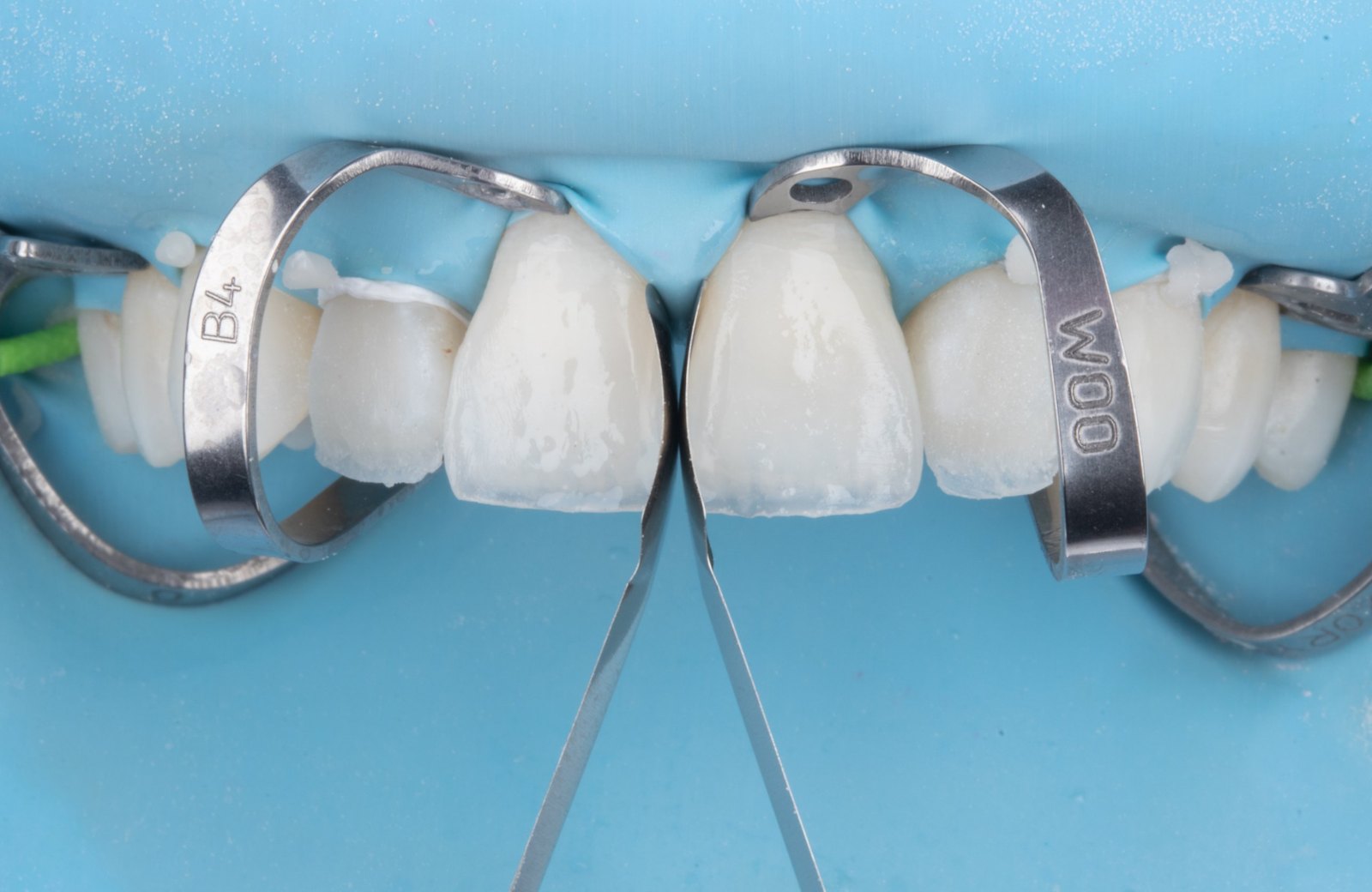
As little as possible. I added only where it was needed, without covering teeth unnecessarily. Full composite veneers went only on the side teeth, where volume was needed to create symmetry; elsewhere, the worn edges and eroded surfaces were bonded.
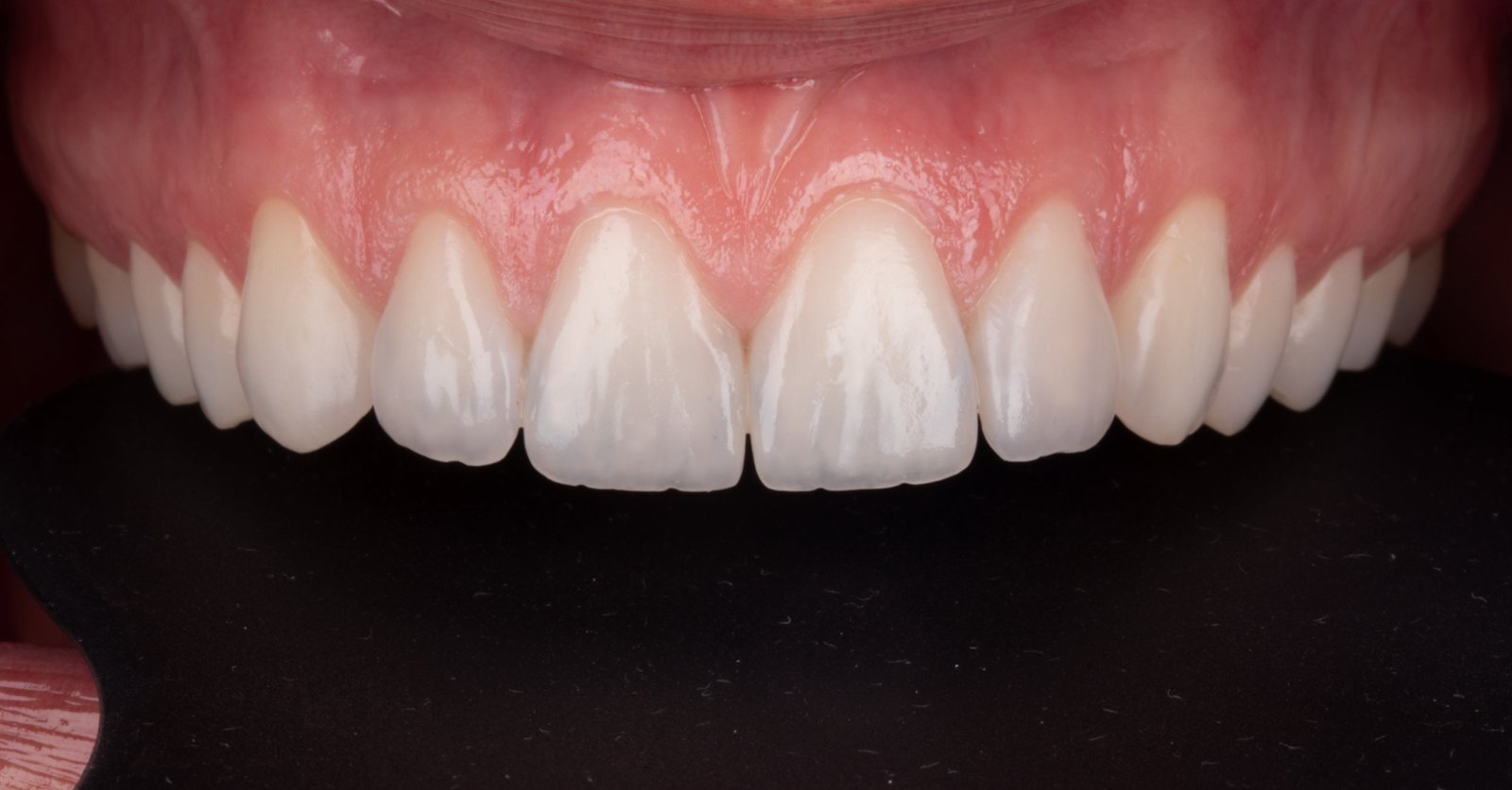
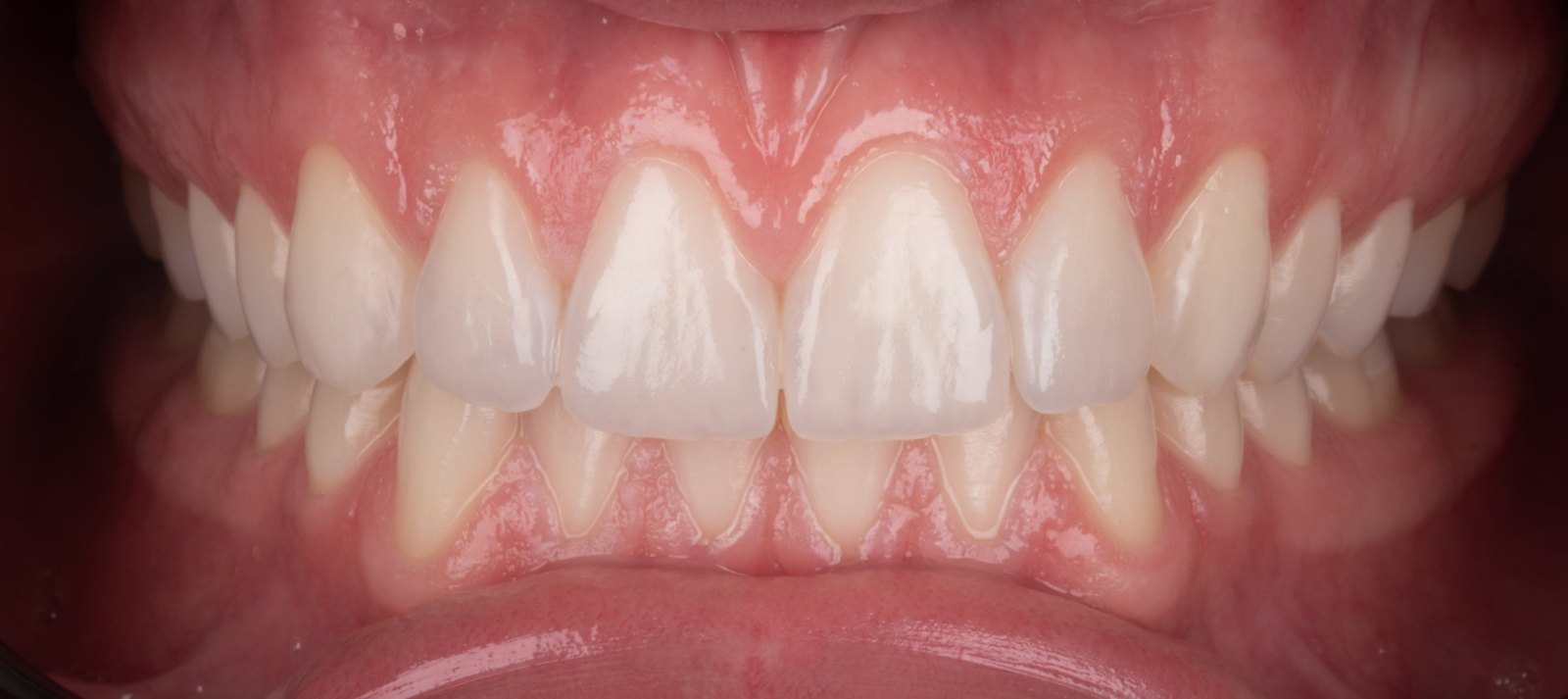
After braces — teeth well positioned within the smileWell aligned, but edges worn from previous wearHealthy teeth, with some erosion visible at the necksOnly minimal additions — on the edges and onto the erosionsErosions sealed, edges restored
Why the orthodontics mattered. Had her teeth still been in the wrong position or the wrong bite, composite would not have been suitable — the teeth would have needed preparation to compensate. When preparation is required, it is a porcelain indication.
Ultra-minimal edge bonding — small teeth with gaps
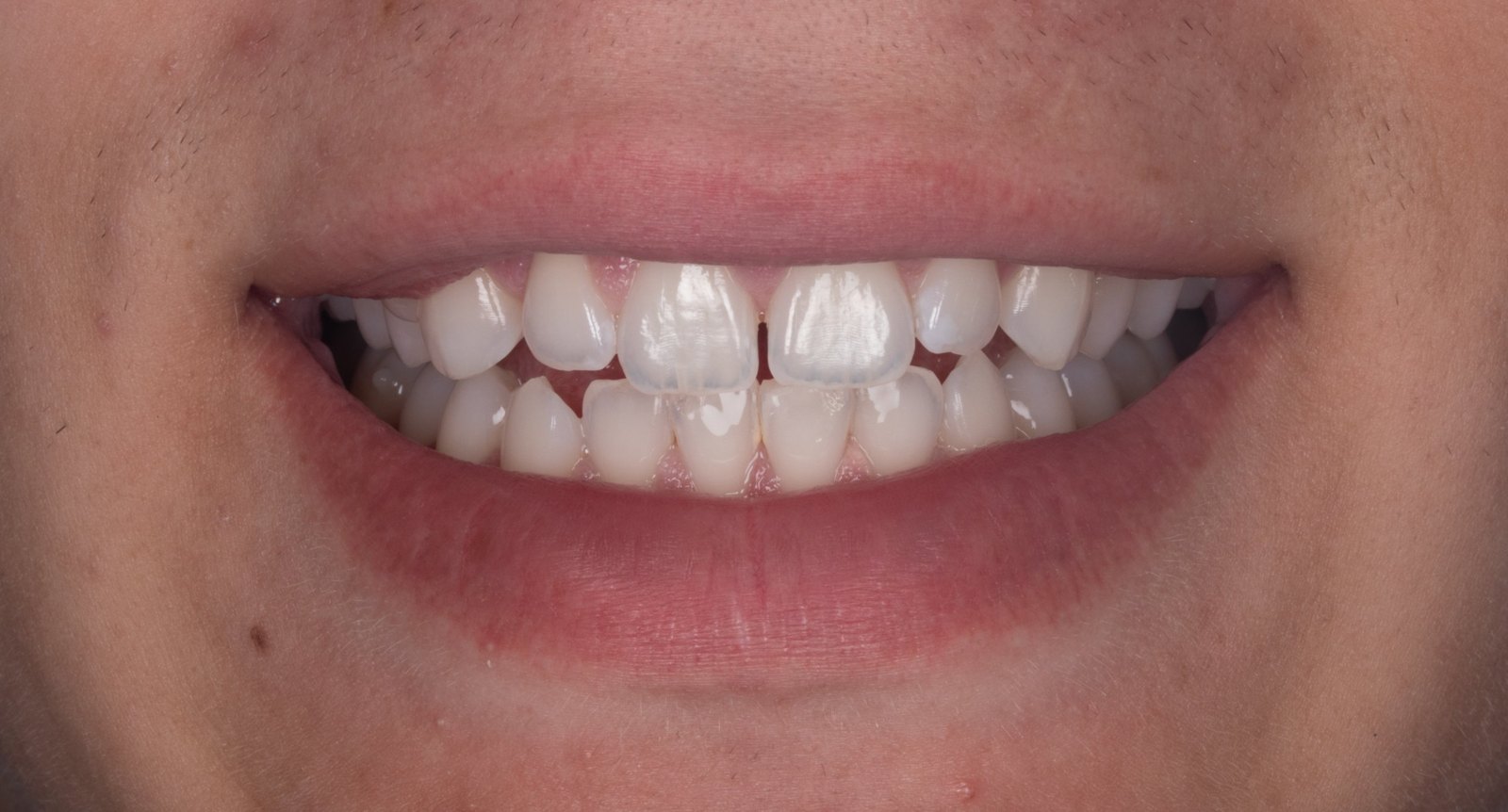
Naturally small teeth with symmetrical gaps — a size problem, not a position one. Composite added only where needed; his own enamel left uncovered.
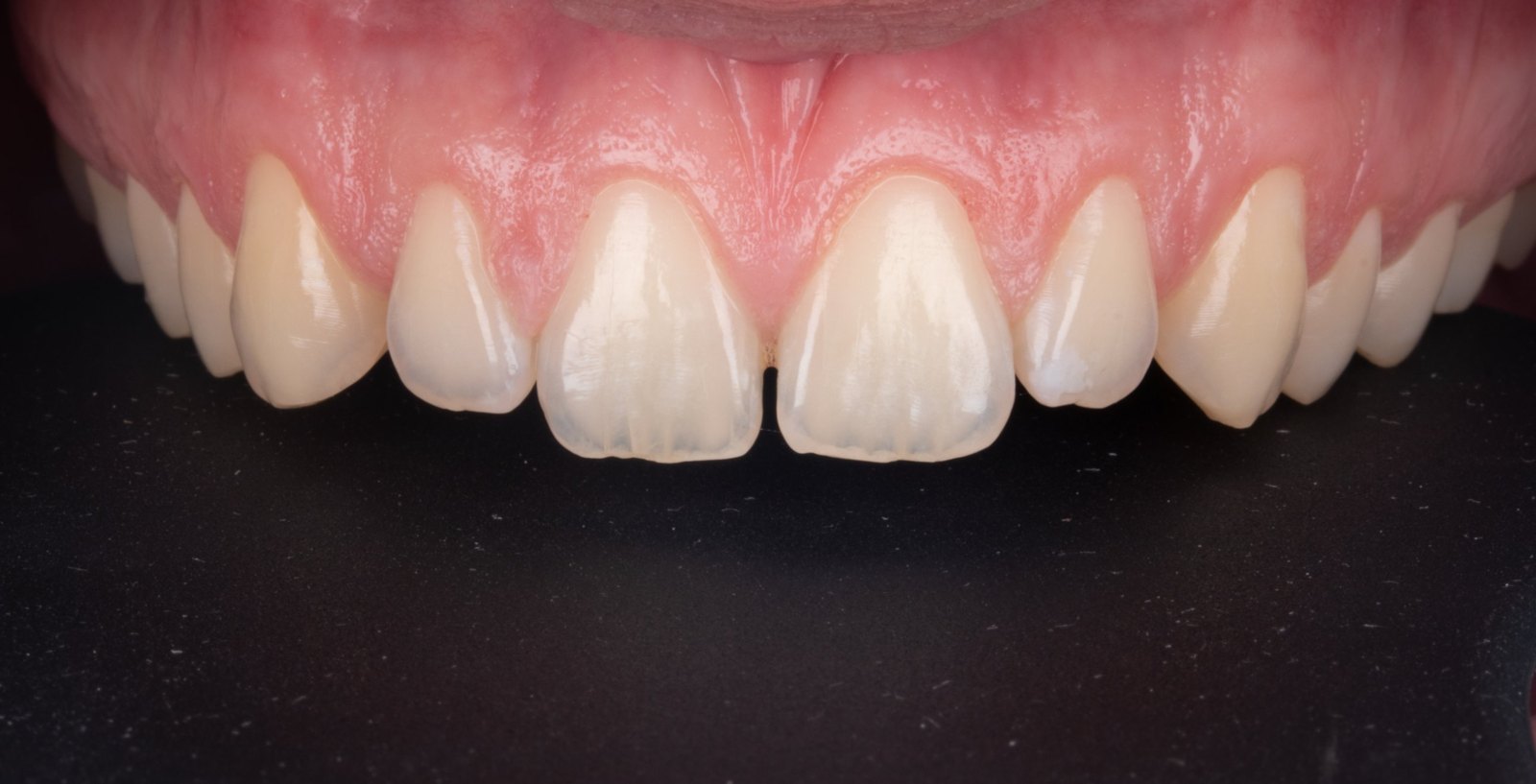
A very young patient with naturally small teeth and gaps between them. His teeth were beautiful — natural shapes, lovely translucent effects — just a little too small. Otherwise they were well positioned, and the gaps were symmetrical.
Why not braces? This is a Bolton discrepancy: the upper teeth are too small for the space they sit in, relative to the lower teeth. Pulling them together with braces would close the gaps by narrowing the arch, so the upper and lower teeth would no longer fit together properly — the bite would pay for it. The gaps are not a position problem but a size problem, so the answer is to make the teeth a little bigger.
Why composite. A young patient, healthy teeth, a good position and a good bite, with nothing to remove and only a little to add — the choice for him is composite.
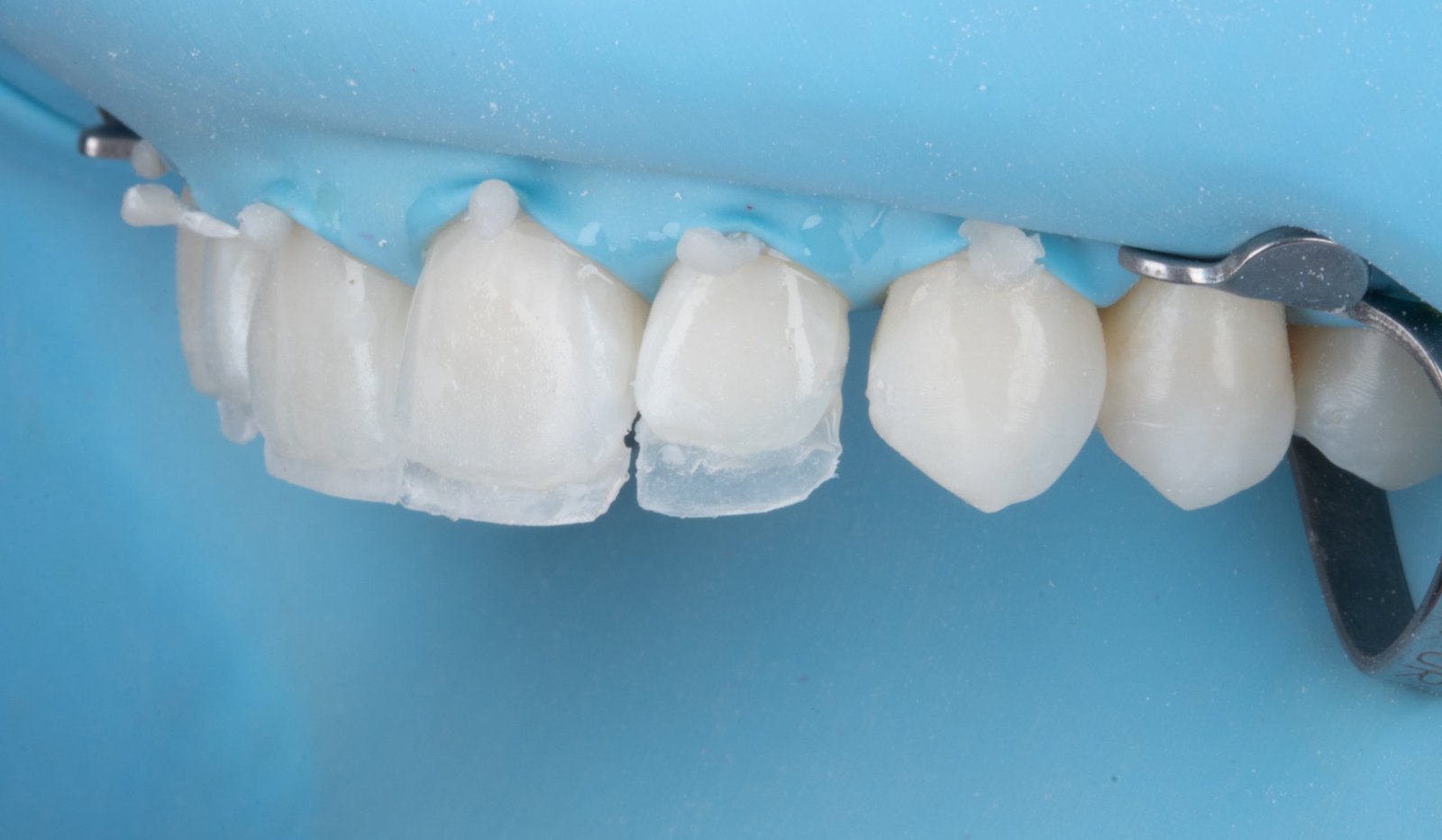
As little as possible. The most important thing for me here was to keep the composite truly minimal: added only where necessary, and blended into the natural tooth. No composite veneers — his own teeth are in excellent condition, with beautiful features that should not be covered with material. And less material means most of his own enamel stays uncovered: the healthiest option, the easiest to maintain, and the kindest to the gums.
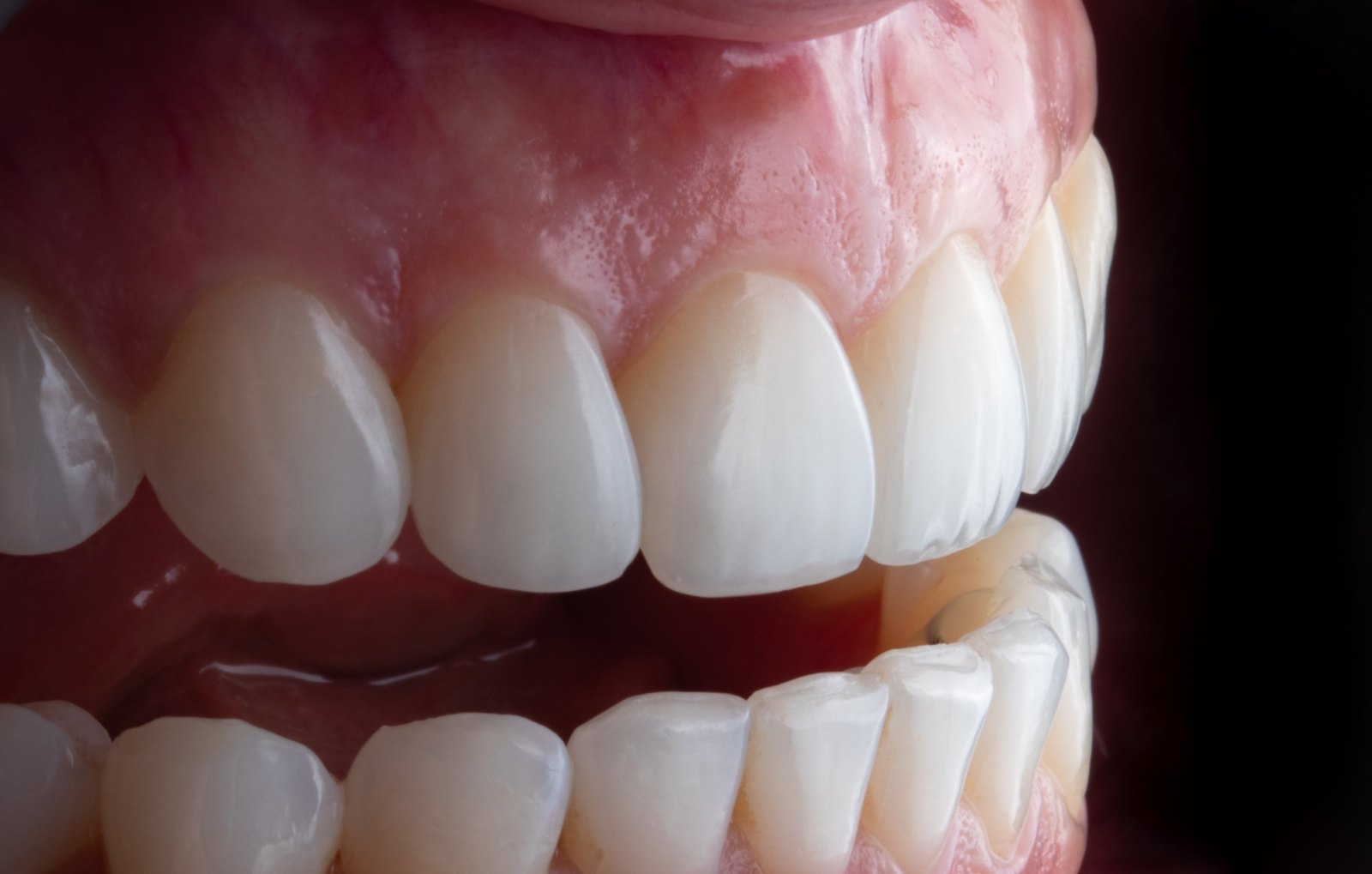
Teeth well aligned, but anatomically too smallSmall teeth and the gaps they leaveThe gaps cannot be closed with braces because of the bite with the opposing teethOnly the edges and sides of each tooth are bonded, keeping the enamel mostly uncoveredSide view of the bonding stageBonding finished — character kept, enamel mostly left uncoveredBetter tooth proportions, in harmony with the bite
Small teeth are not a reason to cover them. When teeth are healthy and beautiful, I add only what is missing — and leave the rest of the enamel exactly as it is.
Dark tooth veneers & crown — four upper front teeth
Well-aligned teeth, already heavily restored — an old crown on a dark root, large fillings, gums sitting low. Porcelain on just four teeth.
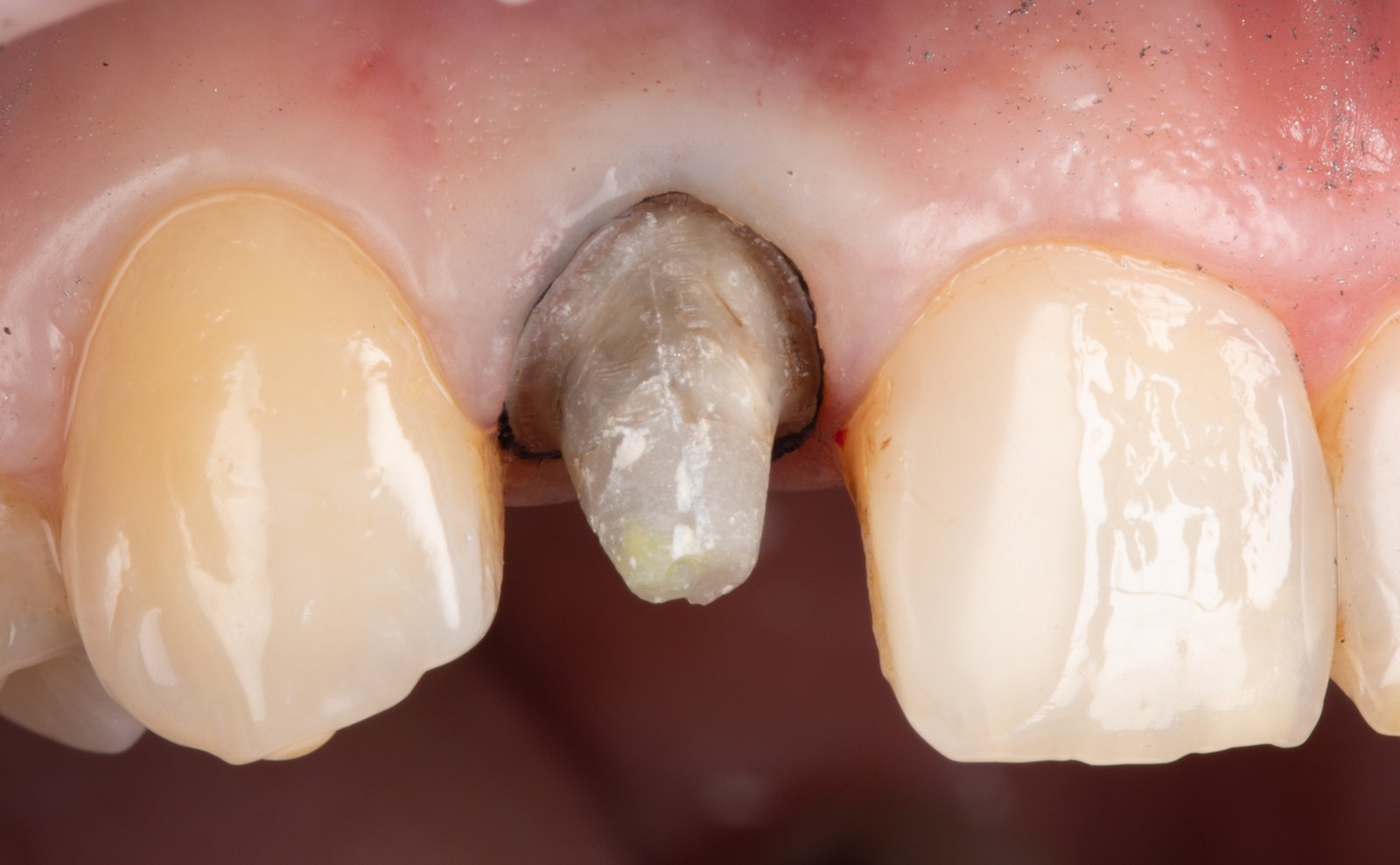
Her teeth were well aligned, but the four front teeth had already been restored. One carried an old crown over a very dark post and root; the other three had large composite fillings. The gum line around the two central incisors also sat a little too low, making them look short and square — so a gum lift was needed to improve the proportions.
Why porcelain. Teeth already heavily restored, with much of the enamel gone. Some preparation required. Root surface exposed after the gum lift, needing good long-term support. One tooth already crowned and needing a new crown. Together, that makes this a porcelain case.
As little as possible. Only the four front teeth were treated — the rest of her teeth were healthy and beautiful, and the smile needed nothing else. The crown on the dark tooth and the veneers on the other three were matched to her lower and side teeth, so the new teeth belong to her smile.
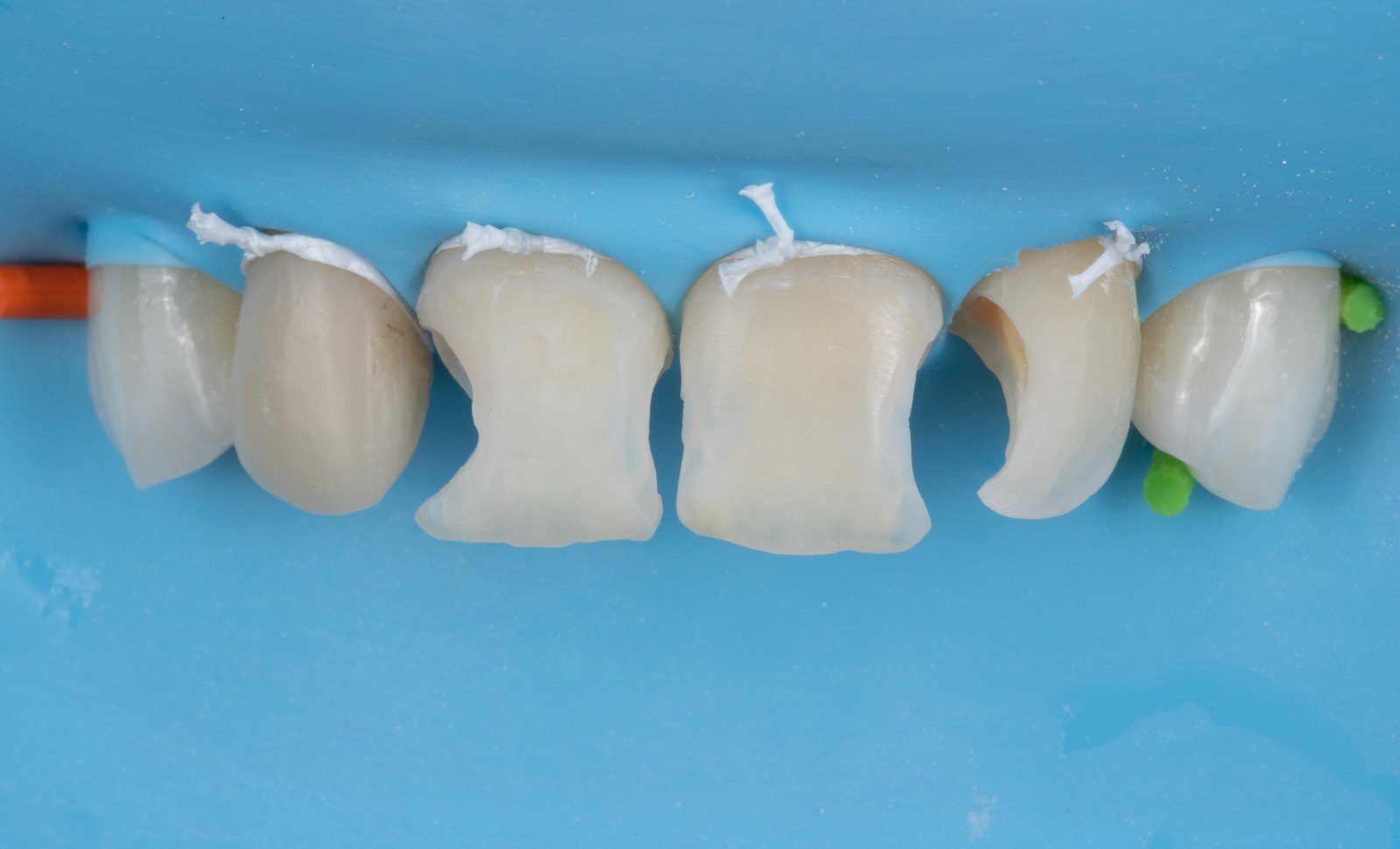
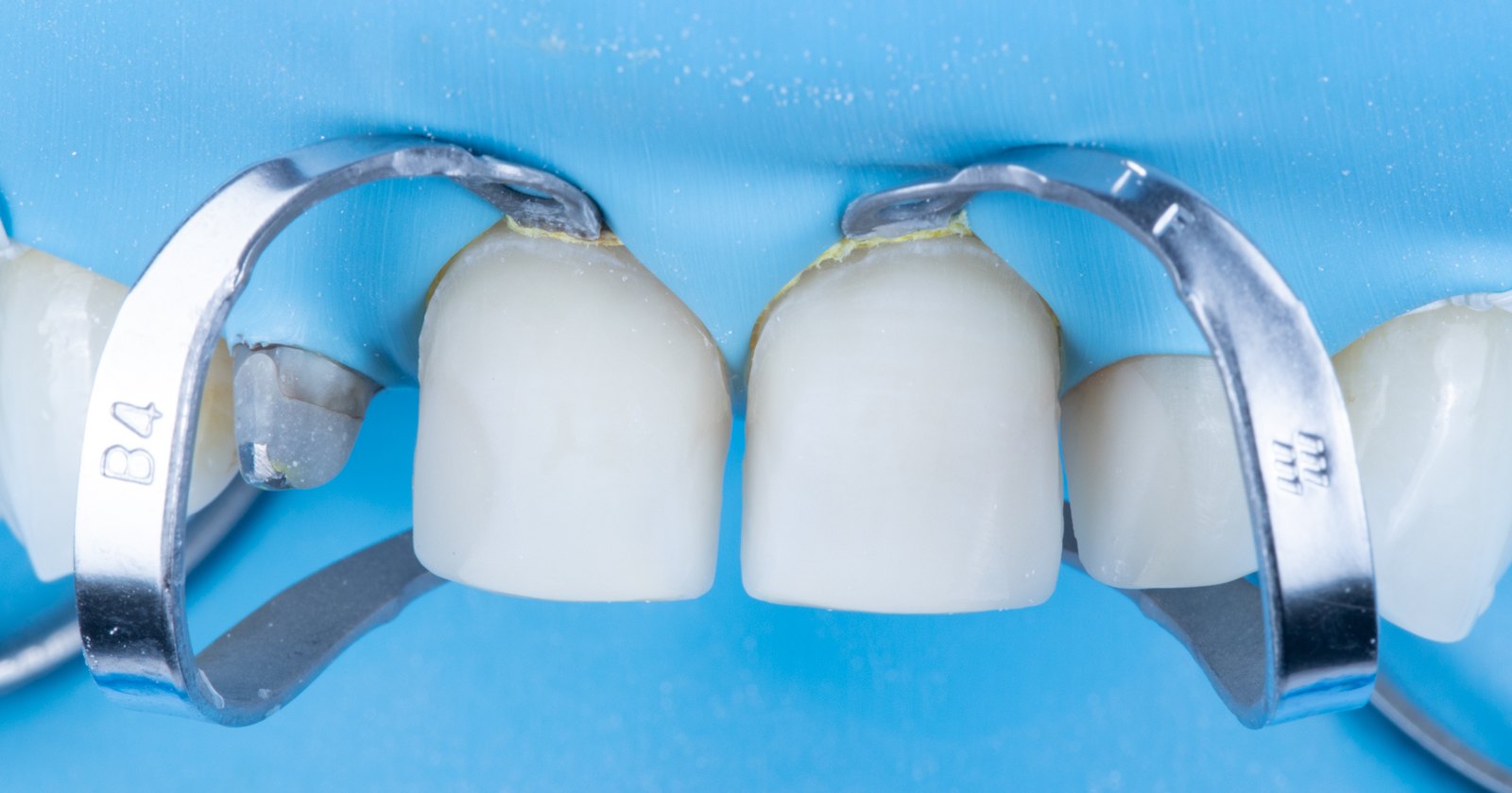
Before — teeth in a good position within the smile frameGood alignment, but the four front teeth worn, heavily restored with composite and shortOne tooth had an old crownThe tooth under the crown is dark and needs a new crownGum liftSide teeth in good condition — no treatment neededFront teeth with large fillings and edge wearMinimal preparationVeneers fitted under isolationPorcelain veneers and one crown, made by a master technician
Why not composite? Large old restorations, missing enamel, a dark root to mask and a tooth that needed a new crown. Once teeth must be prepared, composite is not the material — porcelain is what can restore them.
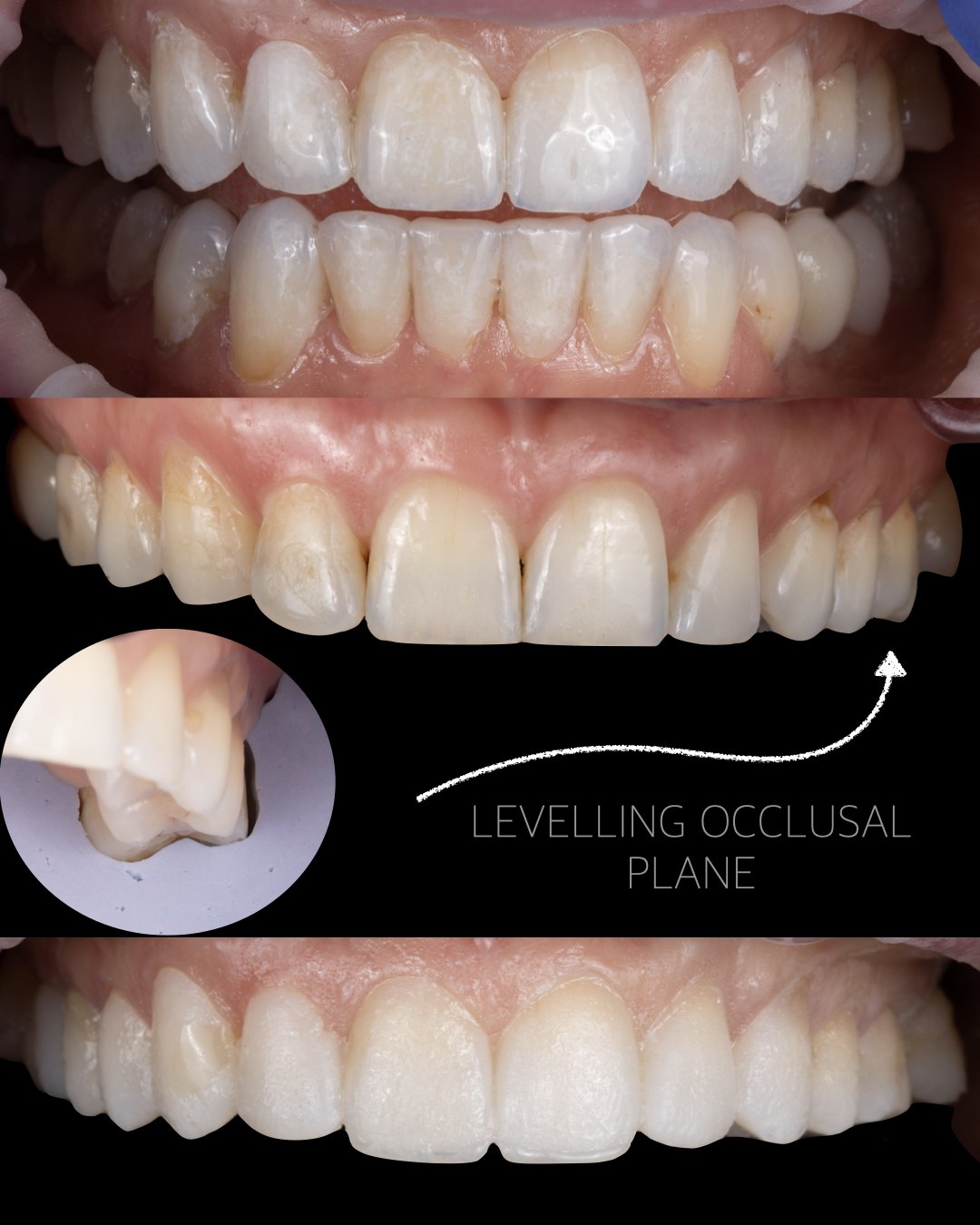
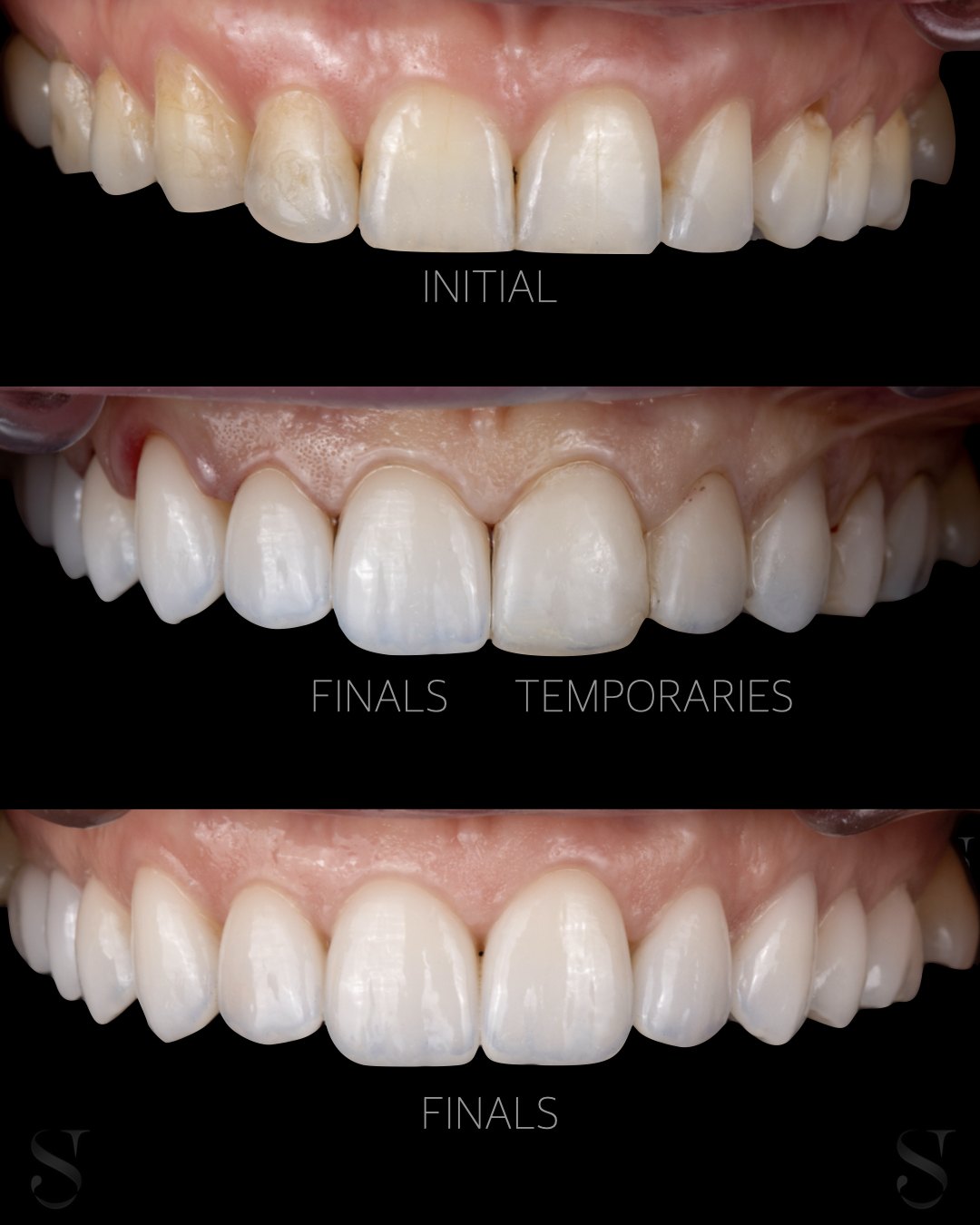
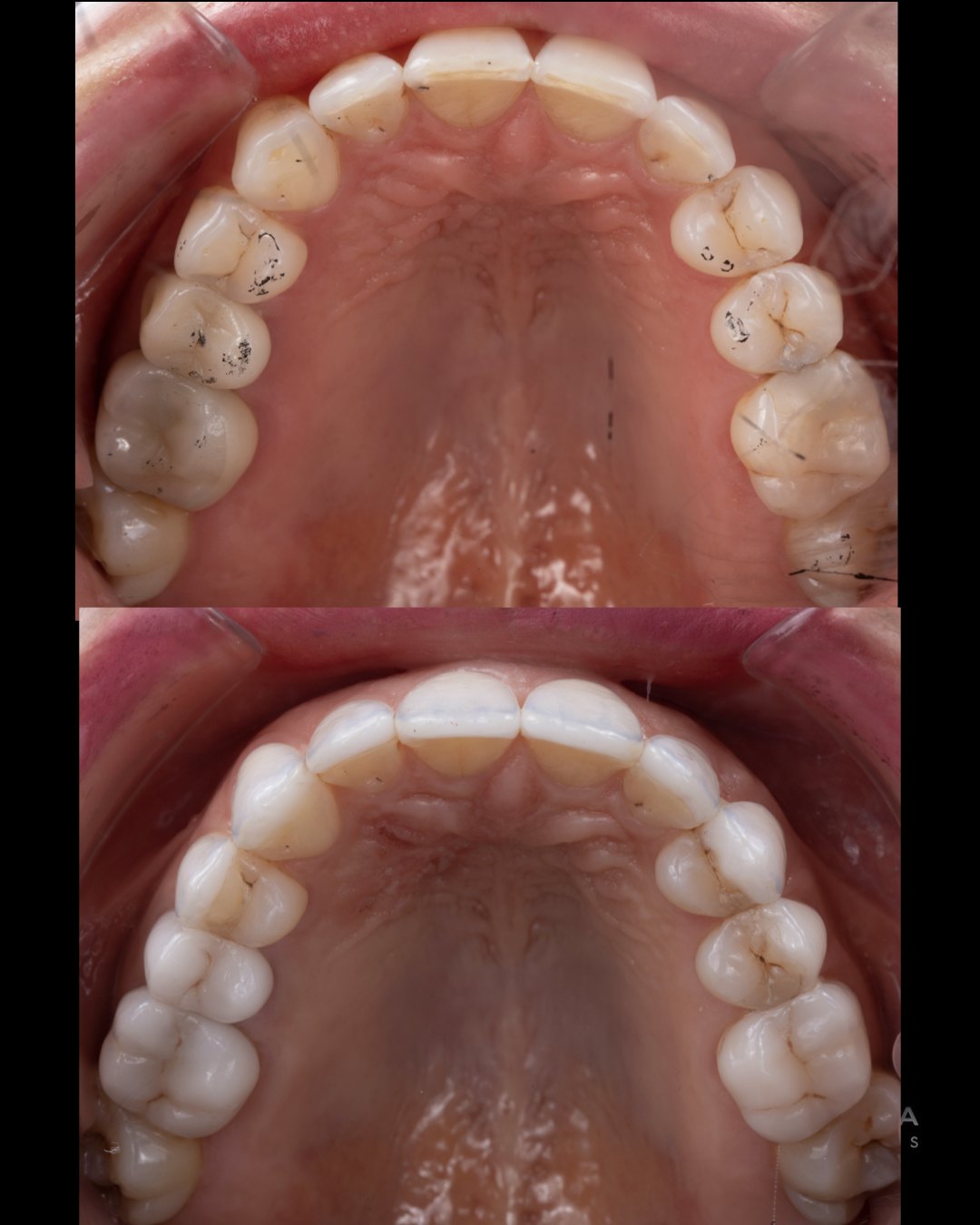
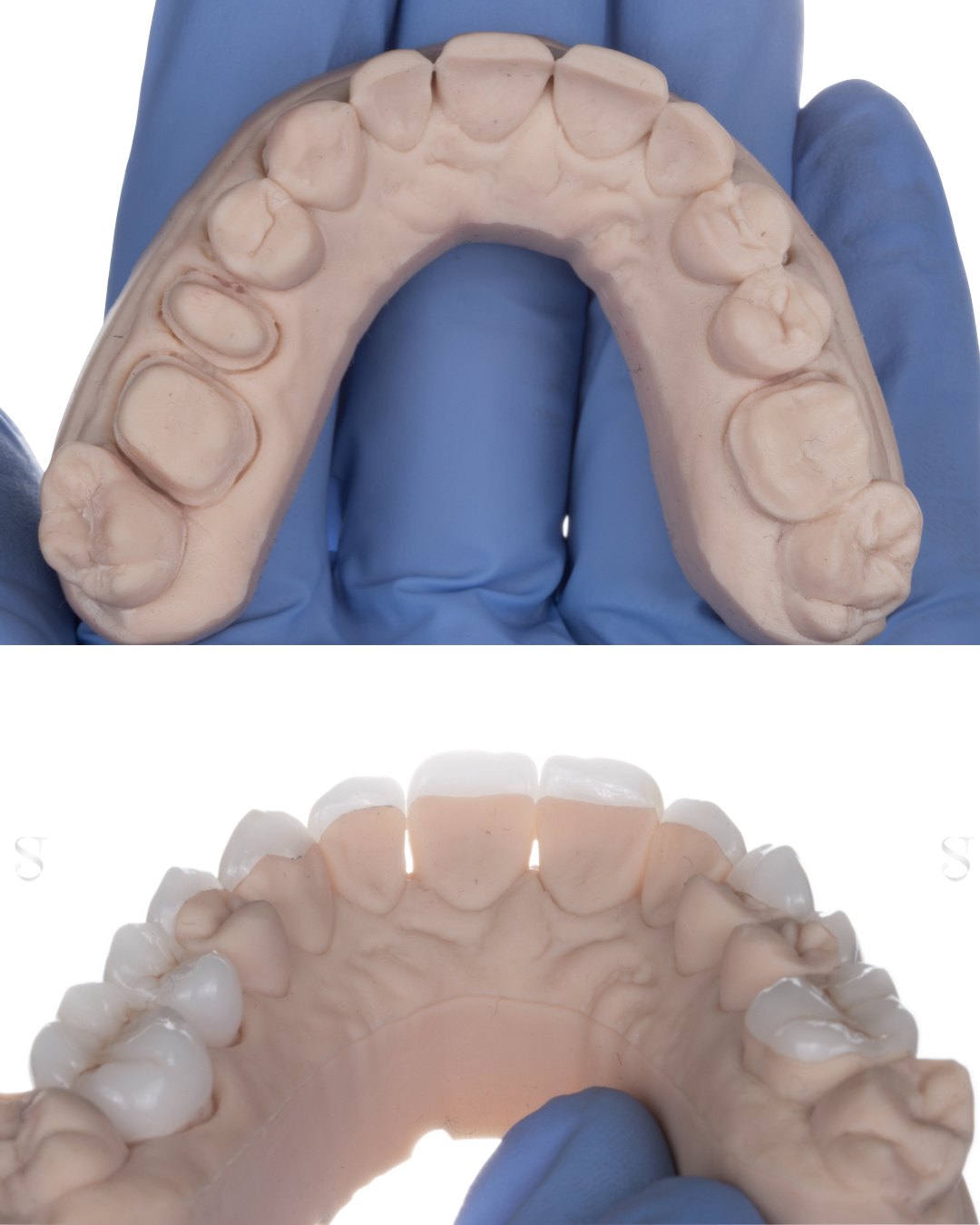
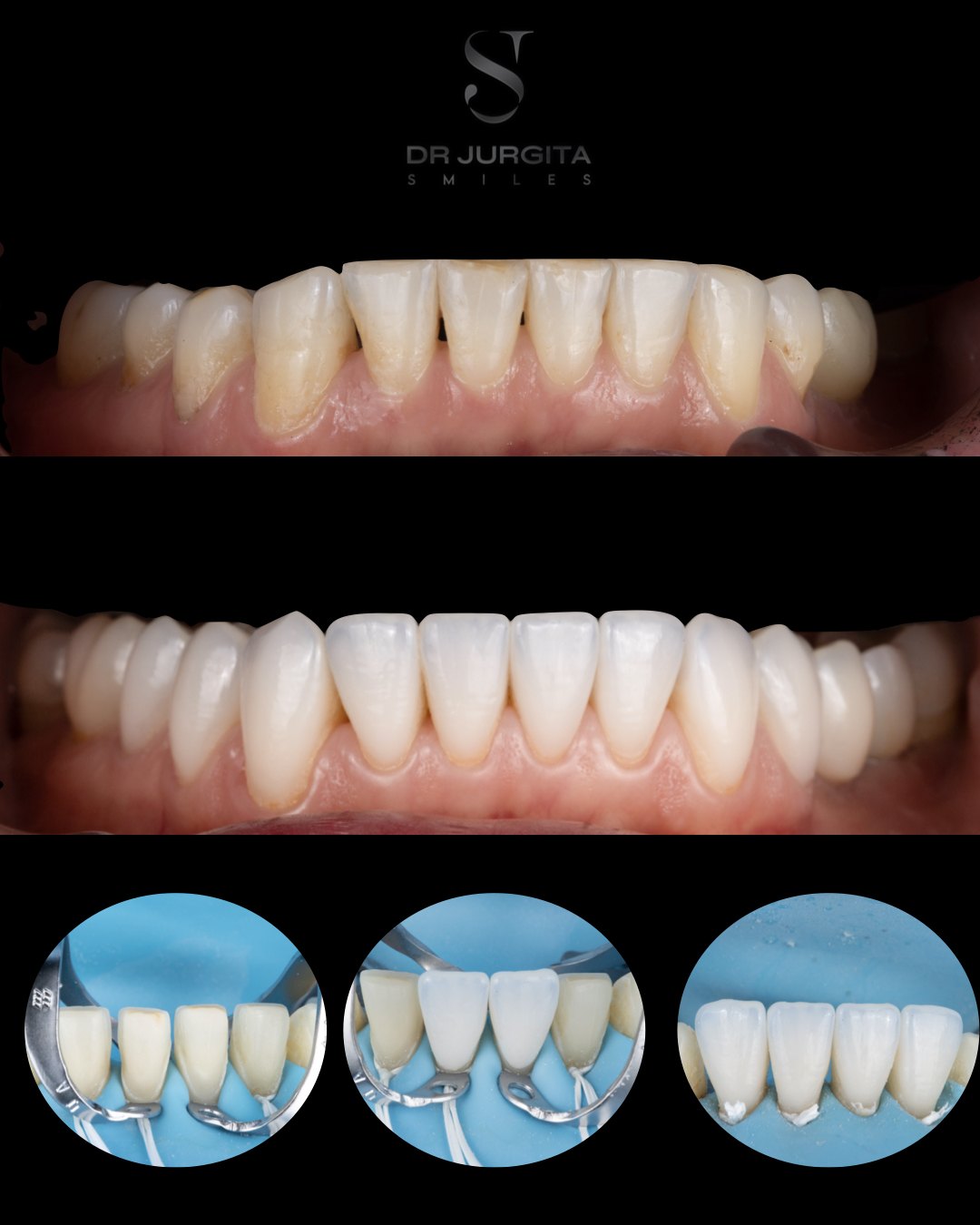
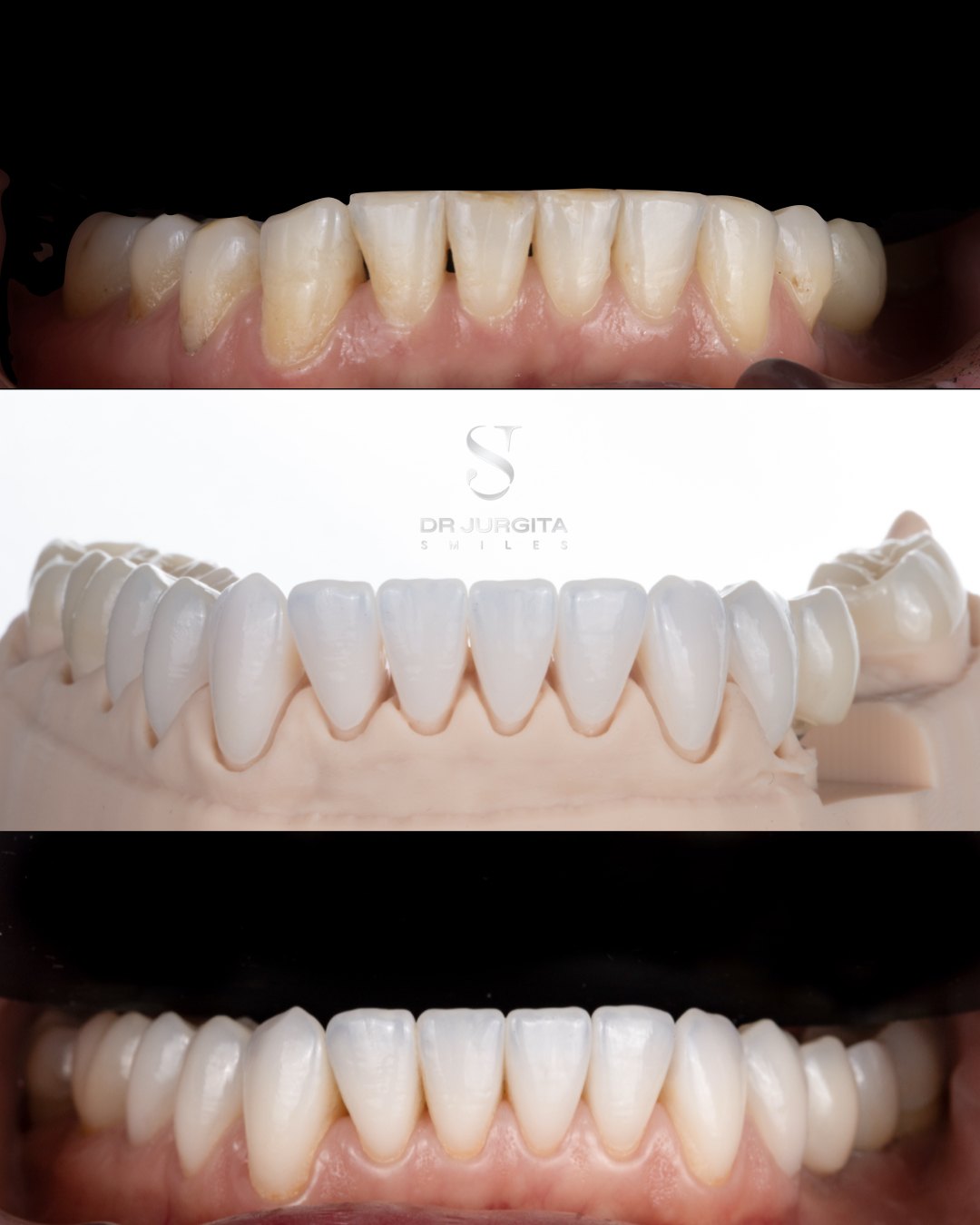
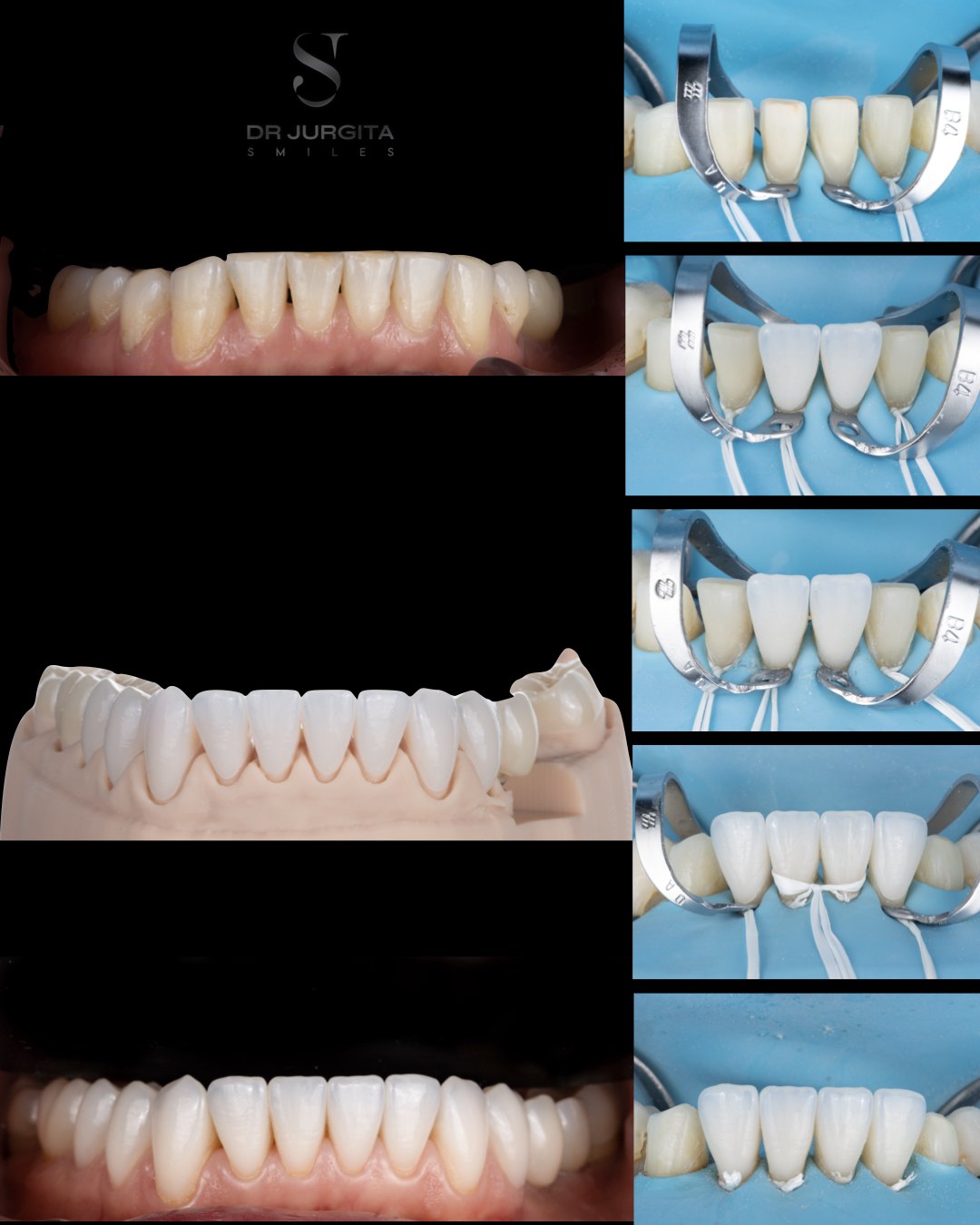
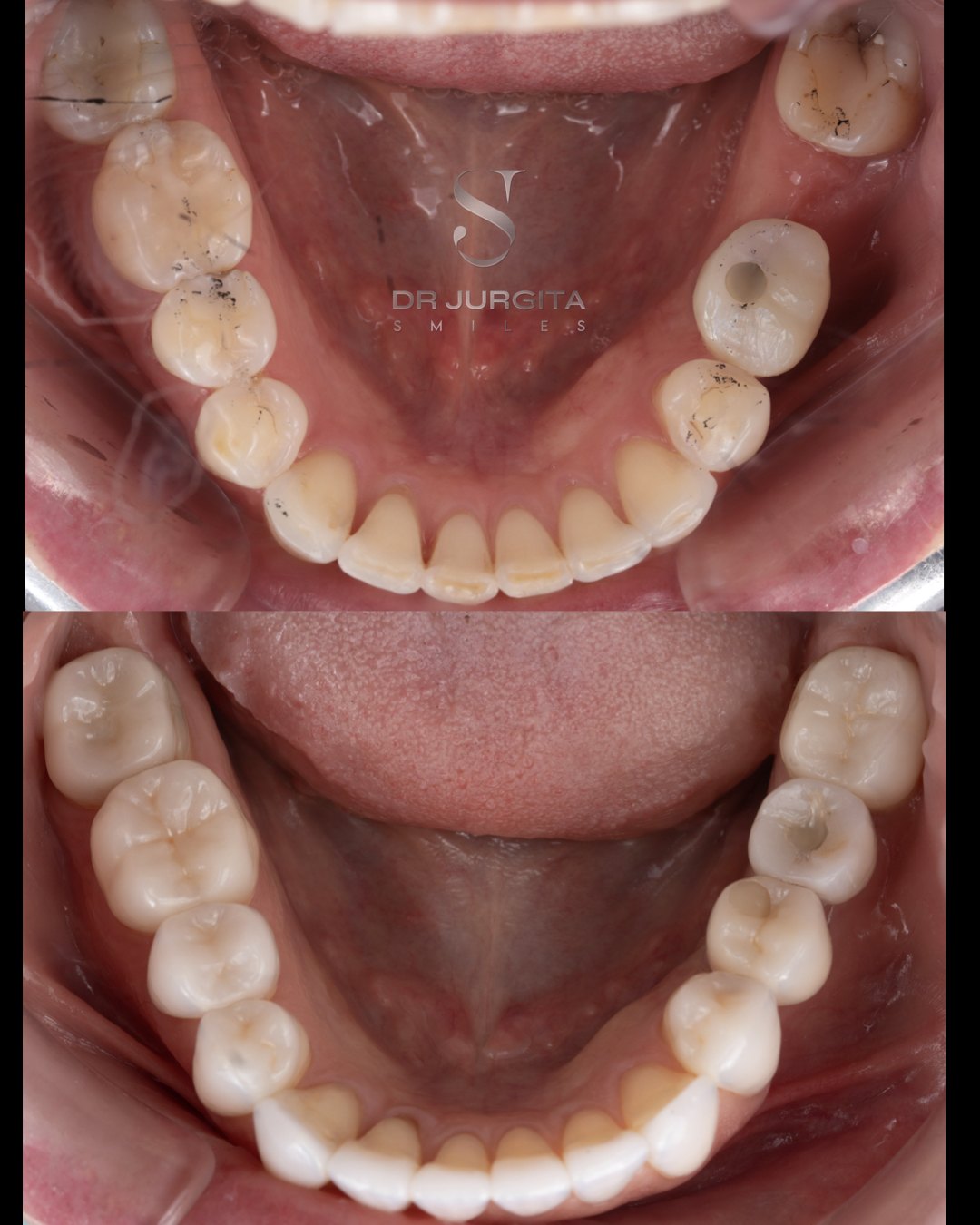
Fillings, missing and worn teeth, and a collapsing, uneven bite. Too extensive for composite — the bite had to be rebuilt in a robust material.
Most of her teeth had fillings, some were missing, and the teeth were worn. Her bite was collapsing, and the back teeth on one side were longer than on the other — an uneven bite that orthodontics could not correct any further: she had already had braces for two years.
Why porcelain. The extent of her previous dentistry. A bite that needed to be stabilised and opened. Worn teeth to rebuild. A more significant smile redesign. That is too extensive for composite. Where the bite needs to be controlled, stabilised and rebuilt, porcelain is the material of choice — robust enough to hold the new bite, and to stop the teeth breaking down again.
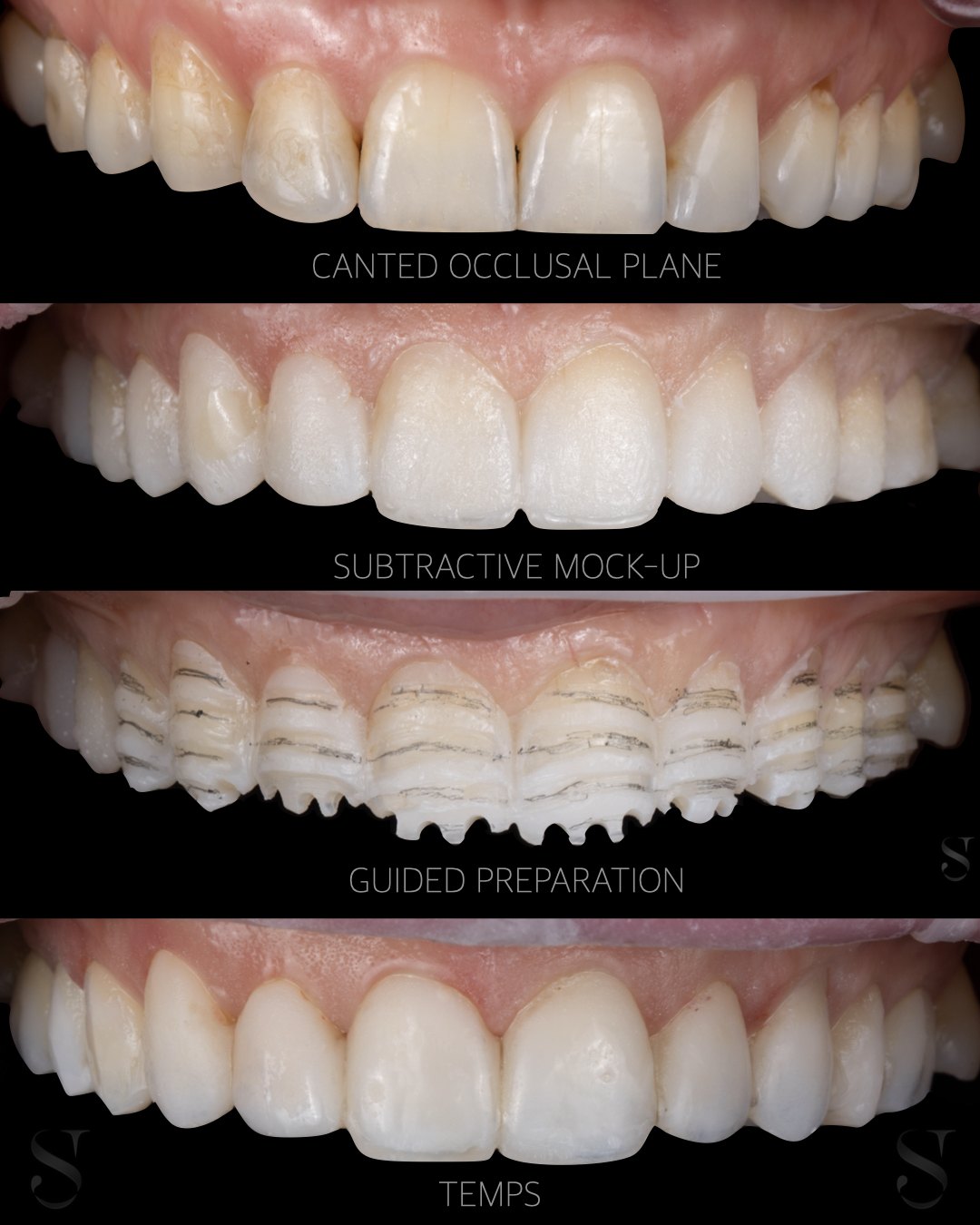
What we did. Bite opening and smile redesign with upper and lower porcelain veneers, and implant-retained crowns to replace the missing back teeth. The new shape and bite were tested first in a mock-up and temporaries, and the preparation was guided by that design — so only what the design required was removed.
When more is the right answer. Minimal is always the aim. But when most teeth are already filled and worn and the bite is collapsing, small additions would only patch a problem that keeps breaking down. Rebuilding the bite in porcelain is what protects the teeth for the long term.
Shown with patient consent. Individual results vary.
10 · Questions patients ask
On average around 7 years before it needs replacing, although some bonding needs attention sooner and some lasts longer. It depends on your teeth and bite, how carefully it was done, your habits, your home care and keeping up with regular maintenance.
Well-planned, carefully made and well-maintained porcelain veneers last on average around 14 years before they need replacing. This is a guide rather than an expiry date.
Not when they are well chosen and well done — in carefully selected cases, veneers can be a conservative treatment. How much tooth is prepared depends on the case: some need barely any preparation, some need a little, and more severe cases may need more. That is why a thorough assessment and careful planning matter more than the material itself. If whitening, orthodontics or small additions of composite can achieve your goal more conservatively, I consider those options first.
Yes, but removing the composite and returning the tooth to its original condition are not always the same thing. This is why I distinguish between removable and fully reversible — and explain before treatment what future removal or replacement would involve.
Whitening does not change the original shade of composite. When whitening is part of the plan, I generally recommend doing it before the final shade is chosen.
Yes. Veneers are not my starting point. Whitening, small additions of composite, aligners — or a combination — are sometimes enough. Veneers are considered when simpler approaches are unlikely to achieve the agreed result.
Composite bonding starts from £300 per tooth. Porcelain veneers start from £1,500 per tooth. Your written plan confirms your exact costs.
11 · Your next step
It depends on your teeth. Let's look at them.
I work with both materials. My recommendation follows what your teeth need and what we want to achieve together.
Sometimes the clinical indications for composite and porcelain overlap — both can address the same concerns about shape, shade or wear. What finally decides the best option is your personal circumstances and expectations. That's why a personal consultation matters most: to find the solution that works best for you.
Send a few photos and tell me what you'd like to change. I look at your photos personally and reply with my first thoughts. An examination is needed to confirm your options.
Full assessment at 35 Devonshire Place, Marylebone — £200, with a written plan and costs. Your first visit includes the examination, photographs and scans or X-rays as needed.
General information, not a diagnosis. Opinions from photos are not a diagnosis. Individual results vary. Fees may change. Jurgita Sybaite · GDC 242279 · 35 Devonshire Place, London W1G 6JP